
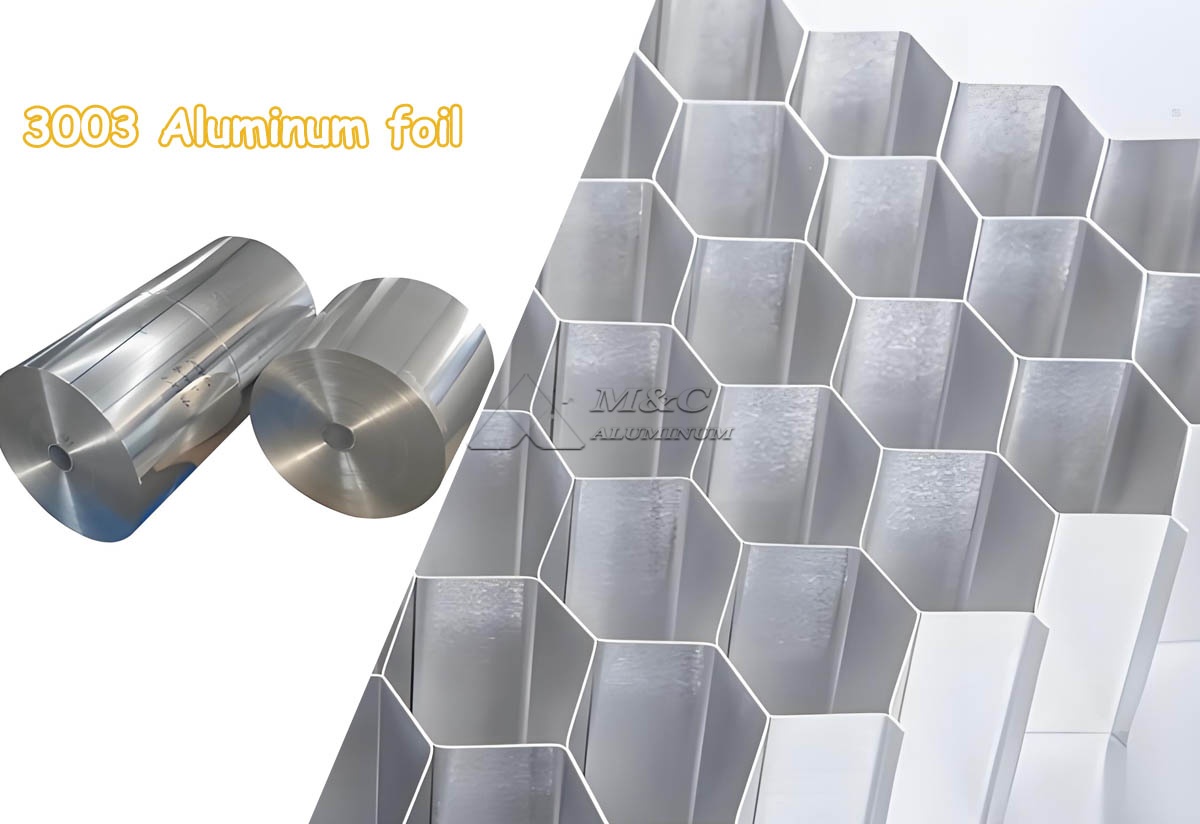
As an aluminum foil manufacturer, we produce 3003 H18 honeycomb core aluminum foil for bonded honeycomb cores used in architectural panels, transportation panels, cleanroom partitions, marine interiors, and industrial composite structures. This product is manufactured from 3003 aluminum alloy and supplied in H18 hard temper, with controlled thickness, width, surface cleanliness, and coil geometry to support stable expansion and reliable adhesive bonding.
For honeycomb core production, aluminum foil is not only a thin metal material. It is also a structural input that directly affects node bonding, cell formation, expansion consistency, and final panel performance. For this reason, our production focus is on clean degreased surface quality, accurate gauge control, good flatness, suitable mechanical strength, and consistent coil-to-coil performance.
Product Overview
3003 H18 honeycomb core aluminum foil is widely used in aluminum honeycomb cores because the 3003 alloy provides a practical balance of strength, corrosion resistance, formability, and cost efficiency. In the H18 temper, the foil has high hardness and tensile strength, helping the honeycomb core maintain cell shape during slitting, coating, stacking, pressing, cutting, and expansion.
Our factory supplies this material as plain aluminum foil with a clean degreased surface. The surface is prepared to reduce rolling oil residue and support stable adhesive wetting during honeycomb core bonding. Depending on customer requirements, the foil can be supplied for continuous bonding lines, block bonding processes, or customized honeycomb core production systems.
For buyers who need a related standard product range, our Honeycomb aluminum foil category includes alloy and temper options commonly used in honeycomb panel manufacturing.
Why 3003 H18 Is Used for Honeycomb Core Foil
The honeycomb core structure relies on thin foil walls to provide high stiffness with low weight. In this application, the alloy and temper must maintain dimensional stability while still allowing expansion into regular cells. 3003 aluminum alloy is an Al-Mn alloy known for good corrosion resistance and stable mechanical properties. Compared with pure aluminum grades, it provides higher strength, which is important for honeycomb core height stability and edge integrity.
The H18 temper is fully hard. It is selected when the core manufacturer requires improved compression resistance, accurate cell geometry, and reduced deformation during handling. For panel applications exposed to humidity or normal atmospheric environments, 3003 aluminum foil also offers dependable corrosion resistance when correctly bonded and protected within the panel system.
Clean Degreased Surface for Adhesive Bonding
A clean degreased surface is one of the most important requirements for aluminum foil for honeycomb cores. During rolling, aluminum foil may carry residual rolling oil, additives, or fine particles. If these residues are not properly controlled, adhesive bonding can become unstable. This may lead to low node strength, uneven expansion, partial delamination, or inconsistent core performance.
Our manufacturing route includes surface cleaning and degreasing control based on the final application requirements. The purpose is to provide a foil surface suitable for bonding with commonly used adhesives in honeycomb core production. Surface cleanliness is inspected during production and before packing, with attention to oil stains, black spots, water marks, severe scratches, and visible contamination.
A clean surface does not mean the foil is chemically treated unless specifically requested. It means the foil is supplied with controlled low-residue surface condition suitable for downstream coating and bonding processes. If customers have specific dyne value, surface tension, or bonding test requirements, we can discuss inspection standards before order confirmation.
Technical Parameters
The following table shows our typical supply range for 3003 H18 honeycomb core aluminum foil. Final specifications should be confirmed according to the honeycomb cell size, core height, adhesive system, and panel application.
| Item | Typical Specification |
|---|---|
| Product | 3003 H18 honeycomb core aluminum foil |
| Alloy | 3003 |
| Temper | H18 |
| Thickness | 0.030 mm to 0.080 mm, customized range available |
| Width | 100 mm to 1600 mm, slit width available |
| Inner diameter | 76 mm or 152 mm, according to customer line |
| Outer diameter | According to coil weight and handling requirement |
| Surface | Clean degreased, plain finish |
| Edge quality | Slit edge, burr controlled |
| Tensile strength | Typically 165 MPa to 205 MPa, subject to thickness |
| Elongation | Generally low in H18 temper, controlled for stable processing |
| Pinholes | Controlled according to thickness and application standard |
| Wettability | Suitable for adhesive bonding after degreasing control |
| Packaging | Export wooden pallet or wooden case with moisture protection |
Chemical Composition of 3003 Aluminum Alloy
3003 aluminum foil belongs to the aluminum-manganese alloy series. The chemical composition is controlled according to applicable aluminum material standards and customer technical requirements.
| Element | Typical Content Range |
|---|---|
| Al | Balance |
| Mn | 1.0 percent to 1.5 percent |
| Fe | Up to 0.7 percent |
| Si | Up to 0.6 percent |
| Cu | 0.05 percent to 0.20 percent |
| Zn | Up to 0.10 percent |
| Other single elements | Controlled within standard limits |
| Other total elements | Controlled within standard limits |
The manganese content contributes to the strength and stability of the alloy. Proper composition control also supports consistent rolling performance, which is essential for thin gauge aluminum foil.
Manufacturing Control in Our Factory
As a manufacturer, we control the production process from incoming aluminum stock to finished foil inspection and export packing. The process route generally includes melting or billet sourcing control, hot rolling or cast rolling route selection, cold rolling, foil rolling, annealing or temper control when required, slitting, degreasing control, inspection, and packaging.
For 3003 H18 honeycomb aluminum foil, the H18 temper requires careful rolling schedule control. The foil must reach the required hardness and strength without excessive waviness, edge cracks, or poor coil shape. Thin foil rolling also requires stable lubrication, clean mill environment, and precise thickness measurement.
During slitting, we pay attention to edge condition because burrs and edge defects can affect unwinding and bonding line stability. Coil tension is also controlled to reduce telescoping, loose winding, and internal deformation during international shipment.
Surface and Appearance Requirements
Honeycomb core manufacturers usually require stable surface quality rather than decorative appearance. However, visible defects can still affect bonding and processing. Our inspection focuses on practical production risks.
The foil surface should be free from heavy oil stain, corrosion, serious oxidation, dense pinholes, severe scratches, holes, splits, folds, foreign particles, and obvious color difference that may influence use. Minor rolling marks may exist within agreed industrial standards, but they must not affect bonding performance or continuous processing.
For adhesive bonding, surface consistency is more important than visual brightness. A uniform clean degreased surface helps the adhesive distribute evenly at the bonding nodes. This contributes to stable block strength and regular expansion of the honeycomb core.
Application in Aluminum Honeycomb Core Production
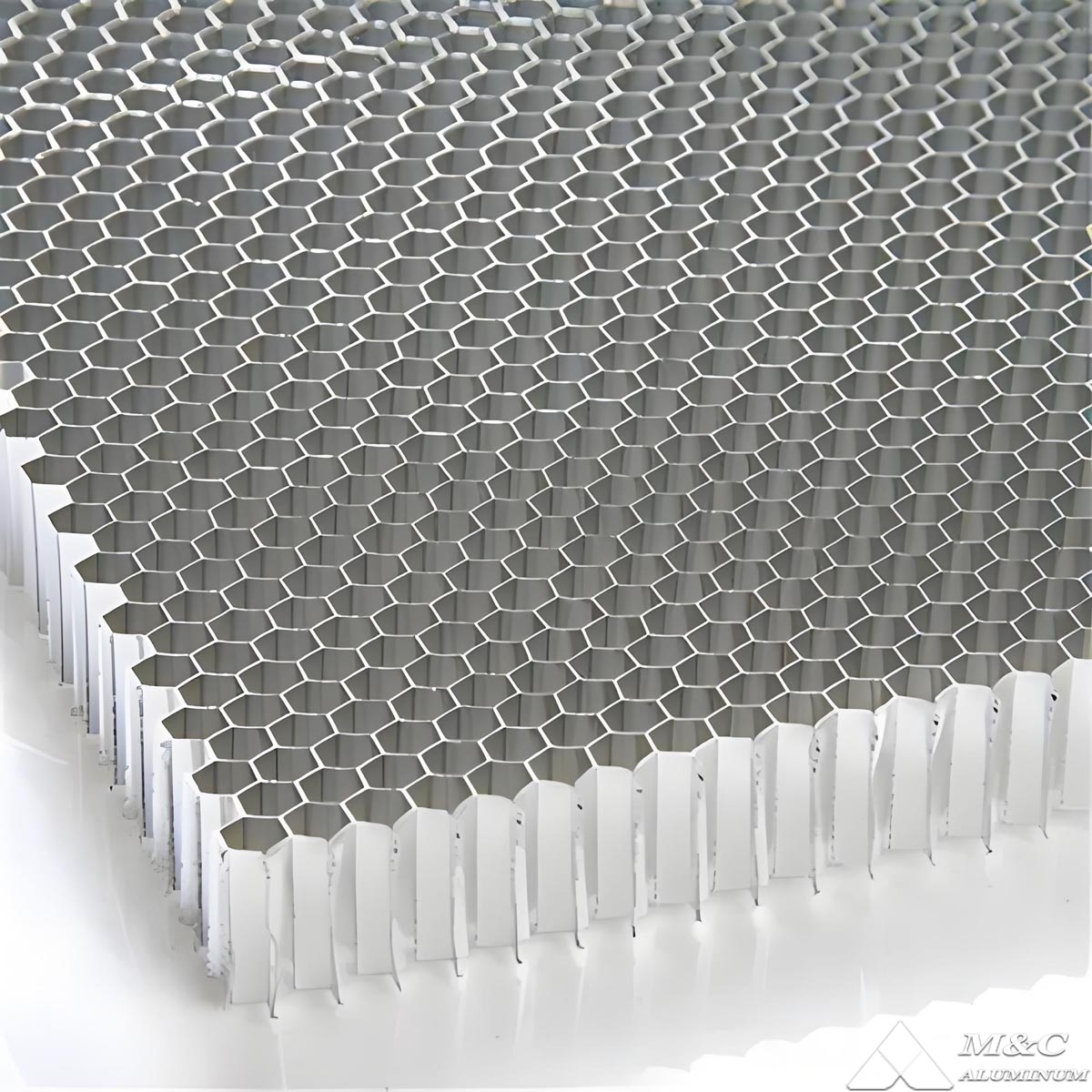
3003 H18 honeycomb core aluminum foil is mainly used to produce aluminum honeycomb cores by bonding foil sheets or strips at regular intervals, curing the bonded block, slicing it to required thickness, and expanding it into honeycomb cells. The expanded core is then bonded with aluminum sheets, stainless steel sheets, FRP sheets, stone veneers, or other skins to form composite panels.
Typical applications include:
Aluminum honeycomb panels for curtain walls and ceilings
Transportation flooring, partitions, and interior panels
Shipbuilding interior structures
Cleanroom wall and ceiling systems
Furniture panels and industrial doors
Lightweight machinery and equipment covers
Energy absorption and airflow control components
The final performance of the panel depends on many factors, including foil thickness, alloy temper, cell size, adhesive type, curing process, core height, and face sheet material. Our role as the foil manufacturer is to provide a stable base material that supports the customer production process.
Selection of Thickness and Width
Foil thickness is selected according to the required strength, weight, cell size, and panel use. Thinner foil helps reduce weight and material cost, while thicker foil improves core strength and handling resistance. Common honeycomb core foil thicknesses include 0.040 mm, 0.050 mm, 0.060 mm, and 0.070 mm, but the final choice should be based on the engineering design of the core.
Width selection depends on the bonding line and the required core block size. Some customers need jumbo rolls for in-house slitting, while others prefer narrow slit coils ready for direct feeding into bonding equipment. We can provide both master coils and slit coils, subject to production feasibility and tolerance requirements.
For customers evaluating alloy alternatives or related specifications, our 3003 Aluminum Foil page provides additional information on this alloy in different industrial applications.
Quality Inspection and Documentation
Before shipment, each batch of 3003 H18 honeycomb core aluminum foil is inspected according to agreed specifications. Our quality control items normally include thickness, width, coil weight, surface appearance, mechanical properties, edge quality, and packaging condition. When required, we provide mill test certificates showing alloy, temper, chemical composition, mechanical properties, and production batch information.
For engineering customers, traceability is important. Coils are labeled with specification, alloy, temper, batch number, net weight, gross weight, and production information. This helps customers manage incoming inspection, production planning, and quality records.
Export Packaging for Long-Distance Shipment
Aluminum foil is sensitive to moisture, impact, and poor handling during transportation. We use export packaging designed to protect the coil during ocean freight and inland transport. Standard packaging may include moisture-proof wrapping, plastic film, desiccant when required, edge protection, paper tube or aluminum core, wooden pallet, or wooden case.
Coils are fixed to reduce movement during shipment. For narrow coils, vertical or horizontal packing can be selected based on coil dimension and customer unloading conditions. Proper packing reduces the risk of oxidation, indentation, edge damage, and coil collapse.
Information Needed for Quotation
To provide an accurate quotation and production proposal, we recommend customers confirm the following information:
Alloy and temper, such as 3003 H18
Thickness and tolerance requirement
Coil width and width tolerance
Inner diameter and maximum outer diameter
Required coil weight or pallet weight
Surface requirement, including degreased condition
Application, such as honeycomb core bonding line
Mechanical property requirements if different from standard range
Annual demand and shipment schedule
Destination port and packaging preference
Clear technical communication before production helps avoid mismatch between foil properties and downstream processing conditions.
Conclusion
3003 H18 honeycomb core aluminum foil with a clean degreased surface is a critical material for stable aluminum honeycomb core production. Its value comes from the combination of suitable alloy strength, hard temper stability, accurate thickness, clean bonding surface, and reliable coil quality. As a factory, we manufacture this foil with controlled production procedures and export packaging suitable for international engineering and panel manufacturing customers.
For honeycomb core producers, selecting a consistent aluminum foil supplier can improve bonding reliability, reduce production interruptions, and support more predictable core performance. We welcome technical discussions based on thickness, width, surface cleanliness, mechanical properties, and packing requirements for your specific honeycomb core application.