
Aluminum honeycomb structures are widely used in various high-end fields due to their excellent mechanical properties and extremely low density. As the key raw material for honeycomb cores, 3003 aluminum foil plays a decisive role in the overall performance of the structure.
Understanding the Structure of Honeycomb Aluminum Foil
An aluminum honeycomb panel is composed of upper and lower aluminum alloy sheets as face panels, with a thick yet lightweight honeycomb core sandwiched in the middle. The face panels and core are bonded together with adhesive to form an integrated rigid structure.
The surface of the panels can be treated by fluorocarbon coating, roller coating, heat transfer printing, brushing, or anodizing. Aluminum honeycomb panels can also be laminated with fireproof boards, stone, or ceramic materials. The upper and lower face panels of aluminum honeycomb panels are mainly made of high-quality 3003-H24 or 5052-H14 aluminum alloy sheets, with thicknesses ranging from 0.4 mm to 3.0 mm.
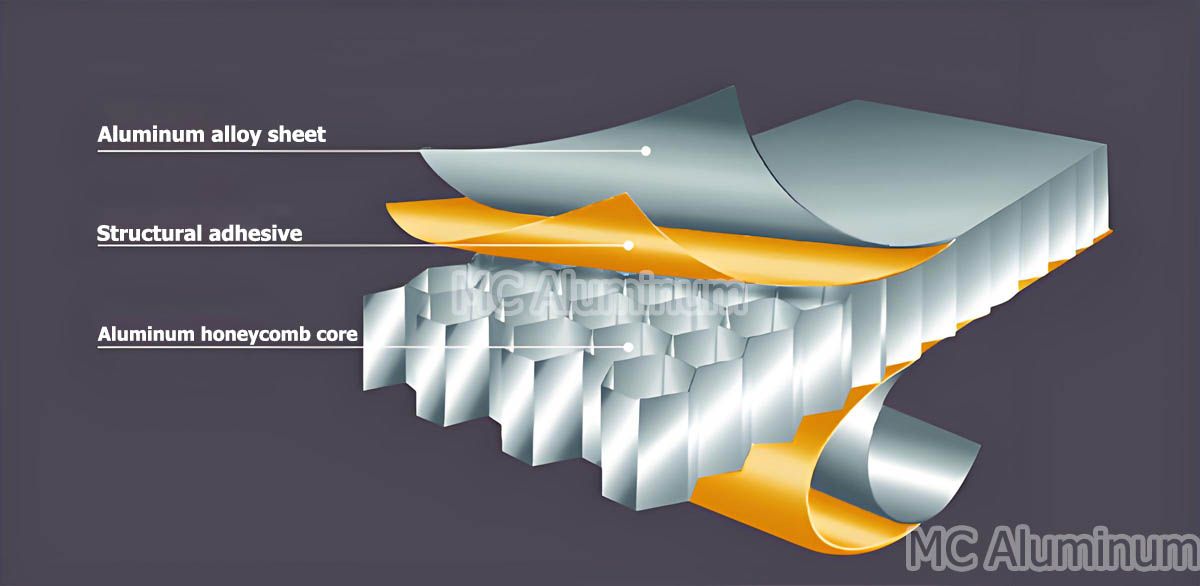
The aluminum honeycomb core is made from a hexagonal honeycomb core formed with 3003 aluminum foil. It is produced by bonding multiple layers of aluminum foil together and then expanding them into a regular honeycomb structure. The aluminum foil thickness is generally 0.02–0.06 mm, and common aluminum honeycomb cell side lengths include 5 mm, 6 mm, 8 mm, 10 mm, 12 mm, and other specifications.
3003 aluminum foil belongs to the Al-Mn aluminum-manganese alloy series. Due to the addition of an appropriate amount of manganese (Mn), its strength is approximately 10% higher than that of 1100 aluminum foil. Finished products made from 3003 aluminum foil are not easily deformed, have flat end faces, smooth edges without burrs, and provide excellent panel flatness after adhesive bonding and lamination.
In the field of honeycomb core manufacturing, 3003 aluminum foil usually undergoes strict rolling and annealing processes to achieve specific hardness levels, such as H18, H19, or O temper, in order to meet subsequent requirements for gluing, stacking, expanding, and stretching. Most high-demand honeycomb cores use H18 temper. H18 represents a hard temper, meaning the aluminum foil has undergone full work hardening and has the highest strength and hardness, ensuring precise hexagonal honeycomb dimensions and strong rebound performance after stretching.
The 3003 aluminum foil produced by MC Aluminum features a clean, degreased surface and strong adhesive bonding performance. With dedicated degreasing equipment and imported cleaning agents, the foil surface is kept free of oil stains, ensuring firm bonding, reduced risk of adhesive peeling, and a longer service life.
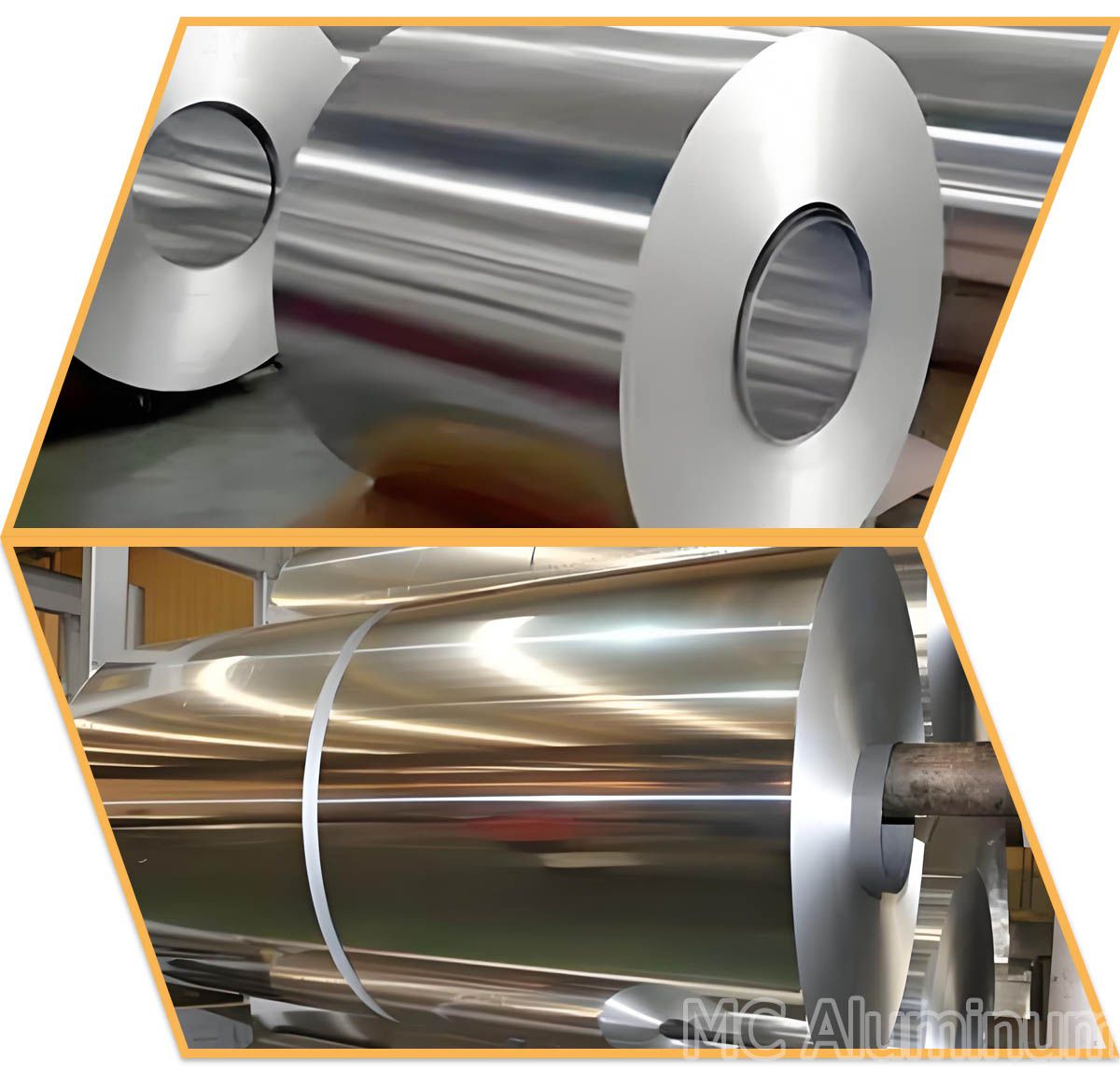
Technical Parameters of 3003 Honeycomb Foil
| Item | Specification |
| Alloy | 3003 |
| Temper | O, H14, H16, H18, H22, H24 |
| Thickness | 0.016–0.2 mm |
| Width | 100–1600 mm |
| Length | C |
| Tensile Strength | ≥ 140 MPa |
| Elongation | ≥ 2% |
| Thermal Conductivity | ≈ 235 W/(m·K) |
| Typical Products | Electronic foil, honeycomb foil, container foil, etc. |
| MOQ | 1-3 tons |
Core Performance Advantages of 3003 Honeycomb Aluminum Foil
1. Excellent Formability
3003 aluminum foil has good plasticity and ductility. During the stretching process of honeycomb core production, it is not prone to cracking and can form a uniform and regular hexagonal structure.
2. Good Corrosion Resistance
With the addition of manganese, 3003 aluminum alloy shows excellent corrosion resistance in humid environments, marine environments, and industrial environments.
3. Outstanding Lightweight Advantage
The aluminum honeycomb structure has low density, with a weight only about one-third that of steel, greatly reducing structural load and improving overall energy efficiency.
4. High Specific Strength and Rigidity
The honeycomb structure offers excellent compressive strength and rigidity, making it a typical "lightweight yet strong" engineering material.
5. Good Thermal Conductivity and Sound Insulation
The honeycomb core structure provides good thermal conductivity, while its internal cavity structure also offers certain sound insulation and vibration damping effects.
Main Application Fields of 3003 Aluminum Foil
1. Aerospace
Used in aircraft interior panels, flooring, partitions, and other structural components, combining lightweight performance with high strength.
2. Building Curtain Walls and Decoration
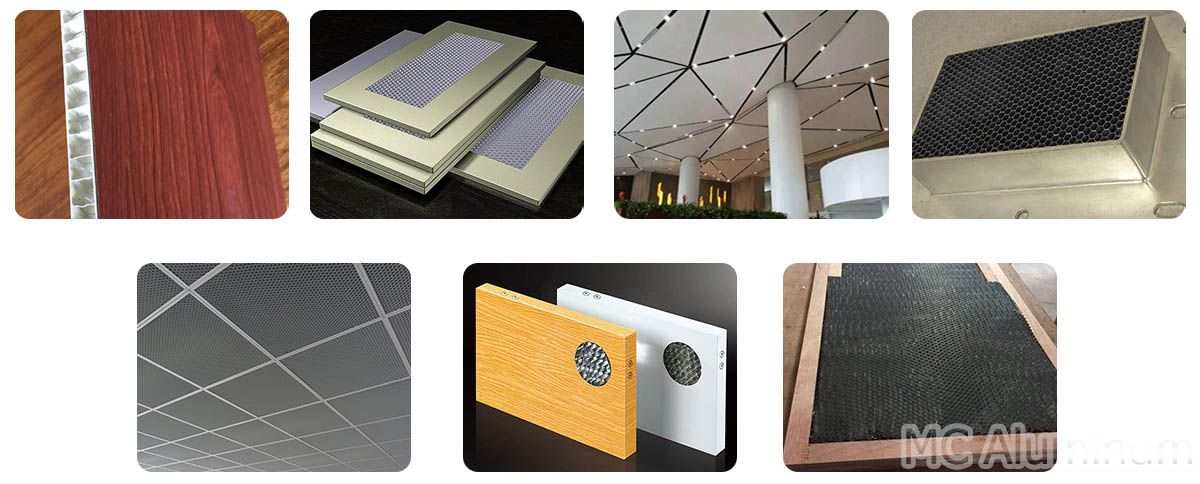
Aluminum honeycomb panels are widely used in high-end building curtain walls, ceiling systems, and interior decoration.
3. Rail Transit
Used in the interiors of high-speed trains and subway carriages to improve safety and comfort.
4. New Energy Vehicles
Applied in battery boxes, protective structures, and other key components.
5. Furniture and Electronics Industry
Used in high-end furniture panels and structural parts of electronic products.
Aluminum Foil Production Process
The production of honeycomb aluminum foil typically involves the following key steps:
Melting and Casting: Control chemical composition to ensure alloy uniformity.
Hot Rolling and Cold Rolling: Multiple rolling passes are carried out to reach the target thickness.
Annealing Treatment: Adjust material hardness and ductility.
Finishing and Slitting: Ensure dimensional accuracy and surface quality.
Surface Treatment Optional: Such as gluing, pretreatment, and other processes.
High-quality aluminum foil not only requires uniform thickness, but also stable mechanical properties and excellent surface cleanliness to ensure the reliability of subsequent bonding processes.
FAQ
1. Why is 3003 aluminum foil commonly used for honeycomb cores?
3003 aluminum foil is an aluminum-manganese anti-rust aluminum alloy with good corrosion resistance, processing performance, and moderate strength. When used in honeycomb core production, it can meet stretching and forming requirements while ensuring good structural stability. Therefore, it is widely used in aluminum honeycomb panel core materials.
2. What is the difference between 3003 aluminum foil and 1100 aluminum foil?
1100 aluminum foil is industrial pure aluminum, featuring good plasticity and easy processing, but relatively low strength. 3003 aluminum foil contains manganese, giving it better strength and corrosion resistance. For honeycomb core products requiring higher strength and durability, 3003 aluminum foil has greater advantages.
3. What is the common thickness of 3003 aluminum foil for honeycomb cores?
The common thickness of 3003 aluminum foil for honeycomb cores is generally 0.03 mm to 0.08 mm. The specific thickness depends on the honeycomb cell size, honeycomb core height, composite panel application, and customer production equipment requirements. Different application scenarios require different thicknesses, and customized specifications are available.
4. What temper should be selected for 3003 aluminum foil used in honeycomb cores?
Common tempers include H18, H19, and O temper. H18 and H19 tempers have higher strength and are suitable for honeycomb cores requiring greater structural stability. O temper aluminum foil is softer and has better ductility, making it suitable for certain processes that require higher formability. The actual selection should be based on the honeycomb core production process and final application.
5. How is the surface cleanliness required for bonding ensured?
Surface quality is critical for honeycomb core production. Our aluminum foil has the following features:
Oil-free or low-oil surface control
Strict degreasing process
Clean packaging to prevent contamination
This ensures strong bonding during honeycomb core manufacturing.
6. Is a honeycomb core made of 3003 aluminum foil easy to deform?
A honeycomb core made from high-quality 3003 aluminum foil has good structural stability and is not prone to obvious deformation. However, if the aluminum foil thickness is uneven, mechanical properties are unstable, adhesive quality is poor, or processing control is improper, problems such as core collapse, uneven stretching, and local deformation may still occur.
7. Are samples available before bulk ordering?
Yes. We provide free samples in small quantities for quality evaluation. Freight costs are usually borne by the buyer.
8. How is the aluminum foil packaged?
Standard export packaging includes:
Wooden pallets or wooden cases
Moisture-proof packaging
Anti-collision protection
Customized packaging can also be provided upon request.