
With the continuous development of electrical appliances, air conditioners, refrigerators, freezers, and various refrigeration equipment have increasingly higher requirements for heat exchange materials. As an important raw material for heat exchanger fins, 8011 H22 hydrophilic coated aluminum foil is gaining growing attention in the refrigeration equipment manufacturing industry due to its good formability, stable mechanical strength, excellent hydrophilic performance, and corrosion resistance.
This article will provide a detailed introduction to 8011 H22 hydrophilic aluminum foil.
What Is 8011 H22 Hydrophilic Coated Aluminum Foil?
8011 is an aluminum alloy grade belonging to the aluminum-iron-silicon alloy series. Compared with pure aluminum grades such as 1100, 8011 alloy contains appropriate amounts of iron and silicon, which significantly improves its strength and stamping performance while maintaining good thermal conductivity. This is the key reason why air conditioner fins do not crack or deform during high-speed stamping production.
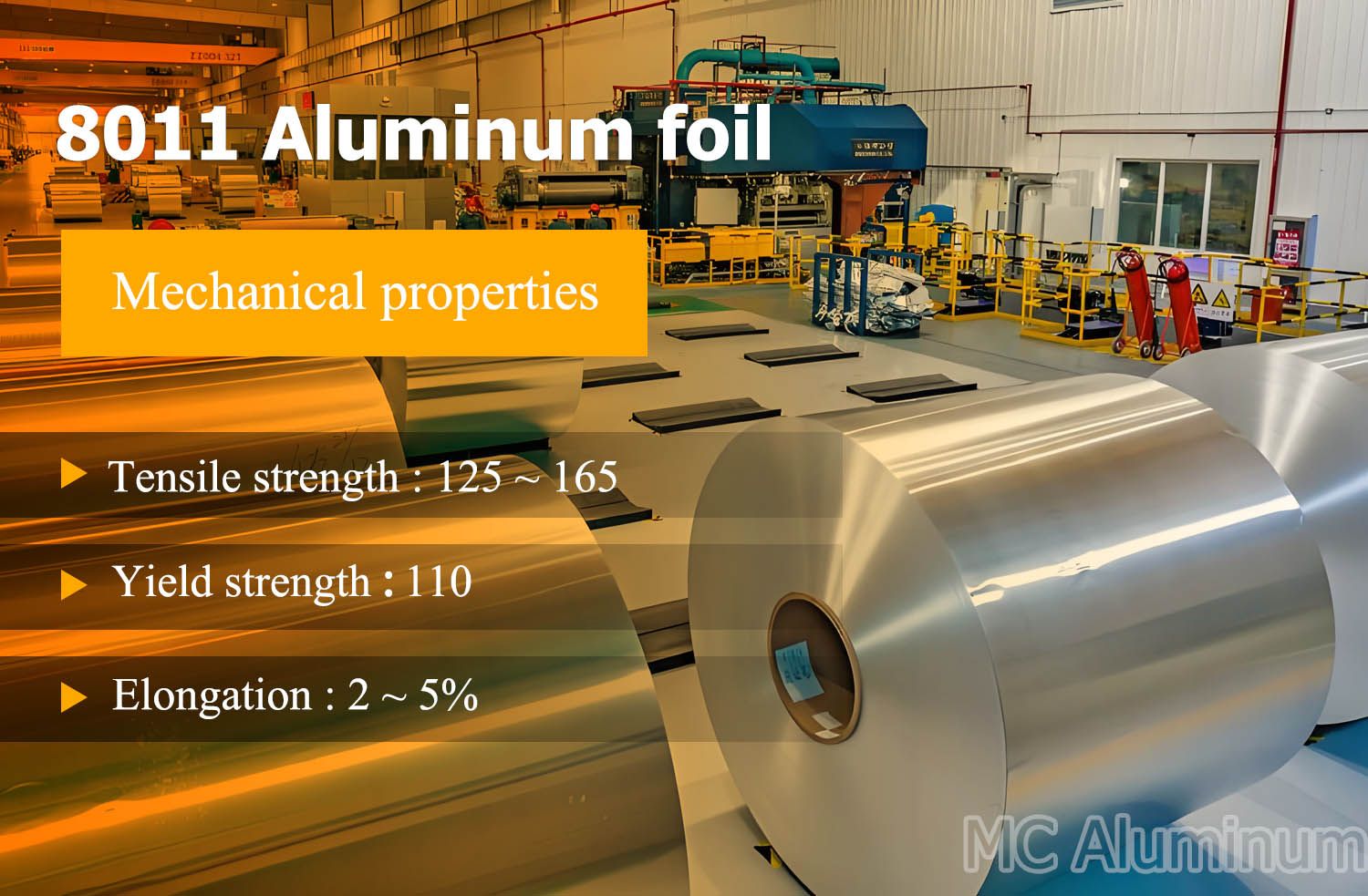
H22 is a temper designation, indicating that the material has been strain-hardened and then partially annealed. This temper gives the aluminum foil a "semi-hard" mechanical state, providing sufficient strength to support the fin structure while maintaining good elongation for stamping and forming. Typical mechanical properties include a tensile strength of 125–165 MPa and an elongation of 2%–5%.
The hydrophilic coating is a functional coating applied to the surface of aluminum foil through a special process. It completely changes the physical properties of the aluminum foil surface-from hydrophobic to hydrophilic.
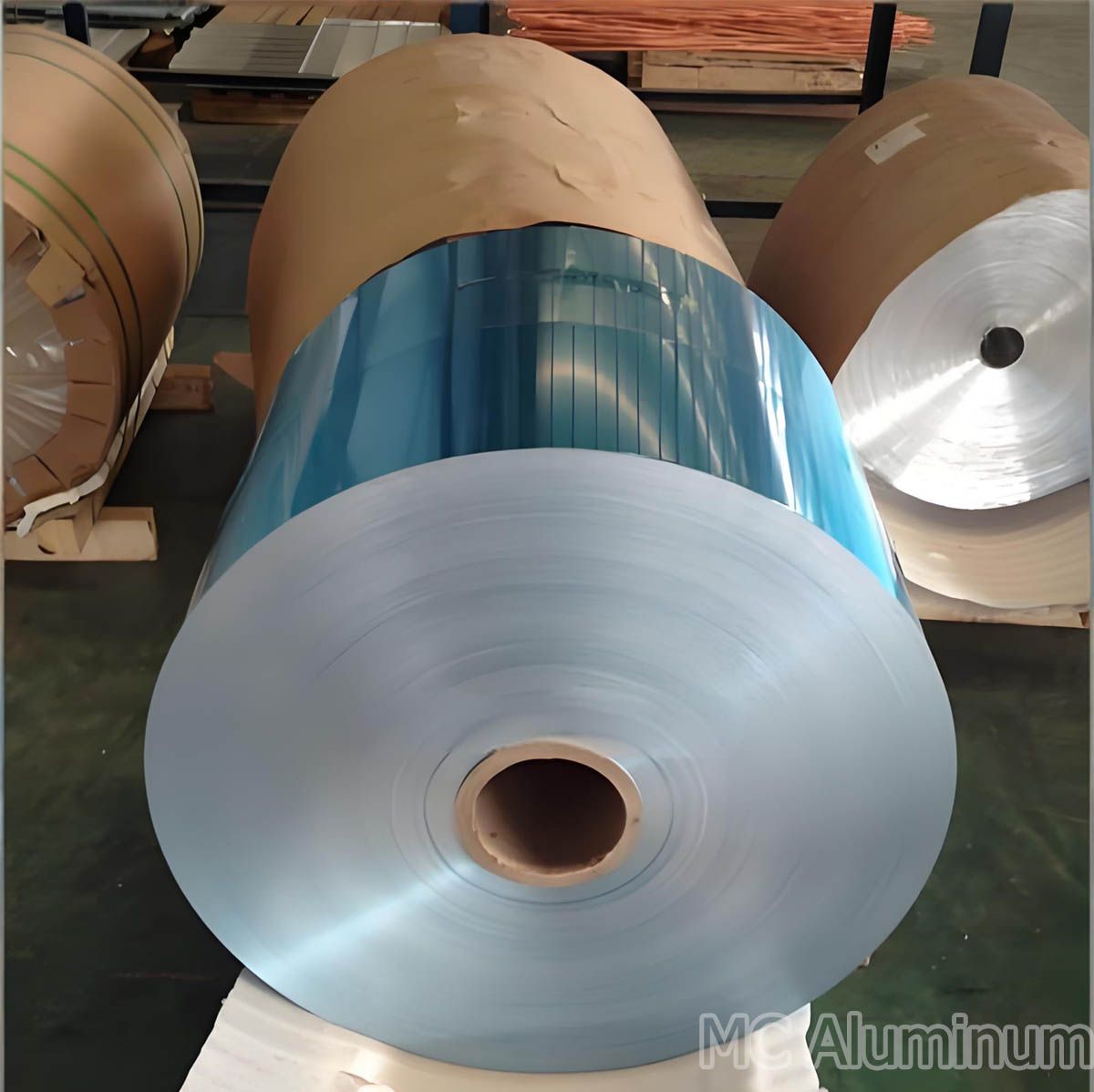
Function of the Hydrophilic Coating
Ordinary bare foil has a hydrophobic surface. When an air conditioner is operating, the condensate water generated on the surface of the heat exchanger condenses into water droplets. These droplets not only obstruct airflow and reduce heat exchange efficiency, but also form "water bridges" between fins, blocking airflow channels. In addition, accumulated moisture may promote mold growth and cause unpleasant odors.
Hydrophilic coated aluminum foil effectively solves these problems. On a hydrophilic surface, condensate water quickly spreads into a uniform water film instead of forming droplets.
Compared with ordinary bare foil, 8011 H22 hydrophilic coated aluminum foil offers five core advantages:
1. Improved Heat Exchange Efficiency
Condensate water is evenly distributed on the surface and does not block the gaps between fins due to droplet accumulation, thereby improving heat exchange efficiency by approximately 5%.
2. Enhanced Corrosion Resistance
The hydrophilic coating itself provides anti-corrosion protection and can effectively prevent oxidation and corrosion of the aluminum foil substrate. Some high-end products can even achieve corrosion resistance of more than 500 hours in neutral salt spray testing.
3. Anti-Mold, Antibacterial, and Odor-Free Performance
The coated surface is less likely to accumulate dirt and mold, helping prevent air conditioner odors from the source.
4. Reduced Operating Noise
Because condensate water does not form droplets, vibration and noise caused by airflow impacting water droplets are reduced.
5. Environmentally Friendly and Healthy
It helps prevent oxidized aluminum powder from being blown into indoor air, reducing potential adverse effects on human health.
Product Parameters
| Parameter | Typical Range |
| Alloy | 8011 |
| Temper | H22 |
| Thickness | 0.08 mm ~ 0.5 mm |
| Width | 15 mm ~ 1000 mm |
| Length | 1000 mm ~ 16000 mm |
| Coil Inner Diameter | Φ75 mm, 150 mm, 300 mm, 400 mm, 500 mm |
| Color | Blue, gold, black, bronze, etc. |
| Coating Type | Single-sided or double-sided |
| Standards | GB/T, ASTM, EN |
| Applications | Condensers, heat exchangers, refrigerators, automotive air conditioners, etc. |
| MOQ | 1–3 tons |
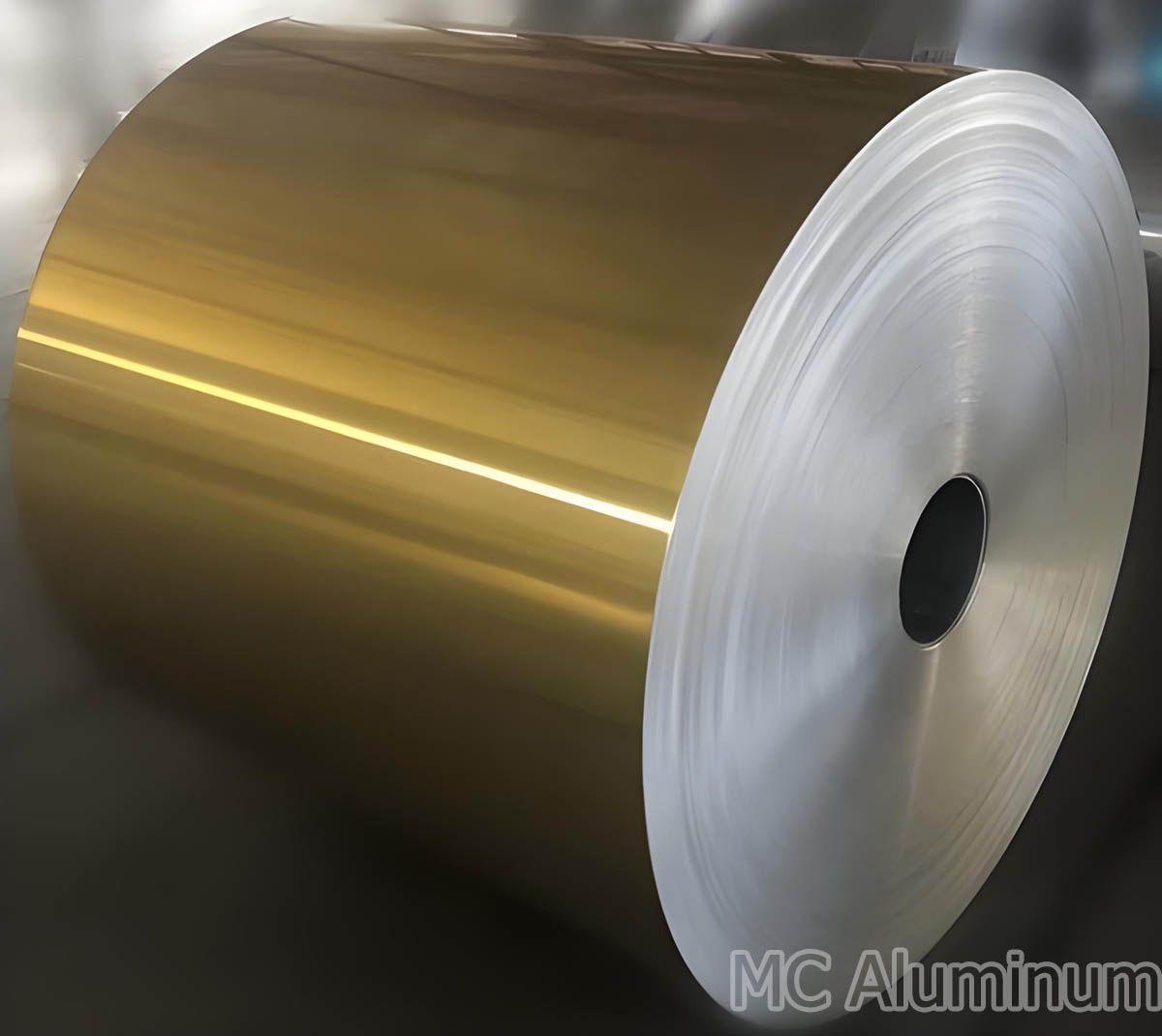
Colors of Hydrophilic Coated Aluminum Foil
| Color Type | Appearance Features | Common Applications |
| Blue Hydrophilic Aluminum Foil | Light blue or blue surface, uniform color, high recognizability | Air conditioner evaporator and condenser fins |
| Gold Hydrophilic Aluminum Foil | Golden yellow or light gold surface, attractive appearance | High-end air conditioners and commercial refrigeration equipment |
| Transparent Hydrophilic Aluminum Foil | Retains the natural aluminum color, with a slightly glossy or matte surface | General heat exchanger fins and standard refrigeration equipment |
| Green Hydrophilic Aluminum Foil | Light green or green surface, soft color tone | Customized products and environmentally friendly products |
| Black Hydrophilic Aluminum Foil | Black or dark gray surface, strong coverage | Special heat exchangers, solar energy systems, or heat exchange systems |
Manufacturing Process of Hydrophilic Aluminum Foil
Producing high-quality hydrophilic coated aluminum foil involves multiple precisely controlled processes:
High-purity aluminum alloy melting
Continuous casting
Hot rolling
Cold rolling
Intermediate annealing
Precision thickness control
Surface cleaning
Hydrophilic coating application
High-temperature curing
Quality inspection
Coil packaging
Each process is strictly monitored to ensure uniform coating adhesion, consistent thickness, and reliable product performance.
Application Scenarios
Household Air Conditioners: Condenser and evaporator fins for indoor and outdoor units.
Central Air Conditioning Systems: Heat exchange components for large commercial air conditioning systems.
Automotive Air Conditioning: Heat exchangers for vehicle refrigeration systems.
Refrigeration and Freezing Equipment: Evaporators for refrigerators, freezers, and refrigerated display cabinets.
Industrial Heat Exchange Equipment: Coolers, radiators, air coolers, and other heat exchange equipment.