
With the rapid development of new energy vehicles, energy storage systems, consumer electronics, and electric tools, lithium-ion batteries have become an indispensable part of the modern energy landscape.
In fact, aluminum foil is one of the core materials used as the cathode current collector in lithium batteries. It not only conducts and collects electrons, but also directly affects battery internal resistance, rate performance, cycle life, safety, and manufacturing yield. This article explores the definition, classification, production process, standards, and importance of lithium battery aluminum foil in the battery industry.
What Is Battery Aluminum Foil?
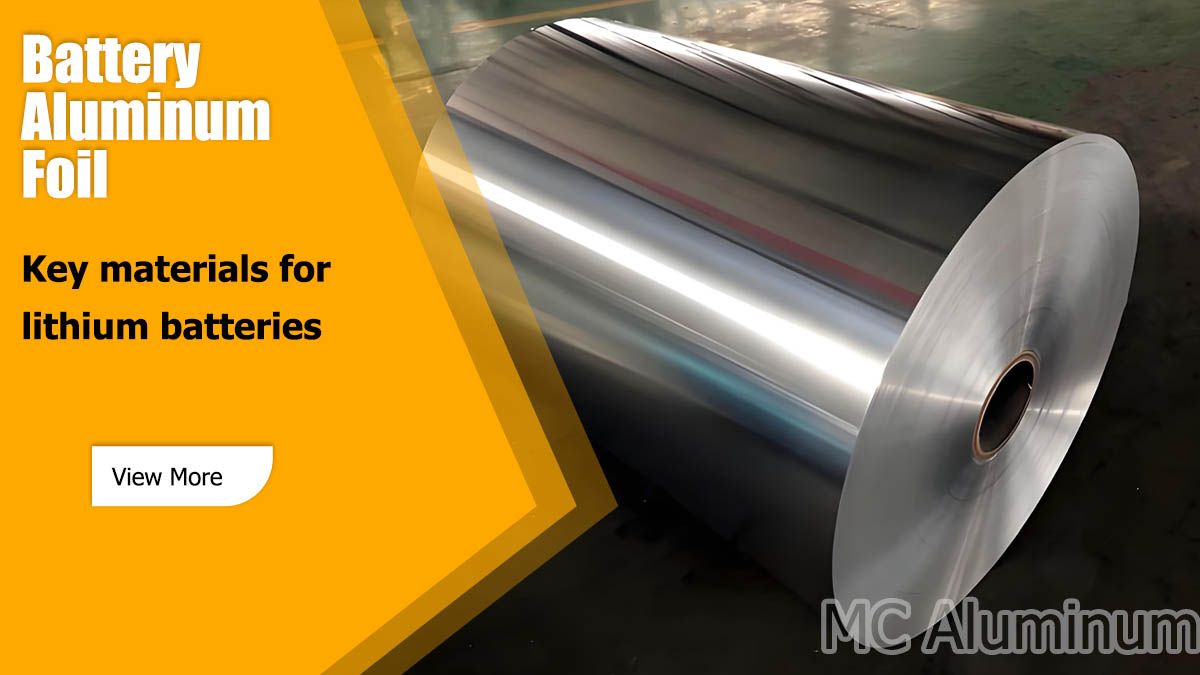
Battery aluminum foil, also known as battery-grade aluminum foil, refers to aluminum foil used for the cathode of lithium-ion batteries. Its thickness is typically around 0.01 mm, or 10 μm. Its primary function is to collect the current generated by the active materials in the battery and transmit it as a larger current to the external circuit.
Compared with conventional aluminum foil, battery aluminum foil has higher purity and more stringent performance requirements.
Classification of Battery Aluminum Foil
According to the application, battery aluminum foil can be divided into aluminum foil for polymer lithium-ion batteries and aluminum foil for lithium cobalt oxide batteries.
Aluminum Foil for Polymer Lithium-Ion Batteries
Aluminum foil for polymer lithium-ion batteries is typically treated with double-sided oxidation treatment, coated with special polymers, and subjected to specialized corrosion-resistant treatment to adapt to the specific operating environment of polymer lithium batteries.
Aluminum Foil for Lithium Cobalt Oxide Batteries
Aluminum foil for lithium cobalt oxide batteries generally uses single-sided oxidation treatment. Its surface may be coated with special organic coatings to improve corrosion resistance and electrical conductivity.
The Role of Battery Aluminum Foil in Lithium-Ion Batteries
1. Current Collection and Conduction
Aluminum foil has excellent electrical conductivity. It can efficiently collect the current generated or received by cathode active materials and transmit it to the battery tabs and external circuit. This function is essential for ensuring high-performance battery output.
2. Supporting Active Materials
As the substrate for coating cathode materials, aluminum foil provides mechanical support and helps maintain the structural integrity of the electrode.
3. Electrochemical Corrosion Resistance
At high cathode potentials, typically above 3.8 V, aluminum forms a dense oxide film on its surface. This oxide layer helps resist electrolyte corrosion and supports long-term cycling stability.
4. Thermal Stability
Aluminum foil can withstand the heat generated during battery charging and discharging, helping ensure battery stability and safety under demanding operating conditions. This is particularly important for applications such as electric vehicles, which require long periods of high-load operation.
5. High Cost Performance
Compared with other metal current collector materials, aluminum foil offers excellent cost performance. Its abundant raw material supply and mature processing technology make it a preferred current collector material for lithium batteries.
Common Aluminum Alloys Used for Battery Aluminum Foil
The most widely used battery foil alloys are 1xxx-series pure aluminum alloys, represented by 1060, 1070, and 1235. Depending on the requirements of specific battery components, 3xxx-series aluminum-manganese alloys and 8xxx-series aluminum-iron-silicon alloys may also be used.
1xxx Series Battery Foil
The 1xxx series is currently the most widely used material category for battery aluminum foil. These alloys have high aluminum purity, generally above 99.0%, providing excellent electrical conductivity, thermal conductivity, and processing performance. They meet the core requirements of current collectors very effectively.
Main Grades: 1060 and 1235 are the most common grades. Other widely used grades include 1050, 1100, 1145, and 1070.
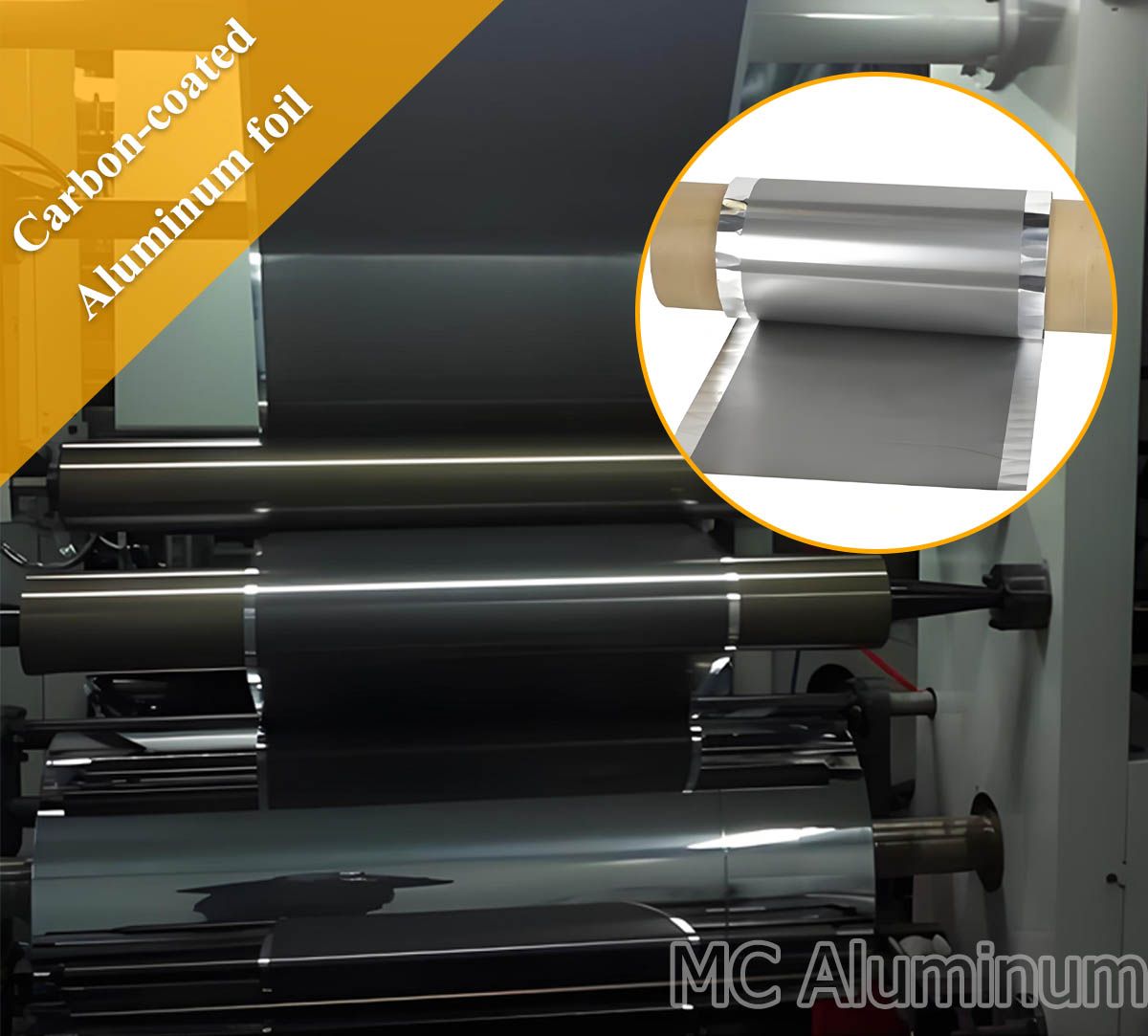
Typical Applications: 1060 and 1050 are commonly used for cathode current collectors and battery tabs where high electrical conductivity is required. Due to its balanced overall performance, 1235 is widely used for cathode current collectors and as a base material for carbon-coated aluminum foil.
3xxx Series Battery Foil
The 3xxx series contains manganese, giving it higher mechanical strength than pure aluminum. When cathode current collectors require improved mechanical properties, 3003 alloy may be selected.
8xxx Series Battery Foil
The 8xxx series belongs to the aluminum-iron-silicon alloy group. Common grades include 8011 and 8021 aluminum foil, which offer better formability and barrier properties. These materials are generally not used as current collectors; instead, they are mainly used for aluminum-plastic film in pouch battery packaging and for components such as battery tabs.
| Alloy Series | Common Grades | Main Application |
| 1xxx Pure Aluminum | 1060, 1235, 1050, 1100, 1145, 1070 | Cathode current collectors; the most important and widely used application |
| 3xxx Aluminum-Manganese | 3003 | Cathode current collectors requiring higher strength |
| 8xxx Aluminum-Iron-Silicon | 8021, 8011 | Aluminum-plastic film for pouch battery casings, battery tabs, and related components |
Temper of Battery Aluminum Foil
In addition to alloy grade, the temper of aluminum foil is also critical because it determines hardness and other mechanical properties.
H18 Temper
H18 indicates a full-hard temper obtained through strain hardening. It is one of the most commonly used tempers for battery aluminum foil, particularly for cathode current collector foil.
O Temper
O temper refers to annealed material. It is the softest state and offers the best plasticity and formability. It is commonly used for aluminum foil applied in aluminum-plastic films, where excellent forming performance is required.
H19 Temper
H19 provides higher strength and is suitable for thinner-gauge battery aluminum foil, especially ultra-thin foil products.
In addition, H14, H22, and H24 are tempers with different degrees of strain hardening and may also be selected according to specific application requirements.
Typical Specifications
| Item | Specification |
| Material | Aluminum, purity >99.3% |
| Temper | O,H18,H19,etc |
| Electrical Resistivity | 2.7 × 10⁻⁸ Ω·m |
| Areal Density | 41 ± 2 g/m² |
| Length | 350 m |
| Width | 280 mm |
| Thickness | 12 μm |
| Density | 3.741 g/cm³ |
| Tensile Strength | ≥200 MPa |
| Core Diameter | 76 mm / 3 inches |
Chemical Composition
| Element | Content |
| AL | >99.35% |
| Si | <0.25% |
| Cu | <0.05% |
| Zn | <0.10% |
| Mn | <0.05% |
| Fe | <0.30% |
Key Characteristics of Battery Aluminum Foil
Battery aluminum foil must possess several key characteristics in order to perform effectively in lithium batteries:
1. High Electrical Conductivity: Low electrical resistivity ensures efficient current transmission.
2. High Mechanical Strength: It must withstand pressure from cathode materials and mechanical stress during battery assembly.
3. Good Chemical Stability: It should not easily react with internal battery components.
4. Oxidation Resistance: It should maintain stable performance in air without significant oxidation.
5. Thin Gauge and Flexibility: It can be produced in ultra-thin gauges while retaining sufficient flexibility.
6. Cost Efficiency: It offers a favorable balance of production cost and performance.
Production Process of Battery Aluminum Foil
The production of high-quality battery aluminum foil involves much more than simple rolling. It includes a series of precision processes, including melting, casting, hot rolling, cold rolling, annealing, finishing, slitting, and inspection.
1. Melting and Casting
First, aluminum melt is prepared according to the target alloy grade. Strict composition control, degassing, slag removal, and filtration are carried out to reduce impurities and ensure high melt purity.
The quality of the aluminum melt directly affects the internal structure, surface quality, and pinhole control capability of subsequent aluminum sheet and foil products.
2. Hot Rolling and Cold Rolling
After casting, aluminum slabs undergo hot rolling and multiple cold-rolling passes to gradually reduce the material to the required thickness.
For battery aluminum foil in the 10–20 μm range, rolling requires highly precise thickness control systems. Rolling oil, roll surface condition, tension control, and equipment precision all have a direct impact on final product quality.
3. Annealing Treatment
Annealing is a critical process for determining the mechanical properties and surface cleanliness of aluminum foil.
By properly controlling annealing temperature, holding time, and heating and cooling curves, manufacturers can improve grain structure, balance tensile strength and elongation, remove rolling oil residues, and enhance surface cleanliness and coating compatibility.
4. Slitting and Finishing
After annealing and inspection, aluminum foil is slit, rewound, and packaged according to customer requirements. During slitting, burr control, edge quality, winding tension, and coil shape must be carefully managed.
This helps prevent edge burrs, loose winding, telescoping, and layer misalignment, which may otherwise affect downstream coating and processing operations.
5. Inspection and Packaging
Finished battery aluminum foil is generally inspected for:
Thickness accuracy
Pinhole rate
Surface quality
Mechanical properties
Electrical conductivity
Wettability
Flatness and coil shape
Packaging is designed to provide moisture resistance, dust protection, and impact protection, preventing the foil from moisture exposure, oxidation, scratches, or deformation during transportation and storage.
Main Applications of Lithium Battery Aluminum Foil
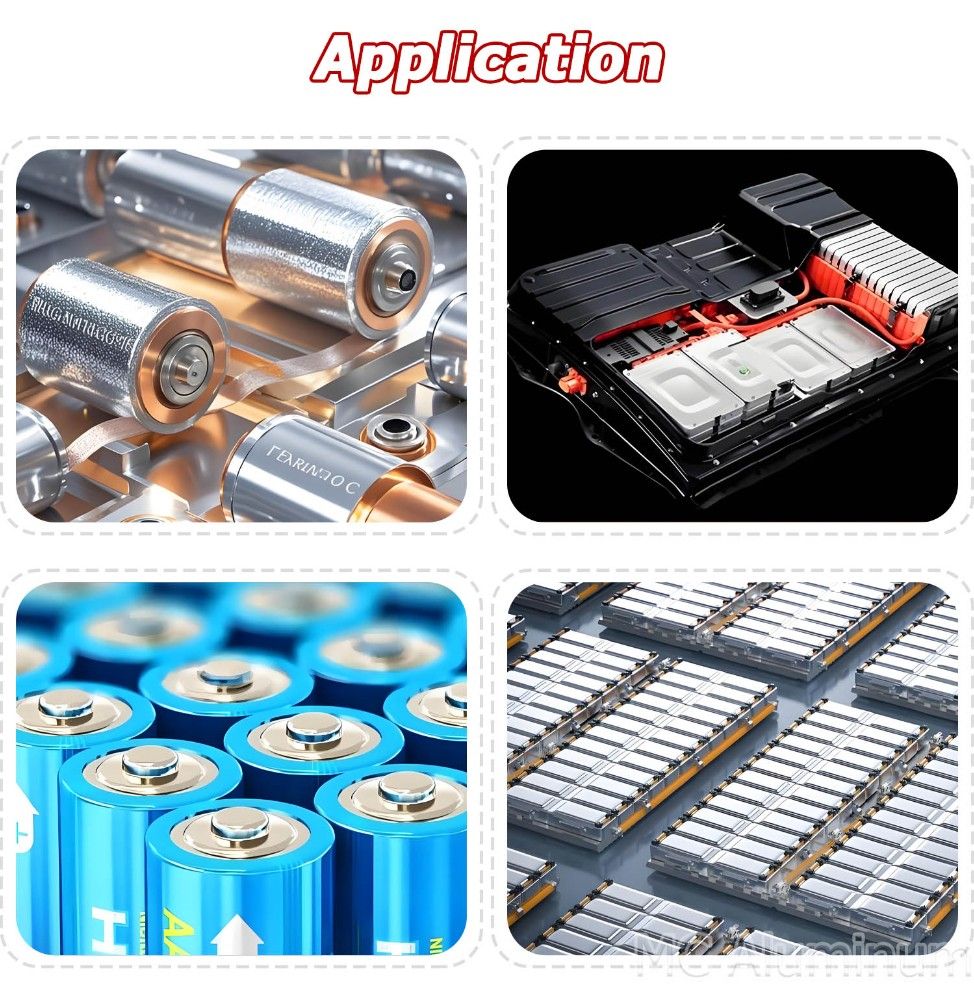
Battery aluminum foil is widely used in the following fields:
New energy vehicle power batteries
Energy storage batteries
Consumer electronics batteries
Power tools and light electric transportation
Solid-state batteries and emerging battery technologies
Impact of Battery Aluminum Foil on Battery Performance
The quality and performance of battery aluminum foil directly influence battery performance and stability.
First, high-quality aluminum foil provides excellent electrical conductivity, allowing efficient current transfer, reduced internal resistance, and improved charging and discharging efficiency.
Second, aluminum foil must have sufficient mechanical strength and corrosion resistance to ensure stable battery operation under different conditions.
In addition, foil thickness, surface smoothness, surface cleanliness, and flatness can all affect battery performance and service life. Therefore, selecting appropriate aluminum foil materials and manufacturing processes is essential during battery production.
Future Development Trends of Battery Aluminum Foil
Driven by the rapid advancement of the new energy industry, battery aluminum foil is evolving in several key directions:
Ultra-Thin Foil
Developing 5–6 μm or even thinner aluminum foil while maintaining adequate strength can further increase battery energy density.
High Strength and High Toughness
By optimizing alloy composition and rolling processes, manufacturers can improve tensile strength and elongation to meet the requirements of high-speed winding and battery assembly.
Higher Surface Cleanliness
Reducing surface contamination and pinhole defects can improve coating uniformity, product consistency, and battery manufacturing yield.
Functional Surface Treatment
Carbon coating, ceramic coating, and other surface treatment technologies can improve active material adhesion, reduce interfacial resistance, and enhance fast-charging performance.
Green Manufacturing
Energy-saving rolling, environmentally friendly cleaning, and scrap recycling processes are increasingly important for reducing carbon emissions and meeting global sustainability requirements.
Environmental Sustainability
The industry is also developing more environmentally responsible production methods, reducing environmental impact, and increasing the use of recyclable materials.
FAQ
1. Why is battery aluminum foil mainly used for lithium battery cathodes?
Aluminum offers excellent electrical conductivity, corrosion resistance, and lightweight properties. It remains stable at the operating potential of lithium battery cathodes, making it widely used as a cathode current collector. Copper foil is generally used as the current collector for anodes.
2. What are the common thicknesses of battery aluminum foil?
Common thicknesses include 6 μm, 8 μm, 9 μm, 10 μm, 12 μm, 15 μm, and 20 μm. Among these, ultra-thin aluminum foil in the 6–10 μm range has become an important development direction because it helps improve battery energy density.
3. Which aluminum alloys are commonly used for battery aluminum foil?
Common alloys include 1060, 1070, 1100, and 1235. Different alloys offer different advantages in electrical conductivity, mechanical properties, and processing performance, allowing them to meet the needs of power batteries, energy storage batteries, and consumer electronics batteries.