
As an aluminum foil manufacturer, we produce 8011 aluminum foil for hookah applications with controlled alloy composition, stable thickness tolerance, clean surface quality, and packaging suitable for international B2B supply. Hookah foil may appear to be a simple consumable, but its performance depends on several manufacturing details, including temper, rolling accuracy, pinhole control, degreasing level, slitting quality, and hygienic packing.
For hookah brands, foil converters, distributors, and private label buyers, the best 8011 aluminum foil for hookah should be easy to shape, resistant to tearing during perforation, stable under heat, and safe for contact with charcoal-heated tobacco or herbal mixtures. Our production approach focuses on consistent industrial quality rather than short-term visual appearance only.
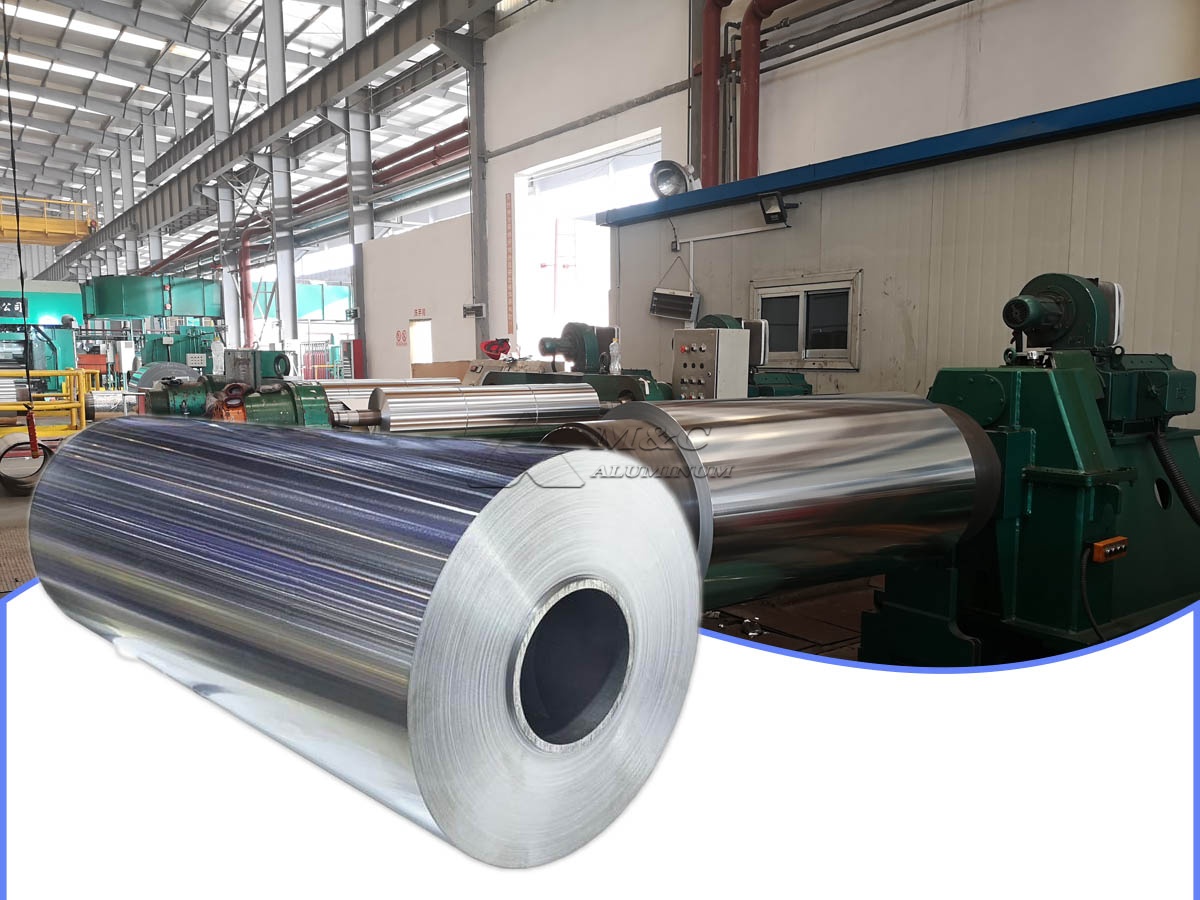
Why 8011 Aluminum Foil Is Suitable for Hookah
8011 aluminum foil is widely used in food packaging, household foil, container lids, and specialty foil products because it offers a practical balance of formability, strength, cleanliness, and cost efficiency. For hookah use, the alloy is especially valued because it can be rolled into thin gauge foil while maintaining sufficient toughness during handling and punching.
The typical alloy system of 8011 contains aluminum as the base metal, with controlled additions of iron and silicon. This composition supports good rolling performance and improves mechanical stability compared with very soft pure aluminum grades. In hookah foil production, this is important because the foil must be flexible enough to wrap tightly over the bowl, while also strong enough to avoid cracking when holes are made.
As a factory, we normally recommend 8011-O aluminum foil for hookah foil sheets and rolls. The O temper provides full softness and high ductility, which helps users press the foil smoothly over the rim of the hookah bowl. For buyers who require higher tensile strength for automatic packing or special perforation processes, we can evaluate alternative temper conditions based on test requirements.
Our 8011 Aluminum Foil product range can be supplied for hookah foil, food wrapping foil, household foil, flexible packaging, and other applications where stable foil properties are required.
Key Requirements for Hookah Aluminum Foil
Hookah aluminum foil is exposed to direct radiant heat from charcoal and must form a stable barrier between the charcoal and the tobacco mixture. Therefore, several quality factors should be considered before purchase.
First, thickness must be consistent. If the foil is too thin, it may tear easily or overheat unevenly. If it is too thick, it may be difficult to pierce and less convenient for end users. Common hookah foil thickness ranges from 0.012 mm to 0.030 mm, with 0.015 mm, 0.018 mm, 0.020 mm, and 0.025 mm being popular choices.
Second, the foil surface should be clean and free from visible oil stains, black spots, oxidation marks, and foreign particles. Since hookah foil is used near consumable material, surface cleanliness is a core factory control point.
Third, pinhole level must be controlled. Aluminum foil becomes more sensitive to pinholes as thickness decreases. A well-managed rolling and inspection process helps reduce the risk of local tearing, leakage, and uneven heating.
Fourth, the foil must have suitable softness and elongation. Hookah users often stretch the foil over a bowl and then perforate it. Poor elongation can lead to splitting around the holes, while excessive brittleness can cause product complaints.
Recommended Technical Parameters
The following table shows our typical factory specification range for 8011 aluminum foil for hookah. Final values can be adjusted according to brand requirements, market standards, packing method, and converting equipment.
| Item | Typical Specification | Notes |
|---|---|---|
| Alloy | 8011 | Food contact grade aluminum alloy |
| Temper | O | Fully soft, suitable for forming and wrapping |
| Thickness | 0.012 mm to 0.030 mm | Popular gauges include 0.018 mm and 0.020 mm |
| Width | 100 mm to 600 mm | Custom widths for rolls or sheets |
| Inner Core | 76 mm or 152 mm | Paper core, plastic core available on request |
| Surface | One side bright, one side matte | Double bright can be discussed for special orders |
| Tensile Strength | 60 MPa to 110 MPa | Depends on thickness and temper |
| Elongation | 1 percent to 5 percent | Controlled according to gauge |
| Pinhole Control | Factory inspection standard | Stricter standard available for thin gauges |
| Wettability | Grade A or according to order | Important for laminating or coating if required |
| Surface Cleanliness | No visible oil stain, dust, or foreign matter | Controlled during rolling, annealing, and packing |
| Packing | Export wooden case or pallet | Moisture-proof wrapping for sea shipment |
| Compliance | RoHS, food contact documentation on request | Based on buyer destination and test scope |
Thickness Selection for Hookah Foil
Selecting the correct thickness is one of the most important steps when purchasing hookah aluminum foil. Different markets have different habits, and product positioning also affects thickness choice.
For economy hookah foil rolls, 0.012 mm to 0.015 mm can be used when cost control is the main priority. This range is flexible and light, but it requires good handling and careful perforation. It is usually selected for general disposable use.
For standard hookah foil, 0.018 mm to 0.020 mm is a balanced option. It offers better tear resistance, more stable heat distribution, and easier operation for most users. Many B2B buyers choose this range for retail rolls, pre-cut sheets, and OEM hookah foil boxes.
For heavy-duty hookah foil, 0.025 mm to 0.030 mm provides stronger resistance to tearing and deformation. It is suitable for premium hookah foil sheets, high-heat charcoal use, or markets where consumers prefer thicker foil. However, thicker foil increases material cost and may require stronger punching tools.
As a manufacturer, we usually advise buyers to test at least two adjacent thicknesses before confirming mass production. For example, if a market currently uses 0.018 mm foil, testing 0.020 mm may help determine whether improved strength justifies the additional cost.
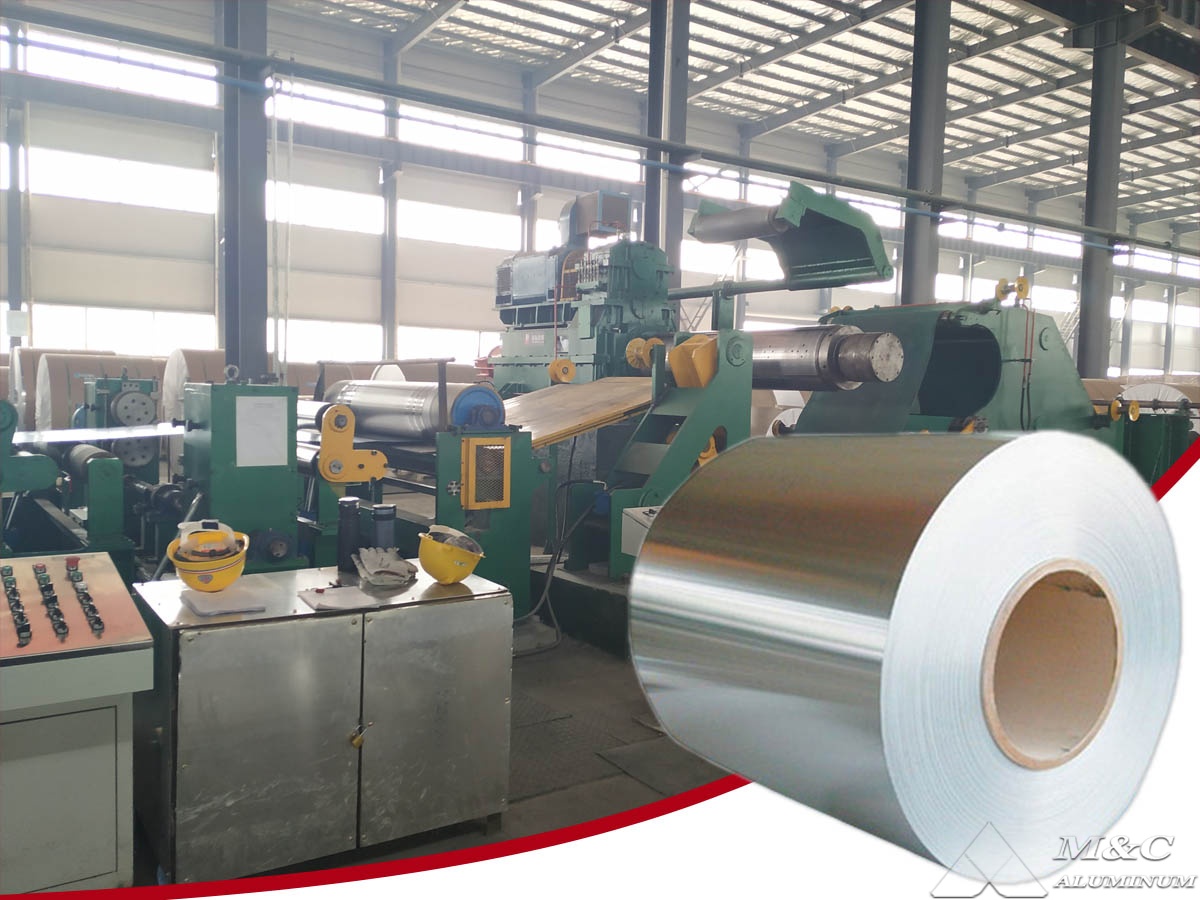
Surface Quality and Cleanliness Control
Surface quality is critical for hookah foil because the foil is handled directly by consumers and exposed to heat during use. In our factory process, surface control begins with aluminum ingot selection and continues through casting, cold rolling, foil rolling, annealing, slitting, inspection, and packing.
During rolling, we control rolling oil quality and filtration to reduce the risk of stains and contamination. During annealing, we use appropriate temperature and time settings to remove rolling oil residue and achieve stable softness. After annealing, the foil should have a clean surface without noticeable odor, visible oil marks, or serious color difference.
Slitting quality is also important. Hookah foil rolls require smooth edges, accurate width, and stable winding tension. Poor slitting may cause burrs, telescoping, edge cracks, or roll deformation during transport. For pre-cut hookah foil sheets, flatness and dimensional accuracy are important for automatic or semi-automatic packaging.
We can supply jumbo rolls for converters, small rolls for retail packing, and pre-cut sheet material for further processing. Buyers who also source kitchen or catering foil can compare related specifications with our Household Aluminum Foil production line, although hookah foil normally requires closer attention to perforation performance and heat stability.
Food Contact and Compliance Considerations
Hookah aluminum foil is commonly requested with food contact related documentation, even though the final use environment differs from standard food wrapping. International buyers may require test reports according to destination market regulations, customer brand policies, or retail channel standards.
As a factory, we can support inspection documents such as material certificate, chemical composition report, mechanical property report, and third-party testing when requested before order confirmation. Common concerns include heavy metals, RoHS substances, odor, and general food contact suitability.
It is important for buyers to define the exact regulatory requirement before production. Different markets may refer to different standards, and the testing scope can affect lead time and cost. We recommend confirming target country, product label requirements, packaging language, and whether the foil will be sold as hookah foil, shisha foil, or multipurpose aluminum foil.
Roll, Sheet, and OEM Packing Options
We supply 8011 aluminum foil for hookah in several formats. Jumbo rolls are suitable for buyers with their own slitting, rewinding, embossing, perforating, or packing equipment. Small rolls are suitable for private label packaging and retail distribution. Pre-cut sheets are suitable for convenience-focused hookah brands and online sales channels.
Typical retail roll sizes may include 12 cm, 15 cm, or 30 cm widths, with customized roll lengths according to market preference. Sheet sizes can be produced according to customer bowl dimensions and packing format. For pre-cut products, flatness, sheet separation, and packing cleanliness are important control points.
OEM packing can include color box, printed carton, shrink wrap, label, or neutral export packing. Before quotation, buyers should provide foil thickness, width, length per roll, roll weight, core size, packing quantity, logo artwork if applicable, and destination port. These details allow us to calculate material consumption, packaging cost, container loading, and production schedule accurately.
Manufacturing Process and Quality Inspection
Our 8011 hookah aluminum foil is produced through a controlled process designed for stable mechanical properties and surface consistency. The main stages include raw material preparation, casting or hot rolling, cold rolling, foil rolling, intermediate annealing if required, final annealing, slitting, inspection, and export packing.
Quality inspection includes thickness measurement, width measurement, surface inspection, mechanical testing, pinhole inspection, winding condition check, and packing verification. For export orders, we pay particular attention to moisture protection because aluminum foil can be affected by condensation during long-distance sea transport. Rolls are packed with moisture-proof film, desiccant when needed, protective paper, strong pallets, and wooden cases suitable for international logistics.
For repeat orders, we keep production records to support batch traceability. Stable traceability is important for B2B buyers who need consistent supply under private label contracts or annual purchasing agreements.
How to Specify the Best 8011 Aluminum Foil for Hookah
To receive an accurate quotation and suitable technical recommendation, buyers should provide clear specifications. The most important information includes alloy, temper, thickness, width, roll length or sheet size, surface requirement, packing method, quantity, compliance requirement, and destination port.
If the buyer is developing a new hookah foil product, we can provide a reference specification based on target market level. For a standard market product, 8011-O aluminum foil with 0.018 mm to 0.020 mm thickness is often a practical starting point. For premium heat-resistant positioning, 0.025 mm or thicker may be considered. For cost-sensitive channels, thinner gauges can be evaluated with careful attention to tear resistance and user handling.
Conclusion
The best 8011 aluminum foil for hookah is not determined by alloy grade alone. It depends on a complete combination of thickness accuracy, O temper softness, clean surface, controlled pinholes, stable slitting, safe packing, and reliable factory quality management. As an aluminum foil manufacturer, we produce hookah foil for B2B buyers who need consistent material performance, export-ready documentation, and flexible OEM supply.
For hookah foil rolls, pre-cut shisha foil sheets, and private label aluminum foil projects, 8011-O remains a practical and proven alloy choice. With proper specification and production control, it can meet the requirements of daily use, retail packaging, and brand-oriented hookah accessory supply.