
With the rapid growth of the fast food, takeaway, and ready-meal industries, the safety, formability, and cost-efficiency of food container materials have become critical considerations. Among various options, food grade aluminum foil has emerged as a core material for container manufacturing due to its outstanding overall performance.
What is "Food Grade" Aluminum Foil?
Not all metal foils are suitable for direct contact with food. So-called "food-grade" aluminum foil refers to products in which impurity levels-specifically heavy metals such as lead and cadmium are strictly controlled during the manufacturing process. Furthermore, these products undergo a surface degreasing treatment to ensure the absence of residual lubricants, thereby complying with safety standards for food-contact materials (such as those established by the FDA and the EU).
Common alloy grades used for food container materials primarily include 8011, 3003, and 3004. These alloys undergo high-temperature annealing treatments, resulting in a soft texture that is both non-toxic and odorless, while also exhibiting exceptional barrier properties.
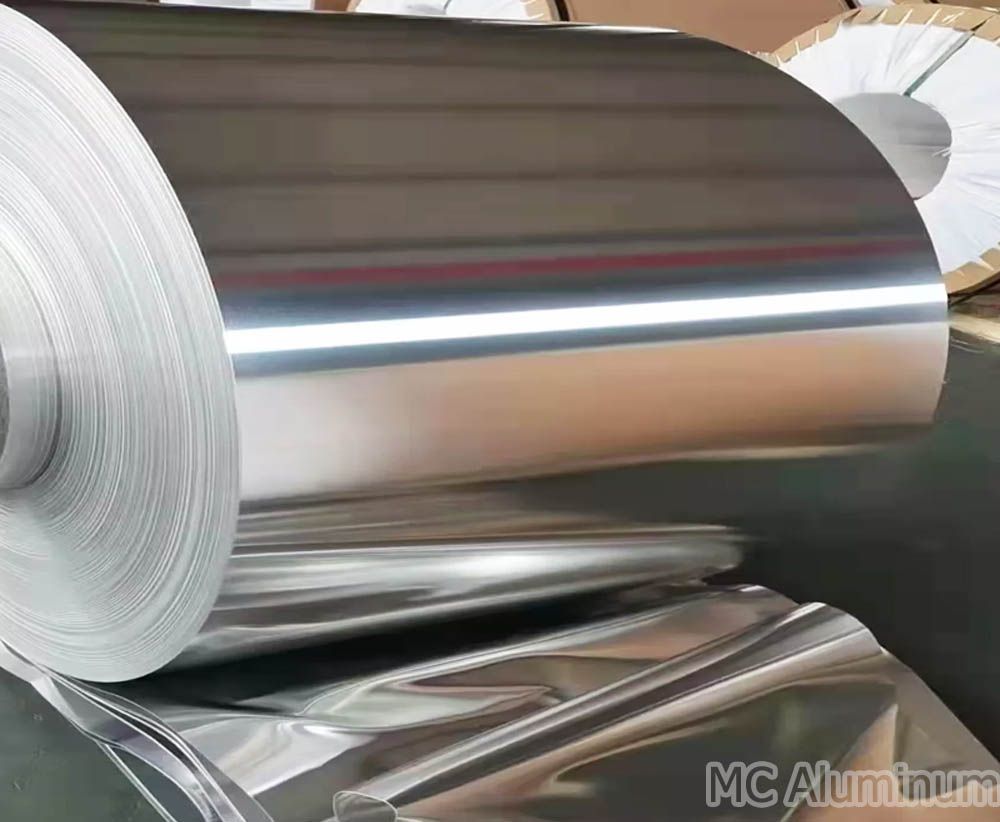
Common Alloy Types and Performance Comparison
| Alloy | Features | Temper | Advantages | Applications |
| 3003 | Good formability and corrosion resistance | H24 / H22 | Cost-effective, suitable for standard containers | Fast food boxes, takeaway containers |
| 3004 | Higher strength than 3003, better pressure resistance | H19 / H22 | Suitable for deep drawing and high-strength containers | Airline meal trays, premium takeaway boxes |
| 8011 | Excellent barrier and sealing performance | O / H22 | Ideal for lids or lightweight containers | Sealing foil, light-duty containers |
| 8006 | High elongation and tensile strength | O / H22 | Crack-resistant, suitable for wrinkle-free containers | High-end disposable aluminum foil containers |
Specifications of Container Aluminum Foil
| Alloy | 8011, 8006, 3003, 3004 |
| Temper | O, H18, H19, H22, H24, etc. |
| Thickness | 0.03 mm – 0.20 mm |
| Width | 1000 mm – 1600 mm |
| Length | 1000 mm – 16000 mm |
| Type | Wrinkled / Wrinkle-free |
| Surface Finish | One side bright / Double side bright |
| Tensile Strength | 90 – 180 MPa |
| Elongation | ≥ 4% – 12% |
| Pinhole Rate | ≤ 60 pcs/m² |
| Surface Tension | ≥ 32 dyne/cm |
Performance Advantages of Aluminum Foil for Containers
1. Excellent Barrier Properties
Aluminum foil provides a complete barrier against air, light, and moisture, preserving food flavor and extending shelf life.
2. Superior Thermal Conductivity
It ensures fast heating and cooling, allowing food to cook or freeze evenly.
3. Lightweight (Material Reduction)
Thin yet strong, aluminum foil reduces packaging weight and material consumption.
4. Low Temperature Resistance
Maintains structural integrity under freezing conditions, ideal for cold chain logistics and frozen foods.
5. Safe and Hygienic
Non-toxic and suitable for direct food contact. High-temperature annealing ensures sterilization and prevents bacterial growth.
6. Recyclability
Aluminum foil containers have a recycling rate of over 95% and do not release toxic gases when incinerated.
Types of Aluminum Foil Containers
Wrinkled Containers (Conventional Type)
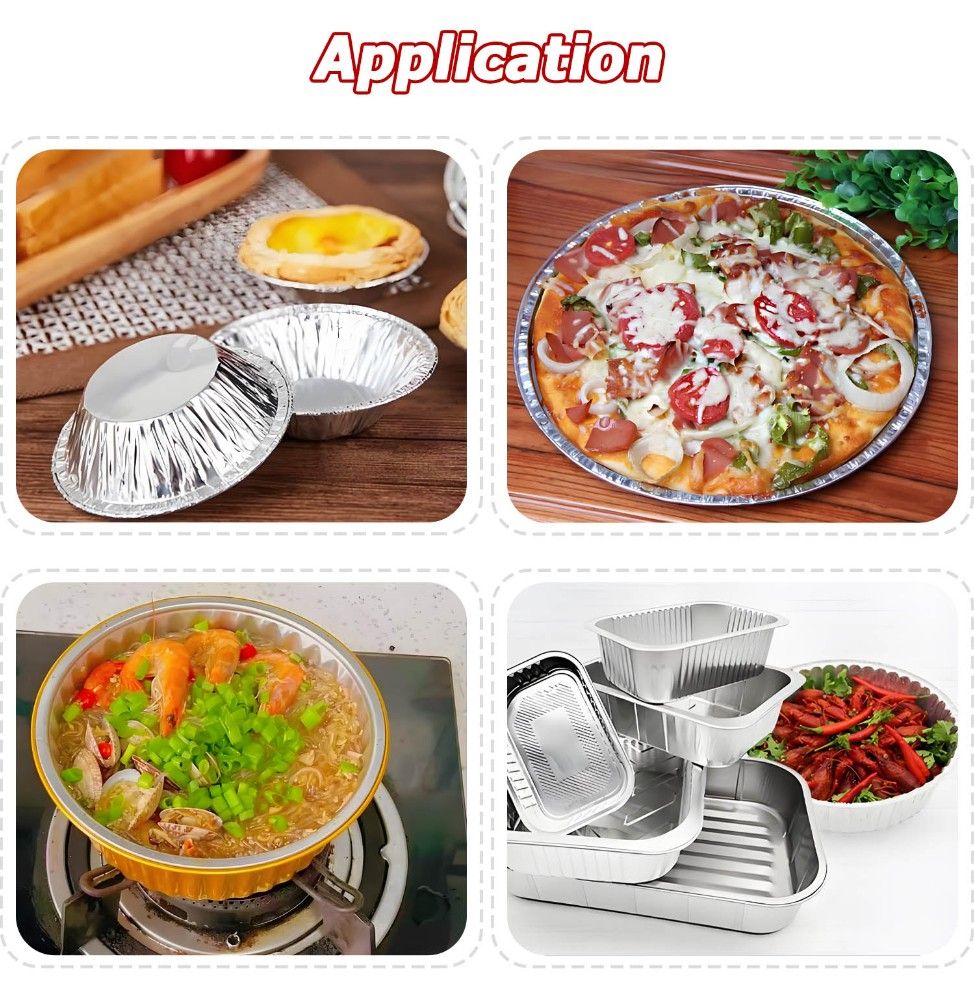
Typically, 8011 or 3003 alloys are used. This material is relatively rigid; during the stamping process, excess material is absorbed through the formation of wrinkles. It is low-cost and well-suited for high-volume, single-use takeout applications.
Wrinkle-Free Containers (Premium Type)
Currently, in-flight catering, high-end pre-prepared meals, and popular trendy products-such as the "Zihaiguo" brand-widely utilize "wrinkle-free meal containers" manufactured from 8006 alloy. These containers not only offer a more aesthetically pleasing appearance but also feature uniform wall thickness and superior load-bearing capacity. The primary technical challenge in this manufacturing process lies in optimizing the material's "cup-drawing value" (which typically needs to exceed 6); only by meeting this specific standard can one guarantee that the container's base remains unthinned and free of cracks during the deep-drawing process.
How to Choose High-Quality Aluminum Foil for Containers?
If you are a packaging manufacturer or food brand, focus on the following key factors:
| Indicator | Requirement | Impact |
| Flatness | No wrinkles, no bright spots | Determines forming yield rate |
| Surface Quality | A-grade water brushing test (no oil residue) | Ensures food safety |
| Mechanical Properties | High elongation, moderate tensile strength | Prevents cracking during deep drawing |