
What Is Cigarette Aluminum Foil Paper?
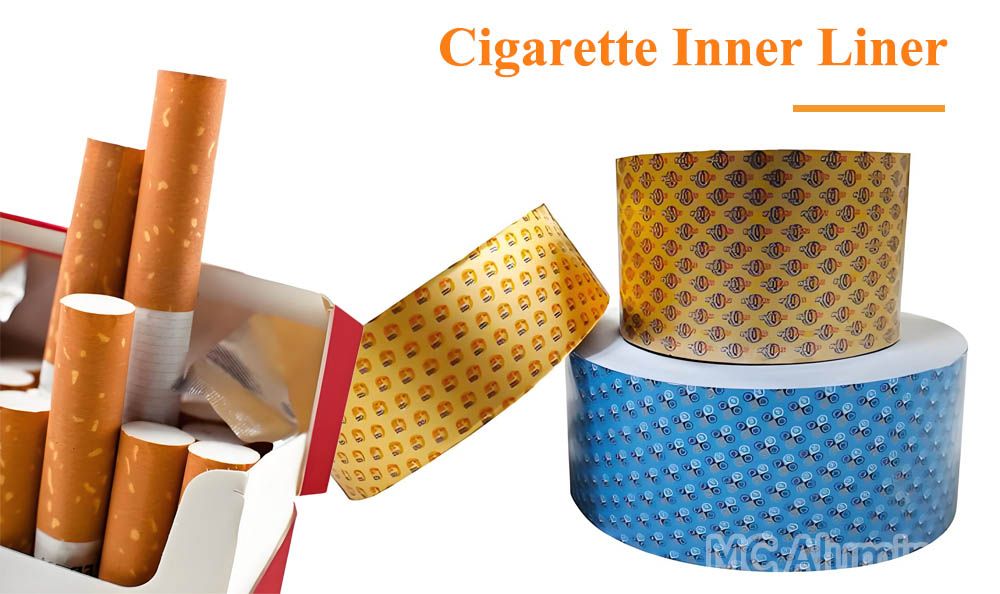
Cigarette aluminum foil paper (also known as Cigarette Inner Liner or Cigarette Aluminum Foil) is typically manufactured by laminating soft aluminum foil such as 8011-O or 1235-O with colored paper. This structure provides excellent softness and ductility, allowing the foil to deform during wrapping without springing back. The most common colors are gold and silver.
Positioned inside the cigarette pack or carton, it wraps the cigarette bundle, helping maintain freshness and stability during storage and transportation.
Composition of Cigarette Inner Liner Foil
Cigarette inner liner (Cigarette Inner Liner) generally consists of a composite structure of two layers of paper + one layer of aluminum foil, with the paper, foil, and adhesive layer working together to provide moisture barrier, oxygen resistance, aroma retention, and premium packaging appearance.
1. Paper Layer
The paper layer is available in two types: standard paper and specialty paper.
Standard cigarette paper:
Produced using high-strength base paper, offering good adsorption and moisture-regulating properties to absorb moisture and odors from tobacco.Specialty paper:
Manufactured using more premium raw materials such as mesh paper, cotton paper, or bamboo pulp paper, enhancing tactile feel and improving internal packaging aesthetics.
| Type | Tobacco specific paper,Special paper(Yarn paper, cotton paper, bamboo pulp paper) | |
| Paper Whiteness | ≥75 % | |
| Inner-liner Papper Grammage | 35±1.5 g/m2 | |
| Size | Thickness | 0.0060mm - 0.0105mm |
| Width | <1700 mm | |
2. Aluminum Foil Layer
The aluminum foil used for cigarette packaging is typically around 0.006 mm thick. Although extremely thin, it provides outstanding barrier properties by blocking oxygen, moisture, and external odors to preserve the tobacco’s original flavor.
Common aluminum alloys used include:1235, 1145, 8011, 8111, 8021, and 8079
These alloys are supplied in O-temper (soft state), offering excellent ductility, low pinhole rate, and high adaptability to composite lamination.
Typical thickness range:0.0055 mm / 0.006 mm / 0.0065 mm
| Alloy | 1235 1145 8011 8111 8021 8079 | |
| Temper | O | |
| Inner-liner Papper Grammage | 17±1.5 g/m2 | |
| Size | Thickness | 0.0060mm - 0.0105mm |
| Width | <1700 mm | |
3. Adhesive Layer
The adhesive layer bonds the paper and aluminum foil firmly and is crucial to composite quality.
The adhesive typically uses a specialized adhesive (commonly solvent-based or water-based) or a wax-based adhesive. This ensures long-term stable bonding strength between the paper layer and the aluminum foil layer, improving the adaptability and consistency of cigarette foil paper on high-speed packaging machines.
Why Cigarette Packaging Uses Aluminum Foil
Moisture and Oxygen Barrier
Aluminum foil locks in internal moisture and prevents external humidity and oxygen from entering, avoiding drying, mold growth, or oxidation of tobacco.Light Protection
Blocks visible and UV light, preventing nicotine degradation and oxidation of tobacco oils, extending shelf life.Aroma Preservation
Creates a sealed environment to retain volatile tobacco aroma compounds and prevent odor transfer.Mechanical Protection
Soft yet formable, the foil fits tightly around the cigarette bundle to maintain structural integrity during transportation.Hygiene and Cleanliness
Compared with plain paper, the foil layer more effectively blocks dust, oils, and contaminants.Enhanced Visual Appeal
Metallic gloss and embossing effects give a premium, fresh, and elegant appearance.Manufacturing Efficiency
Paper-foil composites combine barrier properties with printability at a cost-effective level, supporting high-speed mass production.
Customizable Cigarette Foil Paper Specifications
MC Aluminum provides small inventory options for sampling and testing and offers full customization based on customer specifications.
| Color | Customized according to your needs |
| Type | Roll |
| Grammage | 55±3 g/m2 |
| Thickness | upon yours |
| Tensile Strength | ≥18.75 N/15mm |
| Folding Strength | ≥20 Times |
| Molding Degrees | ≥30 Degree |
| WVTR | ≤3.0 g/m2.24h |
| Delivery Moisture | 6±2 % |
| Fluorescent Whiteness | ≤1.0% |
| Eab | ≤2.0 |
| Width | upon yours, normal from 80mm-86mm |
| Length | 1500m-1800m for you choose |
| Inner Dia | 76mm, special requirement acceptable |
Available Custom Inner Liner Types
Colored Cigarette Lining Paper
Mill-Finished Cigarette Lining Paper
Embossed Cigarette Lining Paper
Custom Logo Cigarette Lining Paper
Laser Holographic Inner Liner Paper
How to Choose the Right Cigarette Aluminum Foil Paper
1. Aluminum Purity & Thickness Uniformity
High-purity alloys such as 1235 provide superior ductility and barrier performance. Smaller thickness tolerance ensures stable packaging.
2. Composite Bonding Strength
Layers must be firmly bonded to prevent delamination, especially on high-speed packaging lines.
3. Surface Cleanliness & Gloss
The foil should be free of oil stains, particles, wrinkles, and defects to ensure optimal visual and packaging performance.
4. Pinhole Rate
Low pinhole density is critical for high-end tobacco products because it directly affects barrier properties.
5. Embossing Precision
Clear and uniform embossing improves folding performance and enhances the visual effect.
6. Supplier Capability & Quality System
Manufacturers equipped with continuous rolling mills, coating lines, and composite production lines can deliver more stable quality and reliable supply.