
As a manufacturer of battery aluminum foil, we understand that surface treatment is not an isolated finishing step. It is a controlled manufacturing process that directly affects electrode coating quality, current collector adhesion, electrical resistance, and long-term battery consistency.
Battery aluminum foil is primarily used as the cathode current collector in lithium-ion batteries. During electrode production, the foil must accept slurry coating uniformly while maintaining stable surface energy, controlled oxide characteristics, and low contamination levels. Surface treatment therefore connects aluminum rolling, cleaning, thermal processing, carbon coating, inspection, and packaging into one quality-controlled process.
Our battery aluminum foil surface treatment process is designed for cathode manufacturers producing lithium-ion batteries for electric vehicles, energy storage systems, consumer electronics, and industrial battery applications. We tailor the process route according to alloy, temper, foil thickness, coating method, and electrode chemistry.
Why Surface Treatment Is Important for Battery Aluminum Foil
The surface of untreated aluminum foil may contain residual rolling oil, natural oxide film, fine particles, moisture, or handling contamination. Even when these materials are present in very small quantities, they can affect electrode slurry wetting and reduce the bond between the active material layer and the aluminum substrate.
For a cathode current collector foil, the main objectives of surface treatment are:
Remove residual rolling oil and surface contaminants.
Control the aluminum oxide layer and prevent unstable surface conditions.
Improve wettability for water-based or solvent-based electrode slurries.
Increase coating adhesion and reduce the risk of delamination.
Support uniform electrical contact between the foil and electrode layer.
Improve process stability during high-speed coating, calendering, slitting, and cell assembly.
The appropriate battery aluminum foil surface treatment depends on the electrode design. Standard cleaned foil may be suitable for many conventional cathode applications. Carbon coated aluminum foil is often selected when improved conductivity, adhesion, and interface stability are required, particularly in high-loading electrodes or demanding lithium iron phosphate battery systems.
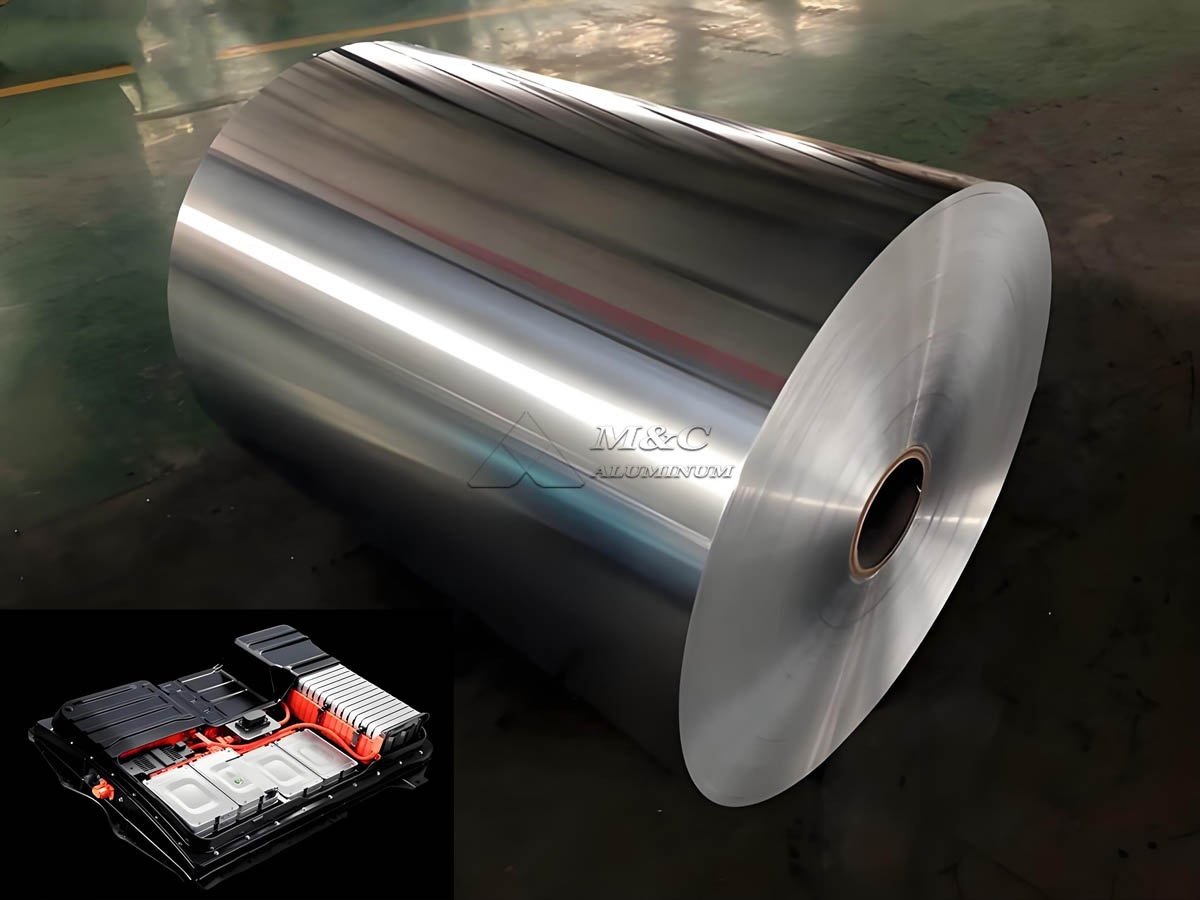
Base Foil Selection Before Surface Treatment
Surface quality begins with the base aluminum foil. A treatment line cannot fully correct defects caused by unsuitable alloy chemistry, poor rolling control, uneven thickness, or excessive inclusions. For this reason, we control the foil substrate before it enters the cleaning or coating process.
High-purity 1xxx series aluminum alloys are commonly used for lithium-ion battery cathode current collectors because of their electrical conductivity, formability, and stable processing behavior. Our 1100 Aluminum Foil can be supplied as a base material for battery foil applications where controlled thickness, flatness, and clean surface condition are required.
Key base foil characteristics include thickness tolerance, pinhole control, tensile strength, elongation, roughness, coil shape, edge quality, and residual oil level. For battery applications, the foil surface must also be free from scratches, dents, roll marks, corrosion spots, and foreign particles that could create coating defects or localized electrical irregularities.
Main Battery Aluminum Foil Surface Treatment Processes
1. Degreasing and Rolling Oil Removal
Aluminum foil rolling requires lubricants, and trace oil may remain on the foil surface after rolling and annealing. In battery aluminum foil production, residual oil must be carefully controlled because it can interfere with slurry spreading and binder adhesion.
We use thermal degreasing, controlled annealing, and, where required, cleaning processes to reduce oil residues. The process is balanced to achieve a clean surface without over-processing the foil or causing oxide growth beyond the specified range. Treatment temperature, line speed, atmosphere, and coil condition are monitored to maintain consistent results from coil to coil.
2. Aqueous Cleaning
Aqueous cleaning is used where a higher level of surface cleanliness is required. The process can include mild alkaline cleaning, rinsing, neutralization, and drying. Chemical concentration and contact time must be controlled carefully because aggressive cleaning can attack the aluminum surface and change its roughness or oxide characteristics.
Our cleaning process focuses on removing contamination while maintaining foil integrity. We use controlled rinse water quality and drying conditions to reduce the risk of ionic residue, water staining, or particulate deposition after treatment.
3. Surface Activation
Surface activation improves the interaction between aluminum foil and electrode slurry. Depending on the application, activation may be achieved through corona treatment, plasma treatment, or specially controlled chemical routes.
Corona and plasma treatment can increase surface energy by modifying the outermost foil surface. This supports improved slurry wetting and coating uniformity. However, activation effects can change over time, so treated foil must be handled, stored, and shipped under defined conditions to preserve its surface performance before electrode coating.
4. Carbon Coating
Carbon coating is a functional surface treatment applied to aluminum foil for selected battery designs. A thin conductive carbon layer can improve contact between the cathode active material and the current collector. It may also reduce interfacial resistance, improve coating adhesion, and support more stable electrode processing.
Carbon coated aluminum foil is commonly evaluated for lithium iron phosphate cathodes, high-rate batteries, and applications requiring enhanced conductivity at the electrode-current collector interface. Coating weight, thickness, resistance, adhesion, and surface uniformity must be controlled as a complete system rather than as independent values.
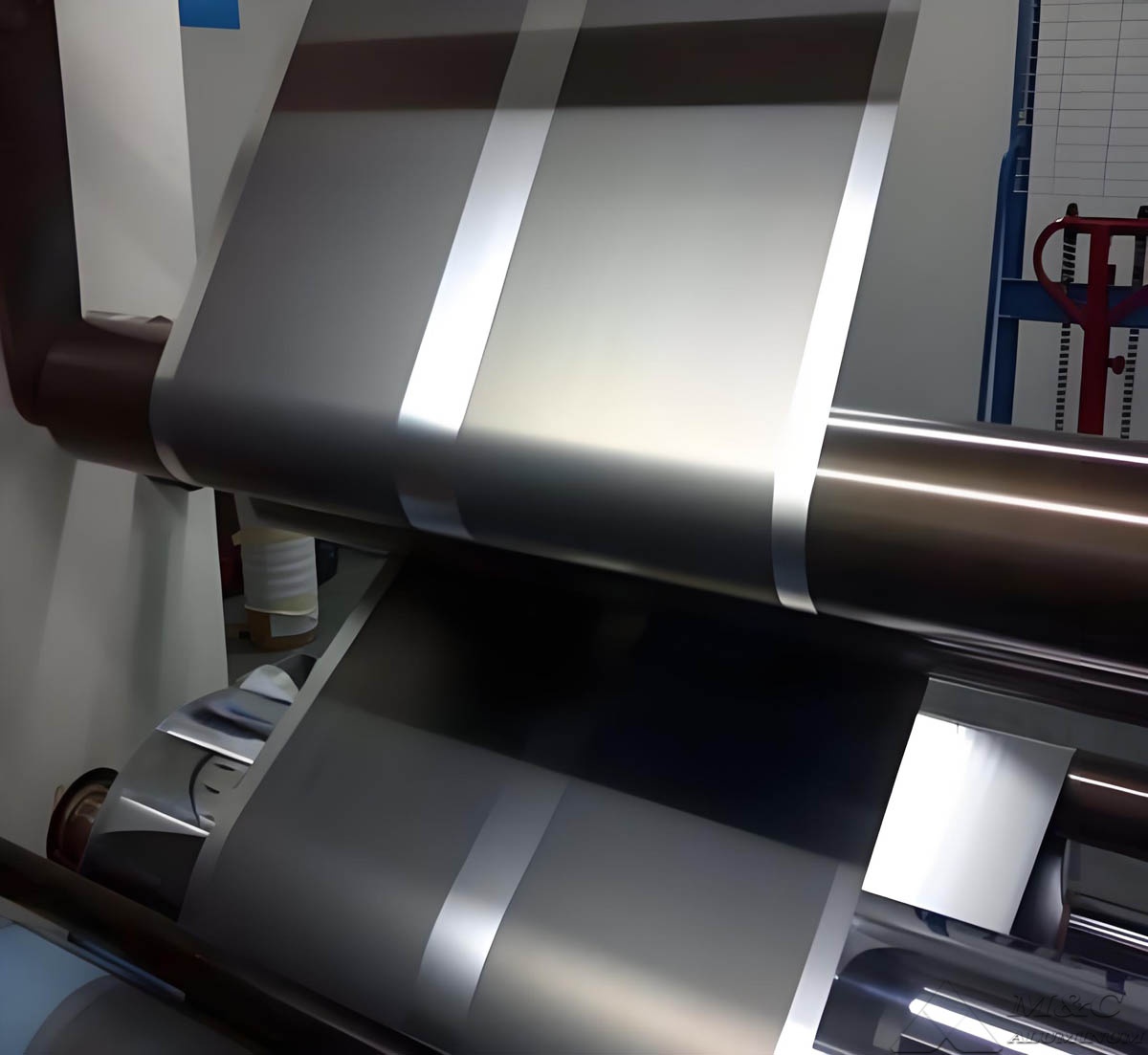
Typical Technical Parameters
The following table shows typical control items for battery aluminum foil surface treatment. Final requirements should be confirmed according to electrode formulation, coating equipment, battery chemistry, and customer specifications.
| Parameter | Typical Control Range or Requirement | Purpose |
|---|---|---|
| Aluminum alloy | 1050, 1060, 1070, 1100, 1235 | Provides conductivity and process stability |
| Foil thickness | 10 to 20 microns | Selected according to cell design and energy density target |
| Temper | O, H14, H16, or customer specified | Balances strength, elongation, and coating performance |
| Surface cleanliness | Low residual rolling oil, controlled by agreed test method | Supports slurry wetting and adhesion |
| Surface tension | Typically 38 dynes/cm or above after activation | Indicates improved coating wettability |
| Surface roughness Ra | Typically 0.15 to 0.50 microns | Supports coating anchorage while avoiding excessive variation |
| Carbon coating thickness | Typically 0.5 to 3.0 microns per side | Improves electrical contact and adhesion where required |
| Carbon coating weight | Typically 0.2 to 1.5 g/sqm per side | Controlled according to electrode design |
| Coating adhesion | No visible peeling after agreed tape or bend test | Verifies bonding stability |
| Surface resistance | Defined according to carbon coating structure | Evaluates conductive layer performance |
| Moisture and packaging | Controlled dry packaging | Reduces contamination during transport and storage |
Quality Control for Treated Battery Foil
We inspect battery aluminum foil surface treatment performance throughout production rather than relying only on final coil inspection. Incoming base foil is checked for thickness, surface defects, coil geometry, and mechanical properties. During treatment, we monitor process temperature, line speed, tension, coating weight, drying conditions, and surface cleanliness.
Finished coils are evaluated using relevant tests such as surface tension measurement, residual oil testing, coating weight analysis, adhesion testing, electrical resistance testing, visual inspection, and dimensional measurement. For carbon coated aluminum foil, uniformity across the foil width is especially important because local coating variation can affect electrode behavior during downstream coating and calendering.
We also inspect coil edges, winding quality, splice condition, and packaging integrity. Battery manufacturers often operate continuous coating lines at high speeds, so stable coil shape and reliable unwinding are essential practical requirements. A clean treated surface is only valuable when the coil can be processed efficiently without edge damage, telescoping, wrinkles, or particle release.
Handling, Storage, and Packaging Requirements
Surface-treated foil should be protected from fingerprints, dust, moisture, and mechanical damage. After cleaning, activation, or carbon coating, uncontrolled handling can reduce the value of the treatment process.
We package treated battery aluminum foil in clean, moisture-resistant materials and protect each coil against impact during shipment. For sensitive battery applications, we can provide customized inner wrapping, desiccant arrangements, pallet protection, and labeling according to customer handling procedures.
Storage conditions should remain dry, clean, and free from corrosive gases. Treated foil should not be placed directly on the floor or exposed to repeated temperature fluctuations that may cause condensation. Customers should also use the material within the agreed storage period, especially when surface activation is part of the specified treatment route.
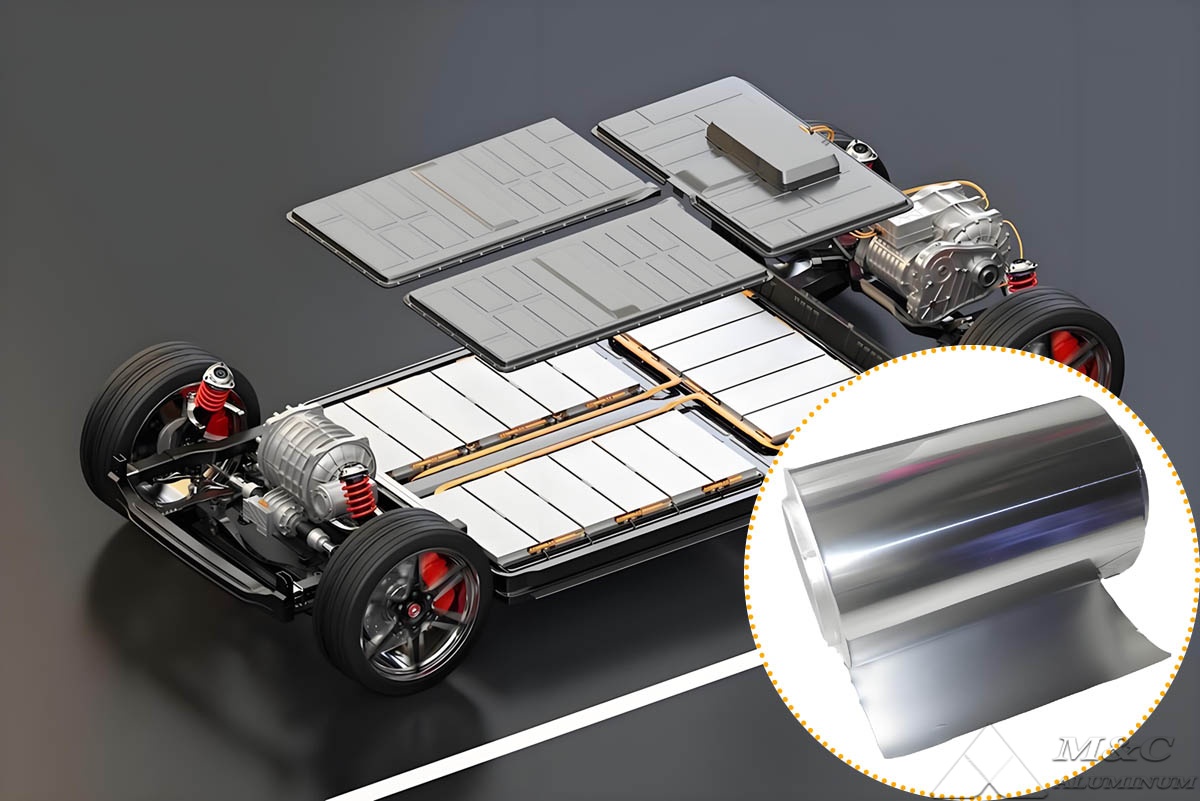
Selecting the Right Treatment Route
There is no single surface treatment suitable for every battery electrode. Standard degreased aluminum foil may meet the requirements of conventional cathode coating lines. Activated foil may be selected when wetting behavior requires improvement. Carbon coated foil may be appropriate when the electrode design needs improved conductivity, adhesion, or interface performance.
As a factory, we work from the base foil specification through to the finished surface condition. This includes alloy selection, thickness control, temper selection, surface preparation, carbon coating options, testing methods, and packaging requirements. For customers reviewing additional foil grades for engineered applications, our 1235 Aluminum Foil is also available for evaluation based on the required battery process conditions.
Conclusion
Battery aluminum foil surface treatment is a critical part of current collector manufacturing. Proper degreasing, cleaning, activation, carbon coating, and quality inspection help create a stable foil surface for reliable electrode production. By controlling both the aluminum substrate and the treatment process, we supply battery aluminum foil that supports consistent coating performance and efficient downstream manufacturing.