
As a direct aluminum foil manufacturer, we produce 3003 aluminum foil for air conditioner fins with controlled chemistry, stable mechanical properties, and reliable surface quality for high-speed fin production. This alloy is widely used in evaporators, condensers, and other heat exchanger systems because it combines good formability, appropriate strength, and corrosion resistance.
In HVAC applications, fin material must meet several requirements at the same time. It must be thin enough for efficient heat transfer, strong enough to withstand stamping and expansion, and consistent enough to support continuous processing. For this reason, many customers select 3003 alloy as a practical solution for air conditioner fin foil, especially where hydrophilic coating, tube bonding, and long-term service stability are required.
Why 3003 Aluminum Foil Is Used for Air Conditioner Fins
3003 aluminum foil belongs to the Al-Mn alloy series. Compared with commercially pure aluminum foil, it offers higher strength while maintaining good workability. In fin manufacturing, this balance is important because the material must pass through decoiling, lubrication, stamping, collaring, louvering, and assembly without cracking or excessive deformation.
From our manufacturing perspective, 3003 aluminum foil is suitable for air conditioner fins for the following reasons:
Good formability for complex fin geometries
Stable mechanical strength for high-speed stamping lines
Good corrosion resistance in humid operating conditions
Favorable compatibility with hydrophilic and anti-corrosion coatings
Reliable thermal conductivity for heat exchange performance
Consistent thickness and flatness for automatic fin production
We supply both bare fin stock and coated fin foil according to customer process requirements. For many HVAC customers, 3003 Aluminum Foil is selected as a standard material for residential and commercial heat exchanger systems.
Main Application in HVAC Heat Exchangers
3003 aluminum foil for air conditioner fins is mainly used in:
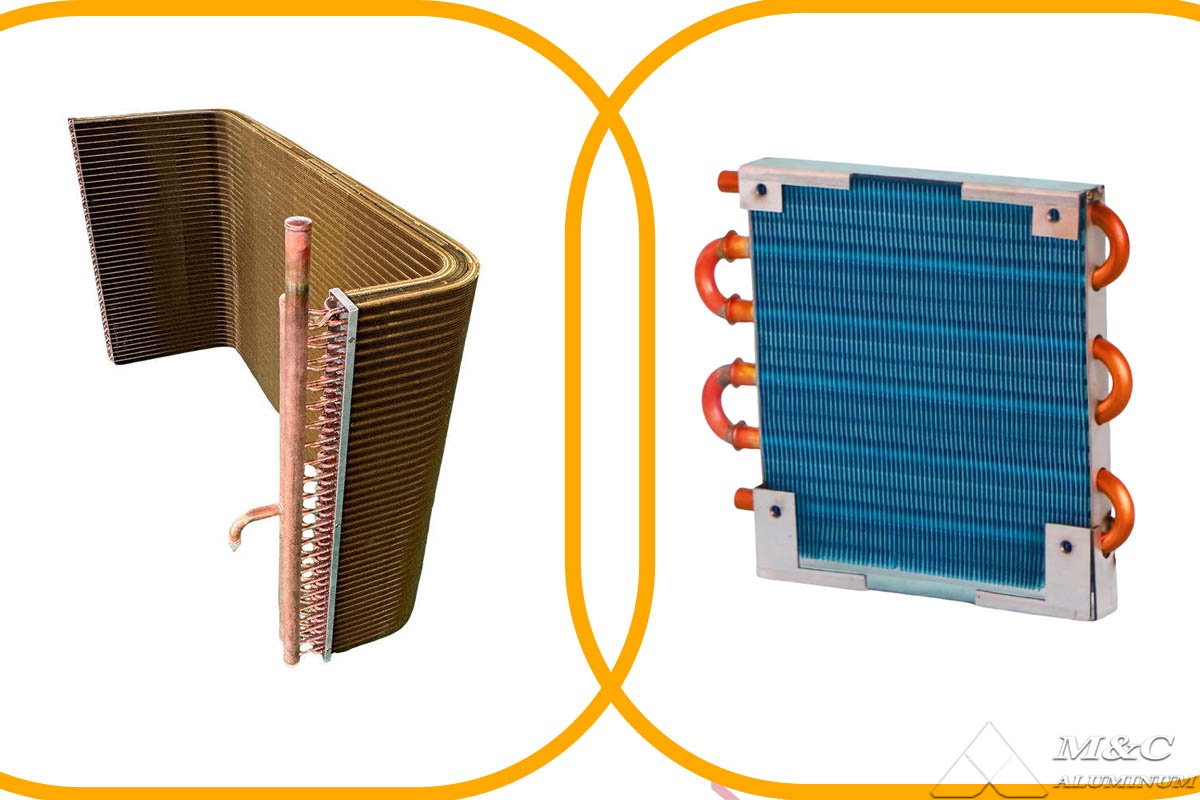
Air conditioner condenser fins
Air conditioner evaporator fins
Heat pump heat exchanger fins
Refrigerator and freezer heat exchanger fins
Industrial cooling equipment fins
Automotive HVAC fin stock in some designs
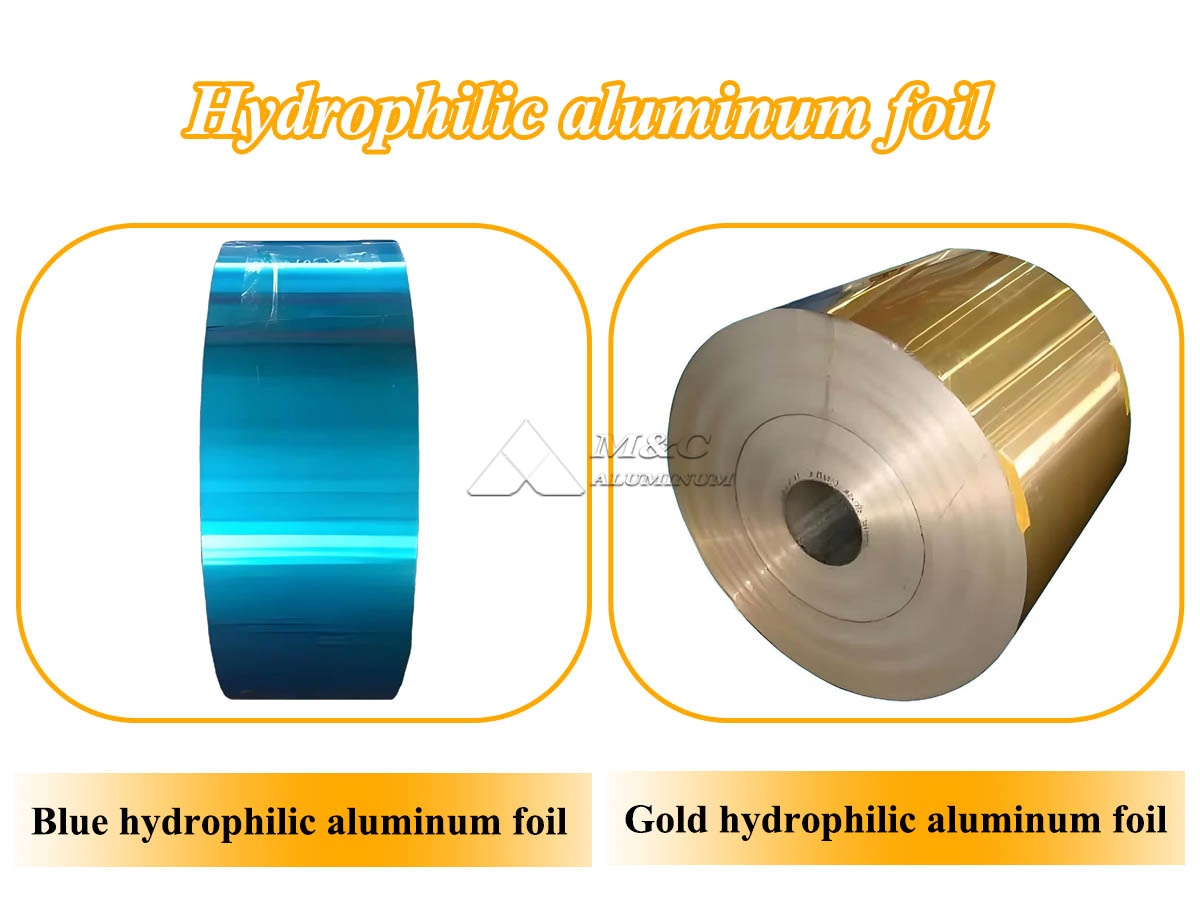
The foil is processed into thin fin sheets with precise collars and louvers to increase heat transfer area and improve air-side efficiency. Depending on the heat exchanger design, the foil may be supplied in bare, blue hydrophilic, gold hydrophilic, or corrosion-resistant coated conditions.
Hydrophilic treatment is especially important in evaporator applications. A hydrophilic surface helps condensate water spread quickly and drain smoothly, reducing water bridging between fins and improving ventilation performance. For this reason, many customers combine 3003 substrate with Products developed for hydrophilic air conditioner foil applications.
Manufacturing Considerations from a Foil Producer
As a manufacturer, we control the full production route from melting and alloying to rolling, annealing, slitting, and inspection. For air conditioner fin foil, process stability is more important than simple nominal specification compliance.
Alloy and Metallurgical Control
The manganese content in 3003 alloy improves strength and contributes to corrosion resistance. During production, chemical composition must be kept within controlled limits to ensure consistent forming behavior. Excessive variation can affect ear formation, elongation, and coating adhesion.
Thickness Accuracy
Fin foil is typically produced in thin gauges. Even small thickness deviations can influence fin pitch, tool wear, and heat exchanger performance. We maintain strict gauge control during rolling and final inspection to support automated fin stamping.
Surface Quality
Clean surface condition is essential for both bare foil processing and coated foil production. Rolling oil residue, scratches, pinholes, waviness, and edge defects may interfere with coating, lubrication, or stamping efficiency. Our production line emphasizes surface cleanliness and coil consistency.
Annealing and Temper Control
The final temper affects strength, elongation, and forming behavior. In air conditioner fin applications, tempers are selected according to tooling design, fin geometry, and customer line speed. Proper annealing is necessary to obtain the required balance between softness and structural stability.
Technical Parameters of 3003 Aluminum Foil for Air Conditioner Fins
The following table shows common technical parameters for 3003 aluminum foil used in air conditioner fin production. Actual values can be adjusted according to customer standards and coating requirements.
| Item | Typical Range / Specification |
|---|---|
| Alloy | 3003 |
| Temper | H22, H24, O, according to fin forming requirements |
| Thickness | 0.08 mm - 0.20 mm |
| Width | 100 mm - 1250 mm |
| Inner Diameter | 150 mm, 300 mm, 405 mm, 505 mm |
| Outer Diameter | According to coil weight and line requirement |
| Surface | Bare, degreased, hydrophilic coated, anti-corrosion coated |
| Coating Type | Blue hydrophilic, gold hydrophilic, transparent hydrophilic |
| Tensile Strength | Typically 120 - 170 MPa, depending on temper |
| Elongation | Typically 3% - 12%, depending on temper and thickness |
| Wettability | As specified for hydrophilic fin stock |
| Fin Application | Condenser fins, evaporator fins, heat exchanger fins |
| Standard | Can be produced according to GB, ASTM, EN, or customer specification |
| Coil Form | Jumbo coil, slit coil |
| Edge Condition | Mill edge or slit edge |
| MOQ | 1-3 tons |
Bare Foil and Hydrophilic Coated Foil
In practical HVAC manufacturing, the choice between bare aluminum foil and hydrophilic aluminum foil depends on the working environment and system design.
Bare 3003 Aluminum Foil
Bare foil is generally used where the customer performs further surface treatment in-house or where coating is not required by the final design. It offers process flexibility and may be suitable for condenser applications in some systems.
Hydrophilic 3003 Aluminum Foil
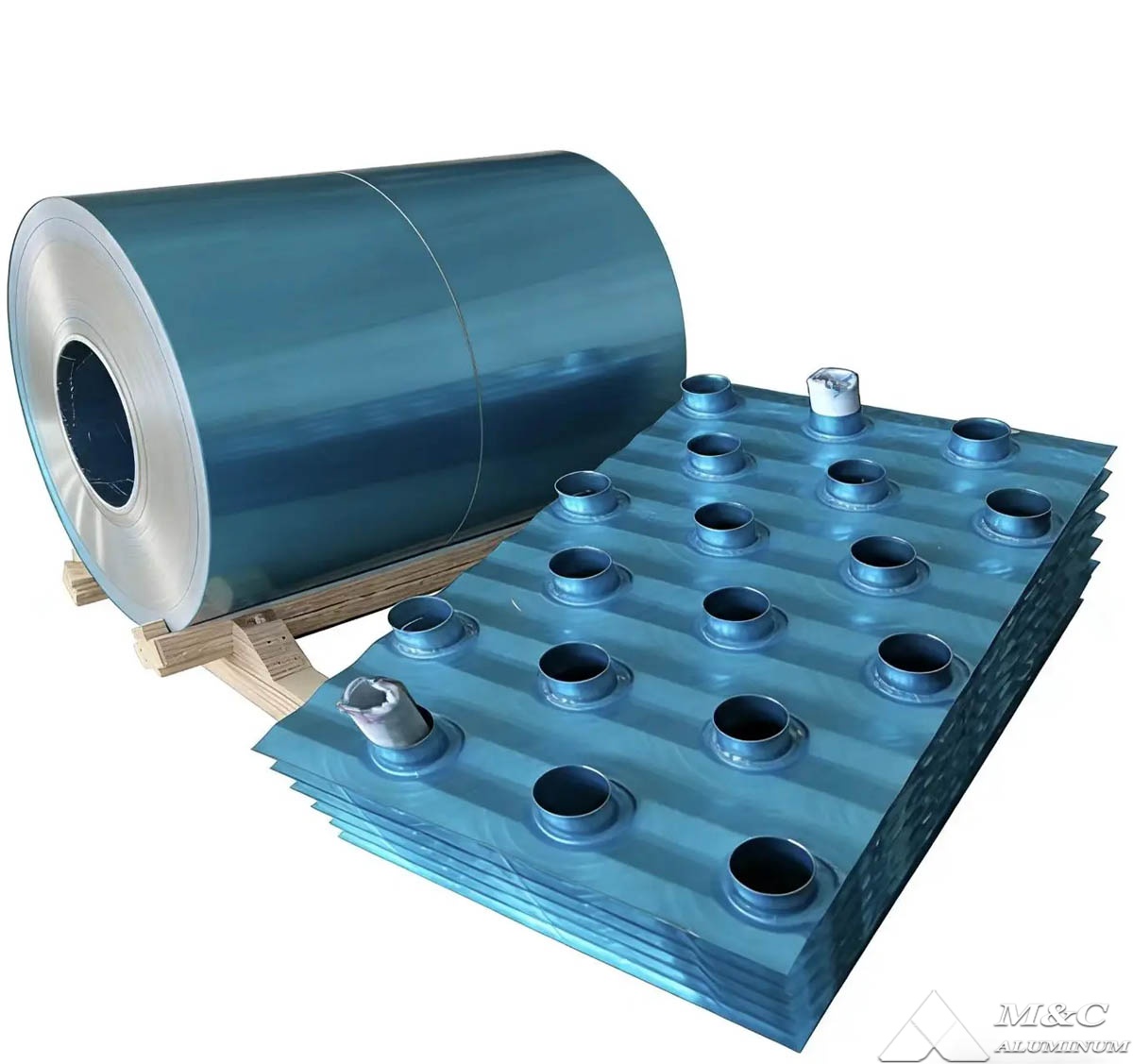
Hydrophilic aluminum foil is widely used in evaporators. The coating improves water spreading, helps condensate drainage, and reduces retention of droplets between fins. This can improve airflow and reduce noise caused by water accumulation. In addition, suitable coating systems can contribute to odor control and corrosion resistance during service.
When we manufacture hydrophilic 3003 fin foil, we pay attention to:
Coating adhesion
Uniform coating weight
Surface wetting performance
Drying and curing stability
Resistance to stamping damage
Corrosion performance after forming
Performance Requirements in Fin Production
For customers producing air conditioner fins, material performance must support efficient conversion on fin press lines. In our experience, the following indicators are critical:
Formability
The foil must withstand collar formation and louver shaping without cracking. This requires controlled temper and good elongation.
Flatness
Poor flatness can lead to feeding instability, misalignment, or die wear. Coil flatness and shape are therefore monitored carefully.
Surface Cleanliness
A clean surface supports coating quality, lubrication control, and stable tooling performance.
Consistent Mechanical Properties
Variation from coil to coil may affect press settings and reject rates. We focus on consistency across production lots so customers can maintain stable processing parameters.
Corrosion Resistance
Air conditioner fins operate in humid and sometimes contaminated environments. The combined effect of alloy selection, coating system, and process control determines long-term durability.
How We Produce 3003 Fin Foil
As a factory, our production process for 3003 aluminum foil for air conditioner fins includes the following steps:
Raw material and alloy composition control
Melting and casting of 3003 alloy slab
Homogenization treatment
Hot rolling and cold rolling to target gauge
Intermediate and final annealing
Surface cleaning and degreasing
Coating process if hydrophilic foil is required
Slitting to customer width
Final inspection of dimensions, surface, and properties
Export packing for moisture and transport protection
At each stage, we inspect key parameters related to HVAC fin stock use. This manufacturer-based approach helps reduce downstream risks for fin press operations and heat exchanger assembly.
Selection Advice for Buyers
When specifying 3003 aluminum foil for air conditioner fins, buyers should not focus only on alloy and thickness. In many cases, the actual production performance depends on a combination of factors:
Temper matched to fin geometry
Surface condition matched to coating route
Coil dimensions suited to line equipment
Hydrophilic performance requirements
Corrosion resistance targets
Packaging standard for sea shipment and storage
For example, a thinner foil may improve heat transfer, but if formability or handling stability is insufficient, manufacturing yield may decline. Similarly, coating quality must be evaluated not only by initial wettability but also by forming resistance and durability after assembly.
Our Supply Capability as a Manufacturer
We produce 3003 aluminum foil in coil form for industrial heat exchanger applications and can customize specifications based on customer drawings or process data. Our production supports different widths, tempers, and surface conditions for condenser and evaporator fin stock.
Typical services include:
Alloy and temper customization
Bare and hydrophilic coated fin foil
Slitting to specific coil width
Mechanical property control for stamping lines
Technical data support before trial production
Export packaging for long-distance shipment
Because we manufacture the foil directly, we can coordinate metallurgy, rolling, annealing, and finishing according to end-use requirements rather than treating fin foil as a generic commodity.
Conclusion
3003 aluminum foil for air conditioner fins remains an important material in HVAC heat exchanger production because it offers a practical balance of formability, strength, corrosion resistance, and coating adaptability. Whether used as bare fin stock or hydrophilic aluminum foil, its performance depends on precise manufacturing control over composition, thickness, temper, and surface quality.
As a producer, we focus on delivering 3003 fin foil that performs consistently on high-speed stamping lines and meets the service demands of evaporators and condensers. For manufacturers of air conditioners, refrigeration equipment, and heat exchangers, stable material quality is the basis for efficient production and reliable end-product performance.