
In the manufacture of aluminum electrolytic capacitors, film capacitors, and various electronic components, aluminum foil is not only an essential base material but also directly affects capacitance, voltage resistance, operational stability, and service life. With its relatively high aluminum purity, excellent electrical and thermal conductivity, good ductility, and processing adaptability, 1060 alloy aluminum foil has become a widely used material in the capacitor manufacturing industry.
MC Aluminum supplies 1060 alloy aluminum foil for capacitors, manufactured from high-quality aluminum ingots through multiple processes, including melting and casting, hot rolling, cold rolling, annealing, slitting, and surface treatment. The product features stable composition, uniform thickness, good flatness, and a clean surface, meeting the requirements of subsequent etching, formation, stamping, slitting, and winding processes.
What Is 1060 Alloy Aluminum Foil?
1060 belongs to the commercial pure aluminum series, with an aluminum content generally no less than 99.6%. It offers high purity, low impurity content, good electrical conductivity, and excellent corrosion resistance. Compared with certain high-strength aluminum alloys, 1060 aluminum foil has relatively lower strength but superior plasticity, ductility, and secondary processing performance. It is particularly suitable for capacitor manufacturing applications that require high material purity, surface quality, and uniformity.
1060 aluminum foil for capacitors is commonly used as a base material for electronic aluminum foil. After subsequent etching and formation processes, it can develop a larger effective surface area, helping improve the energy storage capacity and performance stability of capacitors. High-quality plain foil is an important foundation for manufacturing high-performance aluminum electrolytic capacitors.
Depending on capacitor type and production process, 1060 aluminum foil can be supplied in different thicknesses, widths, and temper conditions.
Common tempers include:
1060 O temper: Fully annealed, offering excellent flexibility and ductility. It is suitable for applications requiring further processing or forming.
1060 H18 temper: A strain-hardened condition with relatively high strength and hardness, suitable for certain electrode materials requiring higher dimensional stability.
1060 H22/H24 temper: Produced through strain hardening and partial annealing, available according to specific process requirements.
The appropriate temper should be selected based on capacitor structure, foil application, and downstream processing requirements. Not all capacitor products require the same aluminum foil specifications.
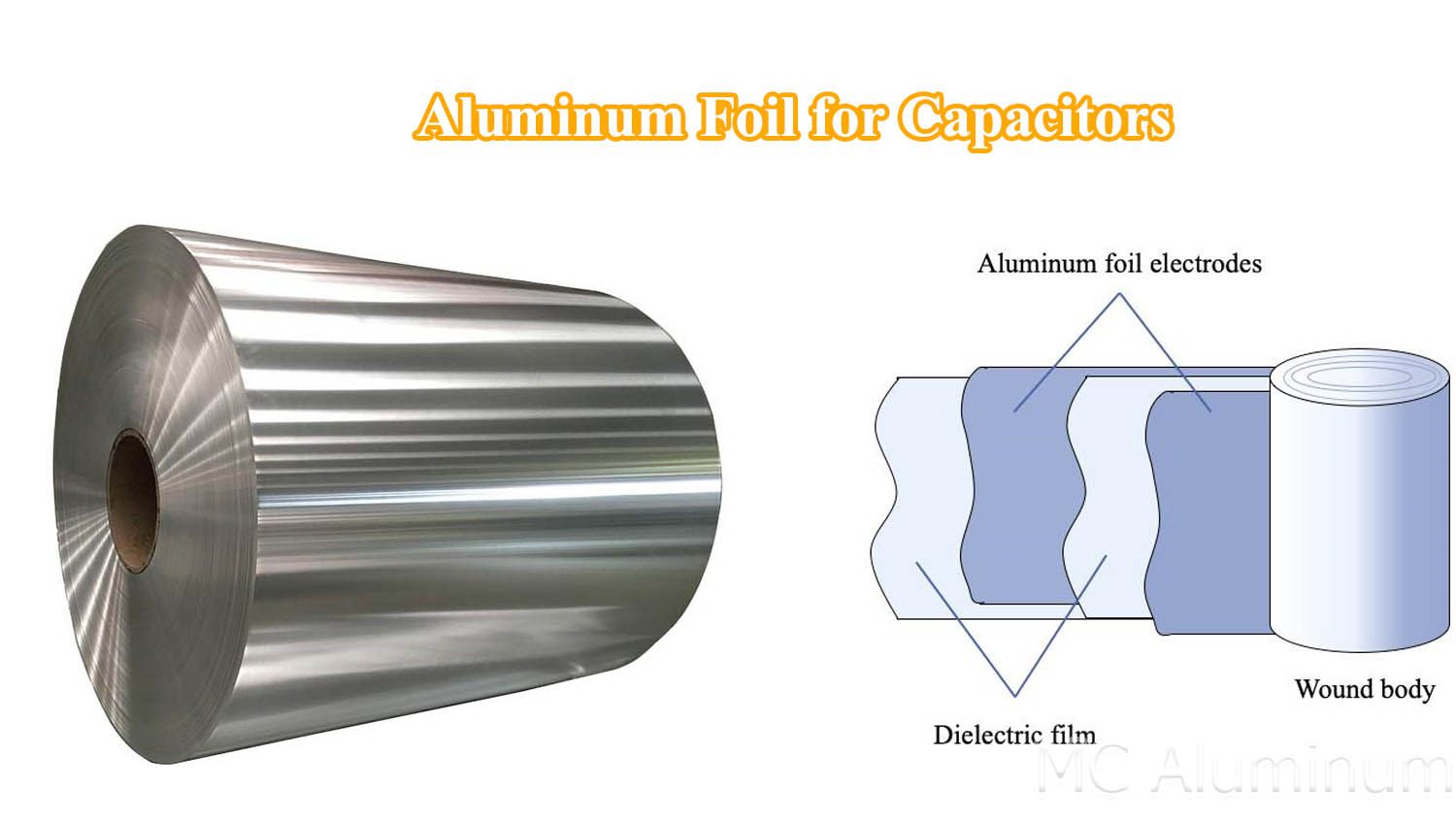
Key Advantages of 1060 Capacitor Aluminum Foil
1.Low Energy Consumption and High Efficiency
Due to its low electrical resistivity, 1060 aluminum foil can reduce resistive losses in capacitor coils, helping improve overall capacitor efficiency and lower operating costs.
2.Oxidation and Corrosion Resistance
Aluminum naturally forms a dense oxide film on its surface, helping resist moisture, salt spray, and other corrosive environments. This contributes to stable long-term performance and minimizes degradation during service.
3.Reliable Mechanical Strength
In the H18 temper, the foil provides higher strength, helping coils resist deformation caused by vibration, impact, and thermal stress, thereby reducing risks such as interlayer short circuits or conductor breakage.
4.Easy Processing and Forming
With a burr-free surface and excellent ductility, 1060 aluminum foil can be easily processed and wound into different coil configurations, including flat, round, and complex multilayer coil structures.
5.Environmentally Friendly and Recyclable
Aluminum is a recyclable material, and aluminum foil can be recovered and reused after service. It supports the development trend toward greener and more sustainable electronic materials.
Product Specifications
| Item | Specification |
| Material | 1060 aluminum alloy, Al ≥ 99.60% |
| Temper | O, H14, H18, H22, H24, etc. |
| Surface | Bright on one side or both sides; low residual oil; free from oil stains, pinholes, scratches, and streaks |
| Thickness Range | 0.01 mm–0.20 mm; commonly used capacitor thicknesses include 0.02 mm, 0.03 mm, 0.04 mm, 0.05 mm, 0.06 mm, 0.08 mm, and 0.10 mm |
| Width Range | 10 mm–1300 mm; precision slitting to customized widths available |
| Coil Core | Paper core or aluminum core available; common inner diameters: 76 mm and 150 mm |
| Standards | GB/T 3198, GB/T 3190; ASTM B209 available upon request |
Inspection Items | Thickness tolerance, width tolerance, surface appearance, pinhole inspection, electrical conductivity, mechanical properties, and spectrometric composition analysis |
| Packaging | Moisture-proof and anti-oxidation vacuum packaging with corner protectors and wooden pallets; suitable for domestic bulk delivery and container export |
| MOQ | 1–3 tons |
Typical Applications
Aluminum Electrolytic Capacitors
Cathode Foil: Used as the cathode electrode material in low-voltage aluminum electrolytic capacitors.
Plain Foil / Base Foil: Used by etching and formation manufacturers as a high-quality base material for etched anode foil and cathode foil.
Power Electronics and Film Capacitors
Used in metallized or conductive foil components for DC-link capacitors, pulse capacitors, and high-frequency filter capacitors.
Specialized Industrial Capacitors
Used in large-capacity capacitor components for frequency converters, energy-storage welding machines, photovoltaic inverters, and new energy vehicle drive systems.
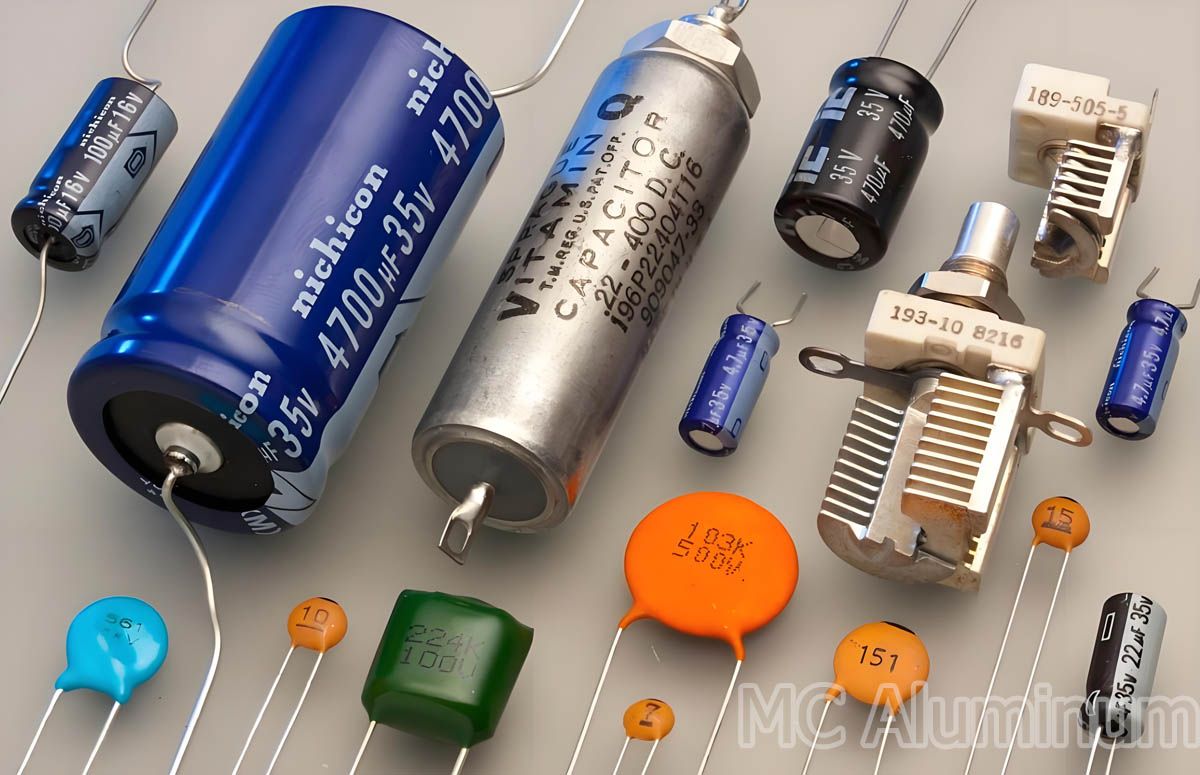
Core Requirements for Aluminum Foil in Capacitor Manufacturing
There are many types of capacitors, including aluminum electrolytic capacitors, film capacitors, and power capacitors. Different capacitor types use aluminum foil in different ways. In aluminum electrolytic capacitors, aluminum foil serves as anode foil and cathode foil and requires etching for surface enlargement and formation treatment. In film capacitors, aluminum foil may be used as an electrode layer. In some capacitor structures, aluminum foil can also be used as a casing material or shielding material.
Regardless of the application, the common requirements for capacitor aluminum foil mainly include the following:
Purity and Composition Stability
The content of impurity elements affects the uniformity of etching behavior and the quality of the formed dielectric film. The high purity of 1060 aluminum is beneficial to the controllability and consistency of the etching process.
Thickness Accuracy and Uniformity
Capacitor aluminum foil is typically available in thicknesses ranging from several microns to several tens of microns. Thickness tolerance directly affects capacitance calculation and winding dimensions. Excessive thickness variation may lead to capacitance inconsistency and uneven winding.
Surface Quality
The surface should be flat and clean, free from oil stains, oxide spots, scratches, pinholes, inclusions, and other defects. For electrolytic capacitor foil, surface condition also affects the distribution of etching initiation sites. Pinholes may cause poor voltage resistance or increased leakage current.
Mechanical Properties
Tensile strength and elongation must match the requirements of winding, slitting, etching, and other processes. Foil that is too hard may crack during winding, while foil that is too soft may wrinkle or deform easily.
Flatness and Winding Quality
The foil should have good flatness, without severe waviness or edge curling. Coils should be tightly and neatly wound to facilitate subsequent slitting and automated production.
Edge Quality
Slit edges should be smooth and free from burrs. This helps prevent burrs from damaging adjacent layers or creating potential local discharge risks.
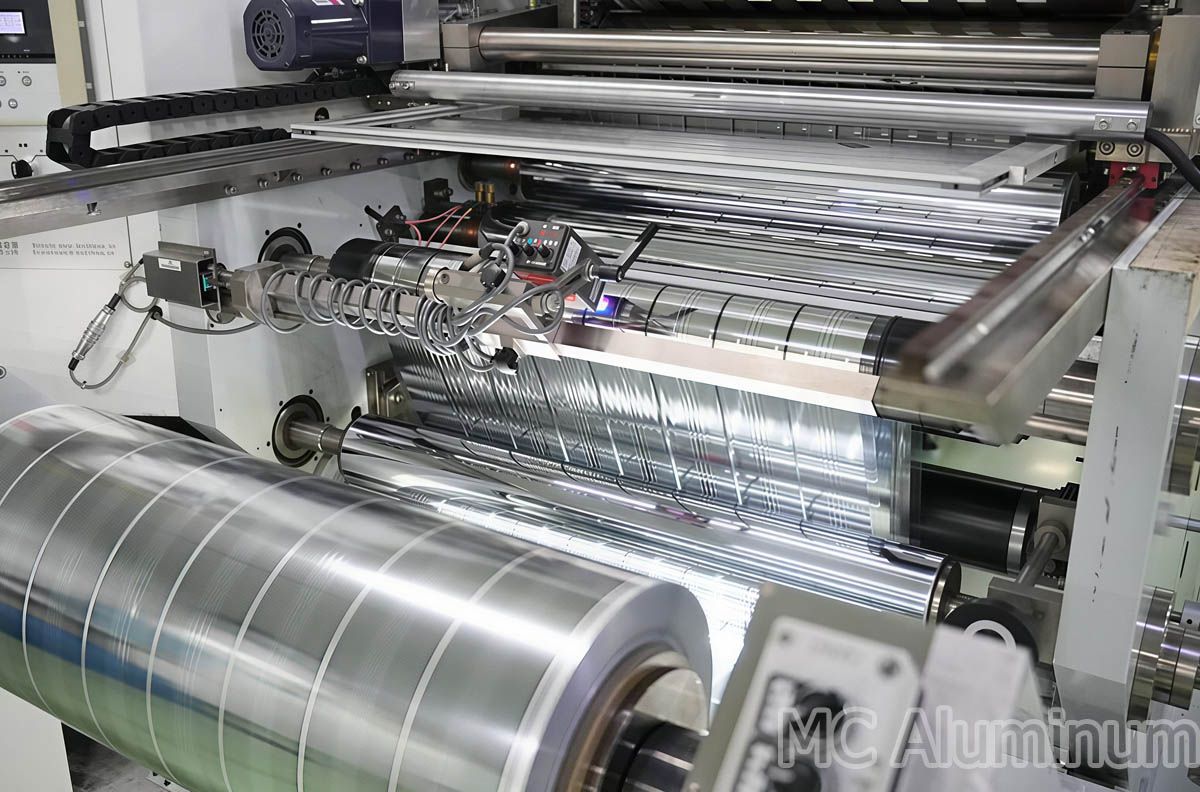
Differences Between 1060 Aluminum Foil and Other Common Capacitor Foil Materials
In capacitor manufacturing, in addition to 1060 aluminum foil, other pure aluminum grades, such as 1050 and 1070, may also be selected according to product design requirements.
Comparison Item | 1050 Aluminum Foil | 1060 Aluminum Foil | 1070 Aluminum Foil |
| Aluminum Content | ≥99.5% | ≥99.6% | ≥99.7% |
| Electrical Conductivity | Good | Good | Generally higher |
| Ductility | Good | Excellent | Excellent |
| Processability | Good | Excellent | Excellent |
| Typical Applications | Electrical and industrial materials | Capacitors and electrical materials | High-purity electrical materials |
1050, 1060, and 1070 all belong to the commercial pure aluminum series. The selection of alloy grade should be based on the specific requirements of capacitor electrodes, including electrical conductivity, etching behavior, formation performance, mechanical strength, and procurement cost.
It should be noted that for capacitor electrode foil subjected to electrochemical etching and formation treatment, the final capacitor performance cannot be evaluated solely according to aluminum content. Verification through specialized electrode foil processing and application testing is also required.