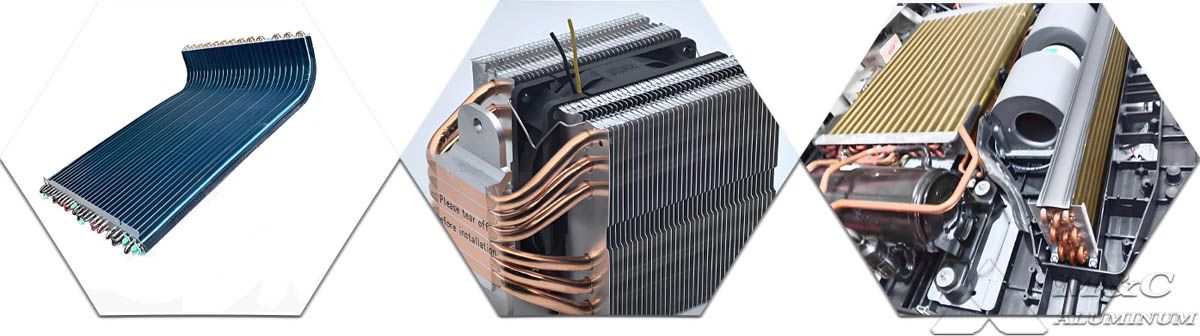
Air conditioning and refrigeration mainly rely on the circulation of refrigerant. Through the continuous flow of refrigerant among the evaporator, compressor, condenser, and throttling device, heat is transferred from one area to another, thereby reducing the indoor temperature.
In this process, aluminum foil, as a key material used in evaporators and condensers, plays an essential role in heat exchange.
Among various aluminum foil materials, 8011 aluminum alloy foil has become one of the most widely used materials in the field of air conditioner heat exchanger fins because of its excellent overall performance.
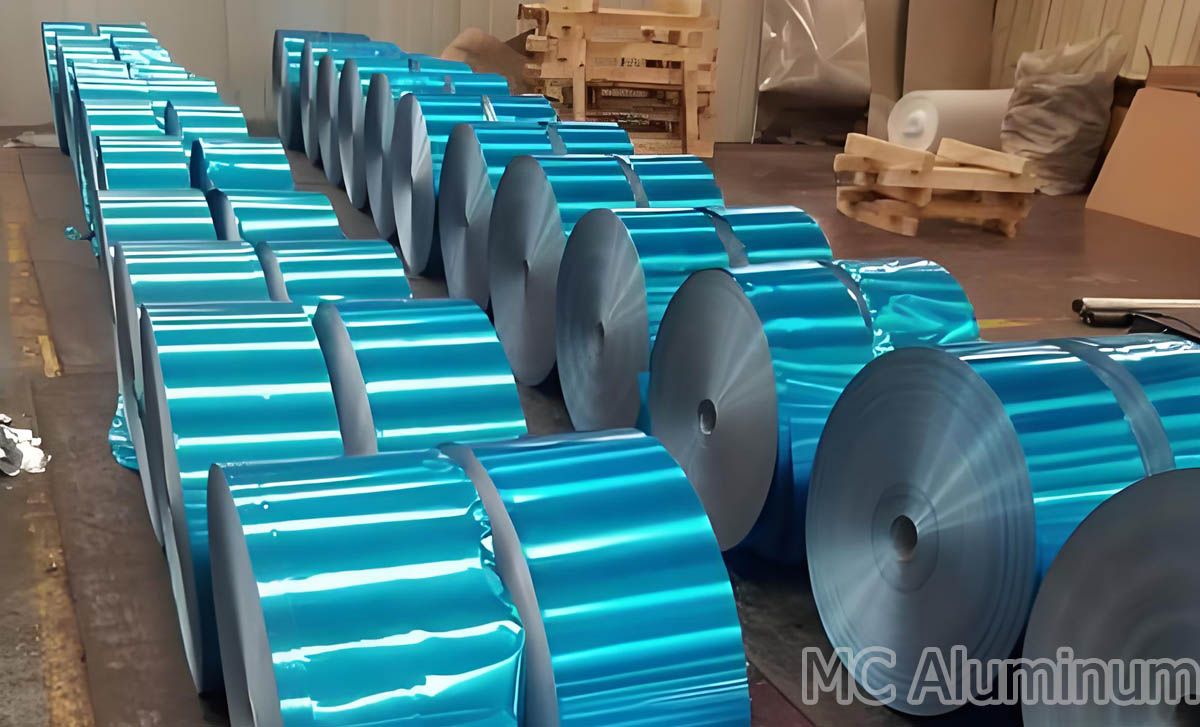
Product Introduction
8011 is one of the representative grades of the internationally used 8xxx series aluminum alloys. Unlike pure aluminum foils such as 1100 and 1060, 8011 alloy contains approximately 0.50%–0.90% silicon and 0.60%–1.0% iron in the aluminum matrix, forming an Al-Fe-Si ternary alloy system.
It is precisely these small but important alloying elements that give 8011 aluminum foil mechanical properties and processing adaptability far superior to those of pure aluminum foil.
8011 aluminum foilbelongs to the category of single-zero aluminum foil, with a typical thickness ranging from 0.02 mm to 0.10 mm. In air conditioner heat exchanger applications, the commonly used thickness is 0.08 mm to 0.20 mm, among which 0.095 mm to 0.15 mm are the most popular specifications.
As air conditioning products continue to develop toward miniaturization and higher efficiency, the thickness of fin stock aluminum foil is also becoming increasingly thinner.
Core Functions of 8011 Aluminum Foil in Air Conditioning and Refrigeration
1. Improving Heat Exchange Efficiency
In an air conditioning system, heat exchange is the core of the refrigeration process. 8011 aluminum foil significantly improves heat exchange efficiency in the following ways:
Enlarged Surface Area
When aluminum foil is made into thin, elongated fins or wavy-edged structures, it greatly increases the contact area with the cooling medium, such as air or refrigerant. This improves heat transfer efficiency.
Excellent Thermal Conductivity
Aluminum has a thermal conductivity of about 205 W/(m·K), which is much higher than that of plastics and many other metals. This enables 8011 aluminum foil to transfer heat quickly and evenly.
Flexible Thin-Film Design
Thin aluminum foil can be easily combined with copper tubes or other structural components to form highly efficient heat exchange surfaces.
2. Corrosion Resistance
Air conditioning systems are often exposed to moisture, dust, and refrigerant vapor. Corrosion is one of the main factors affecting equipment service life. 8011 aluminum foil offers the following corrosion-resistant advantages:
Formation of a Natural Oxide Film
Aluminum naturally forms a dense aluminum oxide film when exposed to air. This film has strong corrosion resistance and can effectively protect the internal metal from moisture and chemical erosion.
Synergistic Effect of Alloying Elements
The presence of alloying elements further enhances the corrosion resistance of the alloy, especially in environments containing chlorine or sulfur.
Resistance to Humid Environments
Even under high humidity and high temperature conditions, 8011 aluminum foil can maintain stable performance and is not prone to blistering or cracking.
3. Brazing Performance
In air conditioning systems, copper tubes and aluminum fins need to be joined through brazing technology to form a tight and sealed structure. 8011 aluminum foil has excellent brazing performance:
Suitable for Low-Temperature Brazing
8011 aluminum foil can be brazed with copper tubes at relatively low temperatures, usually around 590°C, which helps reduce energy consumption and thermal stress.
High Joint Strength
After brazing, the strength of the joint can reach more than 80% of the base material, ensuring sealing performance and operational stability during long-term use.
Fewer Welding Defects
Due to precise control of alloy composition, defects such as bubbles and inclusions during the brazing process can be reduced.
4. Mechanical Properties
8011 aluminum foil also performs well in terms of mechanical properties, which is crucial for its use in air conditioning systems.
Excellent Plasticity
It can be easily stamped, bent, curled, and processed into various complex fin designs.
High Strength
Even in thin foil form, 8011 aluminum foil has sufficient strength to withstand vibration and pressure during system operation.
Good Fatigue Resistance
Under long-term cyclic pressure, the aluminum foil is not prone to significant plastic deformation or fracture.
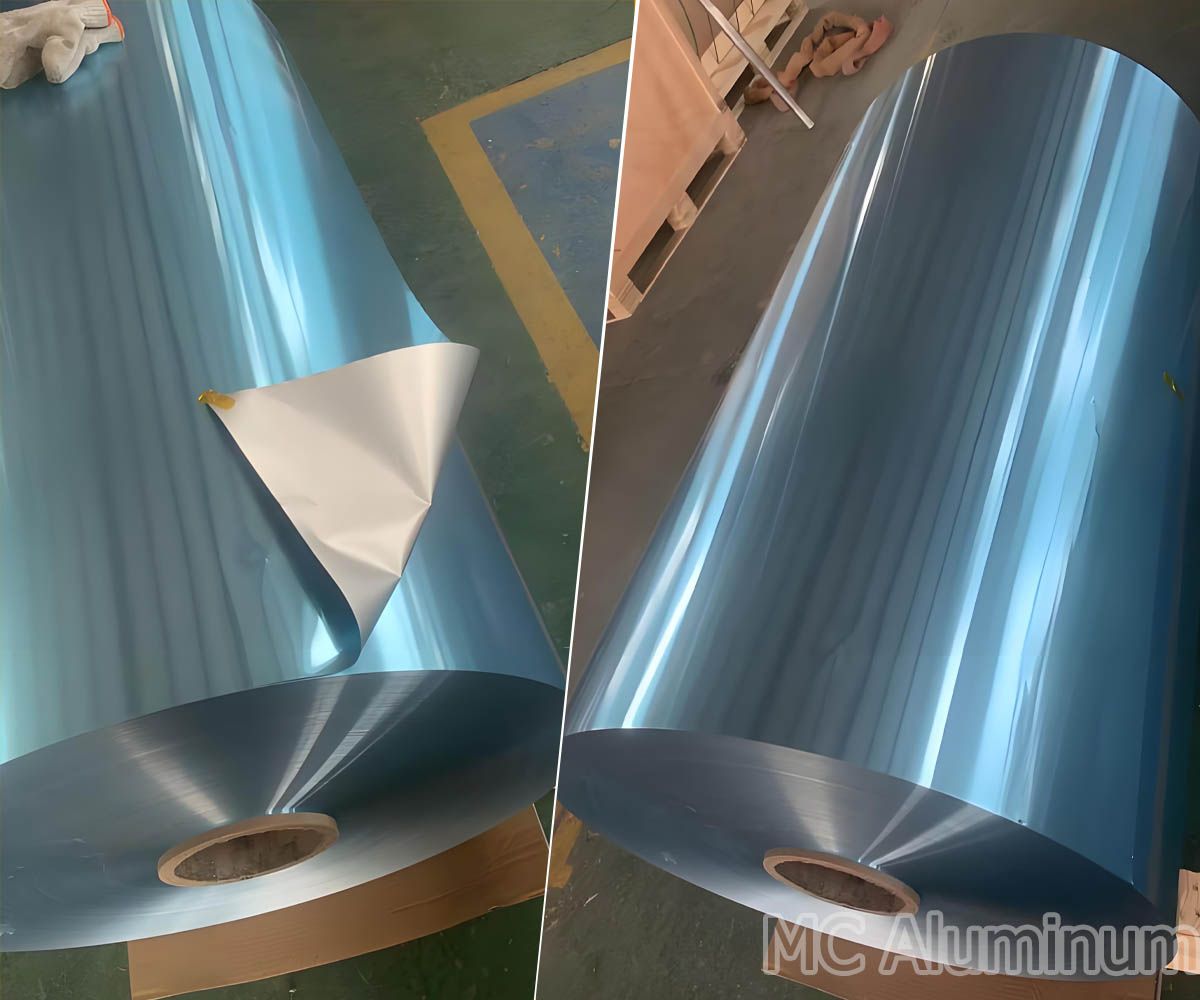
Specifications of 8011 Aluminum Foil for Air Conditioning
| Item | Parameter |
| Alloy | 8011 |
| Temper | O, H14, H16, H18, H22, H24 |
| Thickness | 0.05–0.20 mm, customizable |
| Width | 100–1250 mm |
| Length | 1000-16000 mm |
| Inner Diameter | 76 mm, 150 mm, 300 mm |
| Surface Treatment | Plain foil, hydrophilic coating, anti-corrosion coating, blue hydrophilic coating, golden anti-corrosion coating |
| Thermal Conductivity | Good |
| Processing Methods | Stamping, rolling, laminating, coating |
| Export-standard wooden pallets, moisture-proof packaging |
Surface Treatments for 8011 Aluminum Foil Used in Air Conditioning
Hydrophilic Coated Aluminum Foil
Hydrophilic coated aluminum foil is the most common type. By applying a functional hydrophilic coating to the surface of the aluminum foil, condensed water can quickly spread and flow evenly along the fin surface instead of forming water droplets.
This can effectively reduce airflow resistance, decrease condensation noise, and improve heat exchange efficiency. Studies show that using hydrophilic aluminum foil as a heat exchanger fin material can increase refrigeration efficiency by about 5%.
Anti-Corrosion Coated Aluminum Foil
Anti-corrosion coated aluminum foil adds a protective anti-corrosion layer to the surface. It is suitable for coastal areas or industrial environments with heavy pollution and can significantly extend the service life of air conditioners.
Special Functional Coated Aluminum Foil
In addition, there are coated aluminum foil products with special functions such as high lubrication, organic contamination resistance, and antibacterial performance. These surface treatment technologies further expand the application scenarios and performance limits of 8011 aluminum foil.
Comparison with Other Aluminum Alloys
In air conditioner manufacturing, besides 8011, common aluminum alloys also include 1100, 3003, and 3102. The table below shows the unique advantages of 8011 aluminum foil:
| Alloy Grade | Main Features | Application Advantages in Air Conditioning |
| 1100 / 1200 | Industrial pure aluminum with good thermal conductivity but relatively low strength. | Gradually being replaced. Due to insufficient strength, it is prone to deformation or cracking when stamping ultra-thin, high-density fins. |
| 3003 / 3102 | Aluminum-manganese alloys with excellent corrosion resistance and high strength. | Commonly used in automotive air conditioning or industrial condensers operating in harsh environments. However, they have a strong work-hardening tendency and may cause more wear on high-speed stamping dies. |
| 8011 | Aluminum-iron-silicon alloy with an excellent balance of strength and toughness. | The preferred choice for household and commercial air conditioners. It maintains high thermal conductivity while performing well in lightweight and thin-gauge applications, with smooth stamping performance. |
Specific Applications of 8011 Aluminum Foil in Air Conditioning and Refrigeration
1. Evaporator and Condenser Fins
This is the most important application of 8011 aluminum foil. In evaporators and condensers, aluminum foil is processed into thin fins and connected with copper tubes to form an efficient heat exchange surface.
Evaporator Fins
Evaporator fins absorb heat from indoor air, allowing the refrigerant to change from liquid to gas.
Condenser Fins
Condenser fins release heat to the outdoor air, allowing the refrigerant to change from gas back into liquid.
2. Evaporator and Condenser Cores
Some advanced air conditioning systems use 8011 aluminum foil directly in core structures, such as:
Plate-Type Evaporators
Aluminum foil and copper tubes are stacked layer by layer to form a plate-like structure, improving heat exchange efficiency.
Internal Tube Fins
Aluminum foil fins are attached to the inner wall of copper tubes to increase the surface area of the internal flow channel and improve heat transfer efficiency.
3. Other Auxiliary Components
In addition to the main heat exchange components, 8011 aluminum foil can also be used in the following auxiliary parts:
Air Filter Frames
It provides structural support and helps filter impurities from the air.
Motor Heat Sinks
It helps dissipate heat from air conditioner compressors and fan motors.
Pipe Liners
It provides sealing and protection at pipe connections.