Aluminum foil current collectors are one of the main cathode current collector materials in lithium-ion batteries. They collect the electric current generated by the cathode active material and conduct it to the external circuit. At the same time, they serve as the carrier for cathode active materials, enabling the conversion of chemical energy into electrical energy. Aluminum foil current collectors are therefore widely used in lithium-ion batteries.
A battery cathode generally consists of a cathode tab, high-temperature adhesive tape, aluminum foil cathode current collector, and cathode active material. The aluminum foil used as the cathode current collector is typically 0.010 mm–0.015 mm thick. It is widely used in ternary lithium batteries, lithium iron phosphate (LFP) batteries, sodium-ion batteries, and other battery systems.
The main aluminum alloy grades used for current collector foil include 1060, 1070, 1100, and 1235. Mainstream thicknesses range from 10 μm to 20 μm, while some battery manufacturers use 8 μm foil. The future trend is toward further thickness reduction, potentially down to 6 μm.
Aluminum foil is mainly produced by hot rolling or continuous casting and rolling. Most general industrial double-zero foil, single-zero foil, and battery foil belong to the pure aluminum series and are generally suitable for continuous casting and rolling production. Although battery foil has significantly higher requirements than standard 0.1 mm aluminum foil, the fundamental production technologies and processes are broadly similar.
Common Types of Battery Aluminum Foil
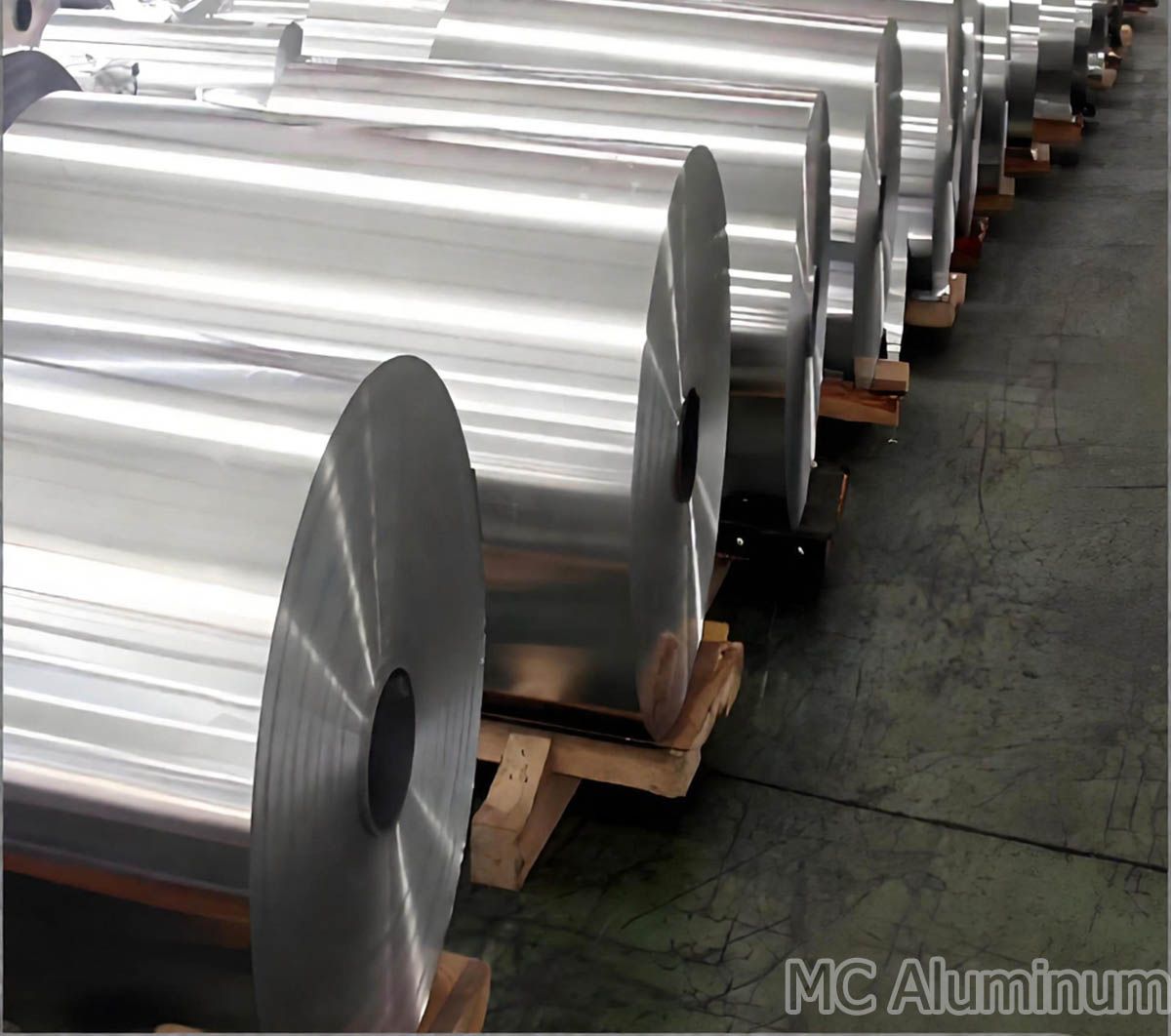
Battery-grade aluminum foil: single-side bright / double-side bright
Carbon-coated aluminum foil: single-side coated / double-side coated
1. Battery-Grade Aluminum Foil
Although aluminum has lower electrical conductivity than copper, aluminum conductors require only about half the mass of copper conductors to transmit the same amount of electricity. Therefore, using aluminum current collectors helps improve the energy density of lithium-ion batteries. In addition, aluminum is more cost-effective than copper.
During lithium-ion battery charging and discharging, a dense oxide film forms on the surface of the aluminum foil current collector. This film enhances the corrosion resistance of the aluminum foil.
2. Carbon-Coated Aluminum Foil
Carbon-coated aluminum foil is an innovative surface modification technology for battery current collectors. A functional coating containing one or more conductive materials is applied to the aluminum foil surface to form an excellent two-dimensional or three-dimensional conductive network.
The coated foil is then combined with conductive resin suitable for water-based systems. Through theoretical simulation and repeated experimental verification, the formulation, structural design, and process conditions are continuously optimized.
This process enables a thinner coating layer, lower coating resistance, and stronger adhesion. It can effectively improve the electrochemical performance and product stability of lithium batteries and is particularly suitable for silicon-carbon battery systems.
Product Features
| Battery-grade aluminum foil (single-sided bright/double-sided bright) | Carbon-coated aluminum foil (single-sided/double-sided) |
Excellent electrical conductivity; Good chemical stability; Good compatibility and adhesion with electrode active materials; Symmetrical double-sided structure; Metal density close to the theoretical density of aluminum; Very low surface roughness; High elongation and tensile strength. | Increase the surface tension of the aluminum foil; Enhance adhesion between the aluminum foil and active materials; reduce the amount of binder required in the electrode; Improve battery energy density and cycle life; Protect the current collector; Reduce interfacial resistance; Improve product stability and consistency; Increase the yield rate of individual cells and the matching rate for battery pack assembly; Lower production costs. |
Lithium-Ion Battery Aluminum Foil Specifications
| Item | Typical Range |
| Alloy | 1235, 1050, 1060, 1070, 1100, etc. |
| Temper | O,H18,etc |
| Common thicknesses | 10μm, 12μm, 15μm, 16μm, 18μm, 20μm, etc. |
| Thickness range | Typically 8μm–30μm; special specifications available upon request. |
| Width range | 100 mm–1650 mm |
| ID | 76mm, 152mm, 300mm, 505mm, etc., or customized upon request |
| OD | Determined by equipment compatibility and roll weight |
| Coil Weight | Customizable based on the customer's equipment load capacity and production pace |
| Surface Condition | Clean and flat on both sides; free from oil stains, oxidation spots, and indentation marks |
| Supply forms | Master rolls, slit rolls, narrow-width rolls, cut-to-length sheets/coils, etc. |
| MOQ | 3 tons |
| Product Name | Single-sided carbon-coated aluminum foil | Double-sided carbon-coated aluminum foil |
| Aluminum foil thickness | 16 µm | |
| Aluminum foil width | 260 ± 1 mm | |
| Coating width | 230 ± 1 mm | |
| Coating thickness | 11 µm | |
| Coating margin (left/right) | 15 mm | |
| Surface wettability | >50 dynes | / |
| Length | 20 m, 50 m, customized | / |
| Wipe with a lint-free cloth; no peeling. | >200 times. | |
| Immerse in electrolyte for 24 hours; no peeling. | None | |
| Areal density | 41.8 ± 2 g/m² | 42 ± 2 g/m² |
| Elongation | >1.5% | |
| Tensile strength | >180 N/mm² | |
| Customizable | Customizable (length, width, thickness) | |
Why Is Aluminum Foil Used for Lithium Battery Cathodes?
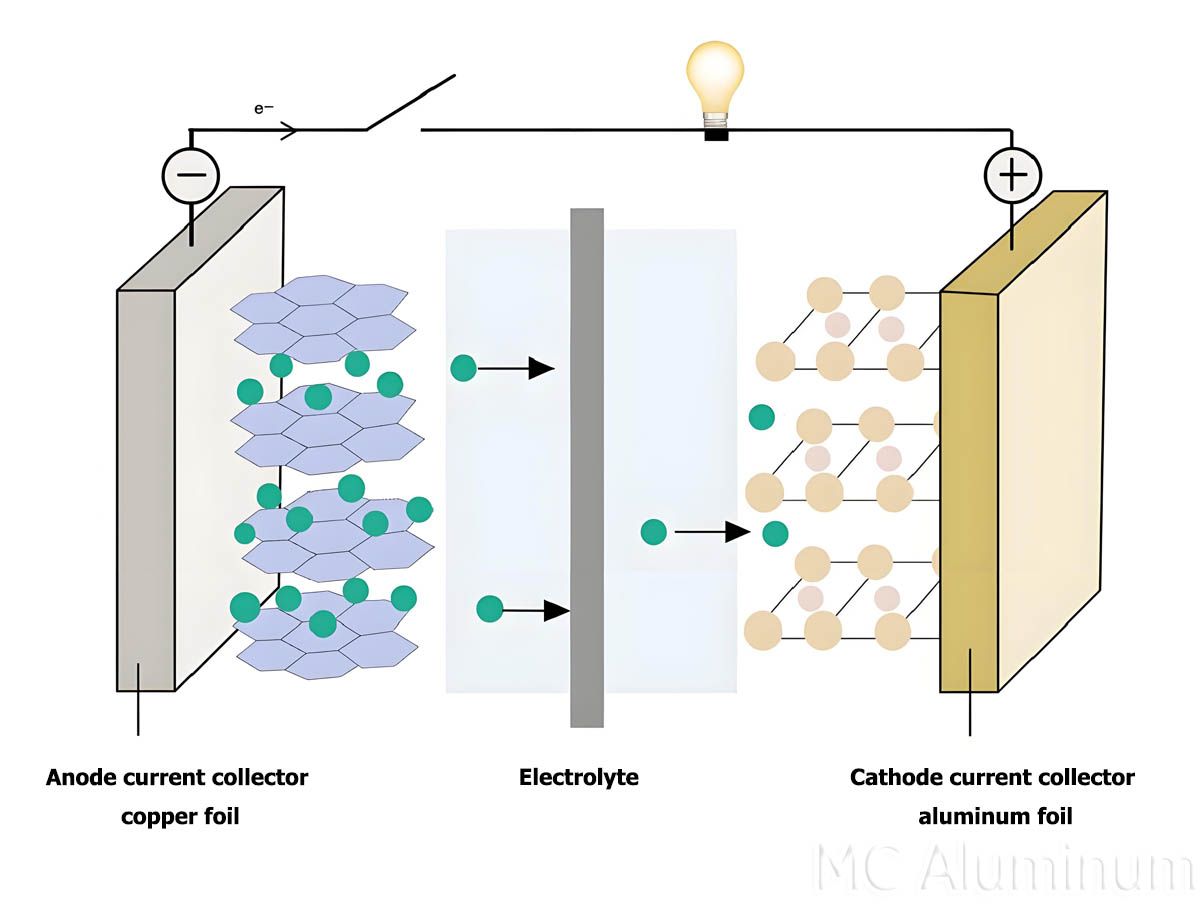
Lithium batteries use aluminum foil for the cathode and copper foil for the anode because of electrochemical potential compatibility.
The cathode operates at a relatively high potential, typically above 3 V. At such a high voltage, copper foil is susceptible to oxidation and corrosion, making it unsuitable as a cathode current collector. Aluminum, however, naturally forms a dense aluminum oxide (Al₂O₃) passivation film on its surface. This oxide layer provides excellent oxidation and corrosion resistance at high potentials, effectively protecting the underlying aluminum substrate.
Conversely, if aluminum foil is used at the anode, it may alloy with lithium at low potentials—generally below 0.5 V vs. Li/Li⁺—which can damage the foil structure. Therefore, aluminum foil is the preferred and standard choice for cathode current collectors.
In addition to its electrochemical compatibility, aluminum foil is widely used because it combines high conductivity, good mechanical properties, low density, and cost advantages. Aluminum has good electrical conductivity, approximately 62% IACS, excellent ductility, and can be easily rolled into ultra-thin foil. It also offers strong resistance to battery electrolyte corrosion.
Performance Requirements for Battery Aluminum Foil
| Quality Item | Requirements |
| Thickness | The thinnest battery foil currently reaches 8 μm. Thickness tolerance must be tightly controlled, generally within ±4%; some battery manufacturers require ±2%. |
| Surface Quality | The surface must not contain pinholes or pits larger than 1 mm in diameter. For pits measuring 0.5 mm–1 mm, fewer than 3 defects per m² are generally permitted. The matte side must be free from raised spots and bright spots. |
| Surface Wetting Tension | Most customers require a surface wetting tension of 30–32 dynes/cm, while some sensitive material systems require higher dyne values. |
| Edge Quality | Slit edges must be of high quality and free from edge cracks and burrs. |
| Mechanical Properties | As foil thickness is reduced, tensile strength (Rm) must be improved accordingly to ensure adequate resistance to breakage. The work-hardening limit of commercially pure aluminum is approximately 310 N/mm². Current battery foil tensile strength is generally in the range of 190–280 N/mm². |
Packaging and Transportation Requirements for Lithium Battery Aluminum Foil
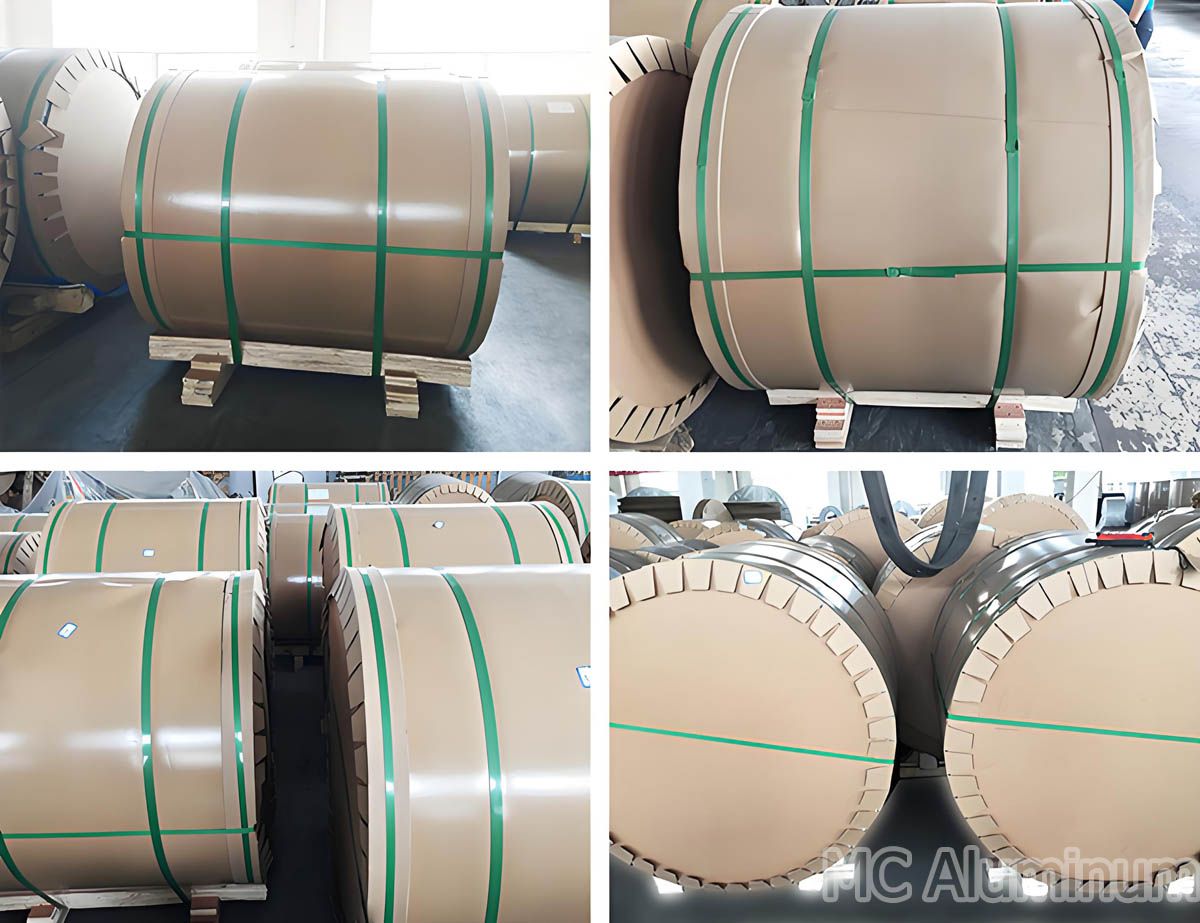
Battery aluminum foil is extremely thin and has high surface-quality requirements. During transportation and storage, it must be protected from moisture, dust, pressure damage, scratches, and oxidation.
Common packaging methods include:
Covering the aluminum foil surface with protective paper or protective film;
Using moisture-proof paper and moisture-barrier film for sealed packaging;
Adding desiccants to reduce moisture exposure during ocean freight or long-distance transportation;
Securing coils with wooden pallets, wooden crate bases, or steel support frames;
Reinforcing coils with steel straps or stretch film to prevent loosening during transportation;
Using fumigated wooden pallets or fumigation-free packaging materials for export shipments in accordance with international transportation requirements.
During storage, aluminum foil should be kept in a dry, clean, and well-ventilated environment, away from corrosive media. During handling, collisions, compression, and contact with sharp objects should be avoided to prevent edge damage, surface scratches, or coil deformation.