
As an aluminum foil manufacturer, we produce 8011 aluminum foil for cable shielding for cable factories, composite tape producers, and electrical material converters. This foil is commonly used as the metallic barrier layer in communication cables, coaxial cables, control cables, instrumentation cables, data cables, and other structures where stable electromagnetic shielding, moisture resistance, and processing consistency are required.
In cable production, aluminum foil is not selected only by alloy name. Thickness tolerance, temper, surface cleanliness, pinhole control, tensile performance, elongation, winding quality, and slitting precision all affect lamination, wrapping, folding, drain wire contact, and long-term cable reliability. Our role as a factory is to control these variables from casting and rolling to final annealing, inspection, slitting, and packing.
Why 8011 Aluminum Foil Is Used in Cable Shielding
8011 aluminum foil is an Al-Fe-Si alloy with good formability, stable mechanical properties, and reliable barrier performance. Compared with some high-purity aluminum foils, 8011 provides a practical balance between strength, flexibility, and cost efficiency. For many cable shielding applications, especially when the foil is laminated with PET, PE, or other polymer films, 8011 alloy can meet the requirements for continuous processing and shielding performance.
The key functions of cable shielding foil include reducing electromagnetic interference, improving signal integrity, providing a moisture barrier, supporting cable identification structures, and assisting grounding when combined with a drain wire. In practical cable structures, aluminum foil may be used as plain foil, single-side laminated foil, double-side laminated foil, aluminum polyester tape, aluminum polyethylene tape, or self-adhesive shielding tape after downstream converting.
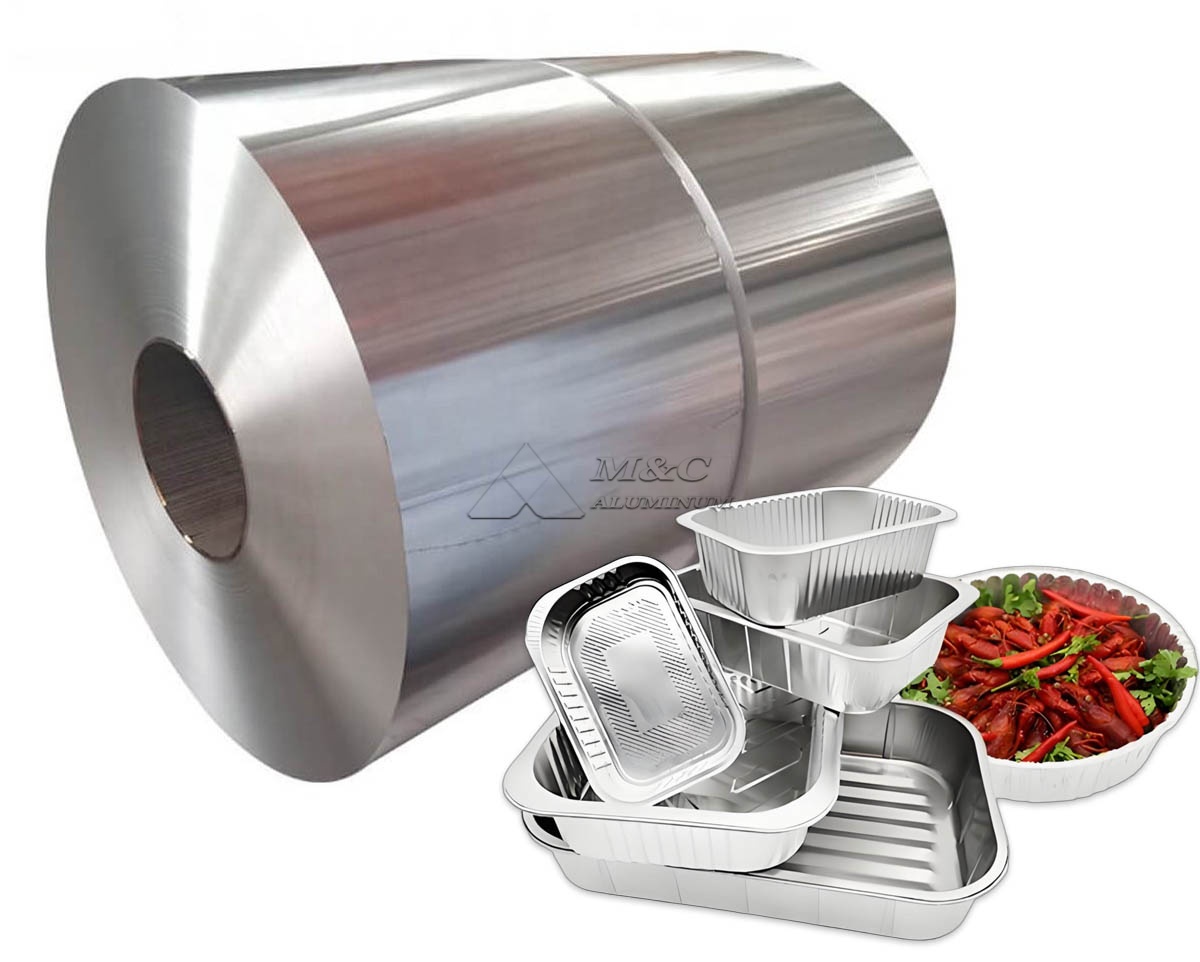
Our 8011 Aluminum Foil is produced with attention to uniform gauge, clean surface, and good roll geometry so that downstream customers can laminate, slit, and wrap the material with fewer breaks and lower process variation.
Typical Cable Applications
8011 aluminum foil for cable shielding is suitable for a wide range of cable constructions. It can be used in low-voltage communication cables, LAN cables, audio cables, CCTV cables, instrumentation cables, RF cables, alarm cables, and control cables. In these applications, the foil layer is normally helically wrapped or longitudinally folded around the cable core.
For communication and data cables, shielding stability is especially important because signal performance may be affected by external interference or crosstalk. Aluminum foil provides continuous coverage around the conductor group, and when combined with a drain wire, it helps achieve effective grounding. For industrial control cables, the shielding layer assists in resisting interference from motors, inverters, and other electrical equipment.
In some cable designs, a laminated aluminum foil tape is preferred because the polymer film improves mechanical support and reduces foil breakage during high-speed cable wrapping. The aluminum layer supplies shielding and barrier performance, while the film layer contributes tensile strength, insulation, and processing stability.
Technical Parameters of 8011 Aluminum Foil for Cable Shielding
The following table shows common manufacturing ranges. Final specifications can be adjusted according to customer cable structure, lamination method, wrapping speed, and shielding performance requirements.
| Item | Typical Specification | Notes |
|---|---|---|
| Alloy | 8011 | Al-Fe-Si alloy suitable for foil rolling and converting |
| Temper | O, H18, H22, H24 | O temper for flexibility; hard tempers for higher strength |
| Thickness | 0.006 mm to 0.050 mm | Common cable shielding range; other gauges by order |
| Width | 20 mm to 1600 mm | Jumbo roll or slit roll supply available |
| Thickness tolerance | As agreed, typically +/- 5% to +/- 8% | Depends on gauge and order standard |
| Surface | Mill finish, clean, oil-controlled | Suitable for lamination and wrapping |
| Pinhole level | Controlled according to thickness | Lower pinhole requirement for barrier applications |
| Core ID | 76 mm, 152 mm, 300 mm | Other cores can be discussed |
| Roll OD | According to customer equipment | Jumbo or small rolls available |
| Edge quality | Slit edge, low burr, clean winding | Important for high-speed wrapping and lamination |
| Packaging | Wooden case or pallet with moisture protection | Suitable for export transportation |
Chemical Composition
8011 alloy performance is based on controlled aluminum, iron, silicon, and trace elements. As a manufacturer, we manage incoming metal quality and rolling process parameters to maintain stable composition and mechanical performance.
| Element | Typical Range, % |
|---|---|
| Si | 0.50 to 0.90 |
| Fe | 0.60 to 1.00 |
| Cu | <= 0.10 |
| Mn | <= 0.20 |
| Mg | <= 0.05 |
| Zn | <= 0.10 |
| Ti | <= 0.08 |
| Other each | <= 0.05 |
| Other total | <= 0.15 |
| Al | Remainder |
Mechanical Properties and Temper Selection
Temper selection depends on how the foil will be used. For plain cable shielding foil that needs high flexibility and good foldability, O temper is often selected. For laminated aluminum polyester tape or aluminum polyethylene tape, harder tempers may be used because the polymer film supplies additional support and the final tape requires stable tensile strength during slitting and wrapping.
| Temper | Tensile Strength, MPa | Elongation, % | Typical Use |
|---|---|---|---|
| O | 60 to 100 | 8 to 20 | Flexible wrapping, folding, and lamination |
| H22 | 80 to 120 | 3 to 10 | Laminated tape with moderate strength |
| H24 | 95 to 135 | 2 to 8 | Shielding tape requiring higher stiffness |
| H18 | 120 to 170 | 1 to 5 | Hard foil for specific converting processes |
Values are typical reference ranges. Final performance is confirmed according to order thickness, temper, and applicable inspection standard.
Manufacturing Process in Our Factory
Our production route for cable shielding foil includes casting or hot rolling feedstock preparation, cold rolling, intermediate annealing when required, foil rolling, final annealing, surface inspection, thickness measurement, slitting, and packing. Each step affects the final cable performance.
During foil rolling, gauge control is essential. Uneven thickness may cause unstable tension during lamination or cable wrapping. Excessive oil residue can reduce adhesion with PET or PE film. Poor roll shape may create wrinkles, telescoping, or edge cracks during downstream converting. For this reason, we manage rolling speed, rolling oil cleanliness, roll surface condition, annealing curve, and winding tension.
Before shipment, rolls are inspected for surface defects, heavy oil stain, serious wrinkles, holes, edge damage, and winding defects. For cable shielding customers, we pay particular attention to roll tightness, end-face neatness, and slit-edge quality because these factors directly affect continuous production efficiency.
Surface Quality Requirements
Cable shielding foil usually requires a clean and uniform surface. Minor rolling marks may be acceptable if they do not affect lamination or electrical performance, but heavy oil, corrosion, black spots, severe wrinkles, and through-holes are not suitable for high-quality shielding tapes.
For laminated aluminum foil for cables, the bonding surface must be compatible with the adhesive or extrusion coating system. Customers using dry lamination, extrusion lamination, or heat-sealing processes may have different surface energy and oil residue requirements. We can discuss the target application before production so that the surface condition is matched to the converting method.
Good surface cleanliness also improves storage stability. Export orders are packed with moisture-proof materials to reduce oxidation risk during sea transportation. However, customers should store the foil in a dry warehouse, avoid condensation, and allow the material to reach room temperature before opening the package in humid climates.
Thickness Selection for Cable Shielding
The thickness of 8011 aluminum foil for cable shielding is normally selected according to shielding effectiveness, flexibility, cable diameter, and processing method. Thinner foil is easier to wrap and more economical, but it may have higher pinhole sensitivity and lower mechanical strength. Thicker foil improves barrier and handling strength, but it may reduce flexibility in small-diameter cables.
Common thicknesses include 0.009 mm, 0.012 mm, 0.015 mm, 0.020 mm, 0.025 mm, 0.030 mm, and 0.040 mm. For aluminum polyester tape, aluminum foil may be laminated with 12 um, 15 um, 23 um, or 25 um PET film, depending on cable design. The final tape thickness should consider both electrical performance and mechanical behavior during wrapping.
For applications requiring different alloy characteristics, customers sometimes compare 8011 with 1235 Aluminum Foil. 1235 offers high aluminum purity and good conductivity, while 8011 provides a robust combination of formability and strength for many industrial shielding tapes. The best option should be confirmed by cable type, production process, and test requirements.
Shielding Performance Considerations
Aluminum foil is widely used in cable shielding because it forms a continuous metallic barrier around the cable core. Its shielding effectiveness depends on coverage, overlap, grounding method, foil thickness, lamination structure, and installation quality. In most wrapped structures, the foil is applied with overlap to maintain continuity. A drain wire is often placed in contact with the aluminum side to provide a grounding path.
For high-frequency applications, surface coverage and continuity are important. For low-frequency electromagnetic interference, cable design may combine aluminum foil with braided copper, tinned copper, or aluminum-magnesium wire. In such composite shielding structures, the aluminum foil layer provides broad coverage and barrier performance, while the braid improves mechanical strength and grounding performance.
It is important to note that aluminum foil alone is not the only factor determining final cable performance. Conductor layout, insulation material, twisting pitch, drain wire placement, jacket material, and installation environment also contribute to shielding results. Therefore, we recommend that cable manufacturers validate the foil specification through cable-level testing before mass production.
Slitting and Roll Supply
Many cable manufacturers and tape converters require narrow-width rolls. We can supply jumbo rolls for customers with their own slitting lines, or slit rolls according to required width and length. Slitting precision is important because narrow tapes must run smoothly at high speed. Burrs, edge waves, and poor tension control can cause tape breakage or unstable wrapping.
For slit roll orders, customers should provide foil thickness, alloy, temper, width tolerance, inner diameter, outer diameter, maximum roll weight, winding direction, splice requirement, and packaging method. If the foil will be laminated, it is also useful to provide the film type, adhesive type, lamination temperature, and line speed.
Quality Control and Documentation
As a factory, we supply inspection documents according to order requirements. Typical quality control items include alloy verification, thickness measurement, width measurement, mechanical property testing, surface inspection, pinhole inspection, roll dimension check, and packing inspection. For export orders, we can provide a mill test certificate, packing list, commercial invoice, and other standard shipping documents.
Our objective is consistent material performance rather than short-term shipment volume. Cable factories require repeatable production, and repeatability depends on stable raw material quality. By controlling process parameters and maintaining traceability, we help customers reduce variation in lamination, slitting, and cable wrapping.
Ordering Information
To quote and produce 8011 aluminum foil for cable shielding accurately, please provide the alloy, temper, thickness, width, roll ID, roll OD or weight, quantity, application, lamination requirement, surface requirement, and destination port. If you have an existing technical standard or sample, we can review it and align production with the required parameters.
8011 aluminum foil is a practical and reliable material for cable shielding when it is manufactured with proper gauge control, clean surface, stable mechanical properties, and precise slitting. For cable manufacturers and shielding tape converters, selecting a qualified foil factory helps maintain stable processing and consistent cable performance in international B2B supply chains.