
As an aluminum foil manufacturer, we produce 8011 aluminum foil for air conditioner fins for residential air conditioners, commercial HVAC units, refrigeration equipment, and heat exchanger assemblies. In fin applications, aluminum foil is not only a thin metal strip. It is a functional material that must combine heat transfer efficiency, formability, surface cleanliness, coating adhesion, corrosion resistance, and stable performance during high-speed fin stamping.
8011 aluminum foil is widely used as air conditioner aluminum foil because it offers a practical balance of mechanical strength, elongation, corrosion resistance, and rolling stability. When processed into bare fin stock or hydrophilic aluminum foil, it can meet the requirements of many condenser and evaporator fin designs. Our production focus is to control alloy chemistry, rolling thickness, temper, surface quality, and coating properties so that customers can obtain consistent performance in fin presses and heat exchanger assembly lines.
Why 8011 Aluminum Foil Is Used For Air Conditioner Fins
Air conditioner fins require thin aluminum material with reliable thermal conductivity and good mechanical behavior during fin forming. The fins are punched, slit, corrugated, louvered, expanded, and assembled with copper tubes or aluminum tubes. If the foil has unstable thickness, uneven temper, excessive oil residue, pinholes, or poor coating adhesion, it may cause fin cracking, die contamination, stacking defects, or reduced heat exchange efficiency.
8011 aluminum foil contains aluminum with controlled additions of iron and silicon. Compared with some pure aluminum grades, 8011 can provide better strength stability in thin gauge rolling while still maintaining suitable elongation. This makes it appropriate for aluminum fin foil used in high-speed stamping equipment.
For customers selecting materials, 8011 is often compared with 1100 and 3003 alloys. 1100 aluminum foil has high thermal conductivity and excellent softness, while 3003 aluminum foil provides higher strength due to manganese content. 8011 aluminum foil is positioned between these options for many fin applications, especially where stable rolling performance, cost efficiency, and good formability are important. For projects that require alternative alloy selection, we also manufacture 3003 Aluminum Foil for certain heat exchanger and industrial foil applications.
Bare 8011 Fin Stock And Hydrophilic Coated Foil
We manufacture 8011 aluminum foil for air conditioner fins in two main forms: bare aluminum fin stock and hydrophilic coated aluminum foil.
Bare 8011 fin stock is supplied after rolling, annealing or partial hardening, degreasing, slitting, and inspection. It is suitable for customers who perform coating in-house or use uncoated fins in specific HVAC designs.
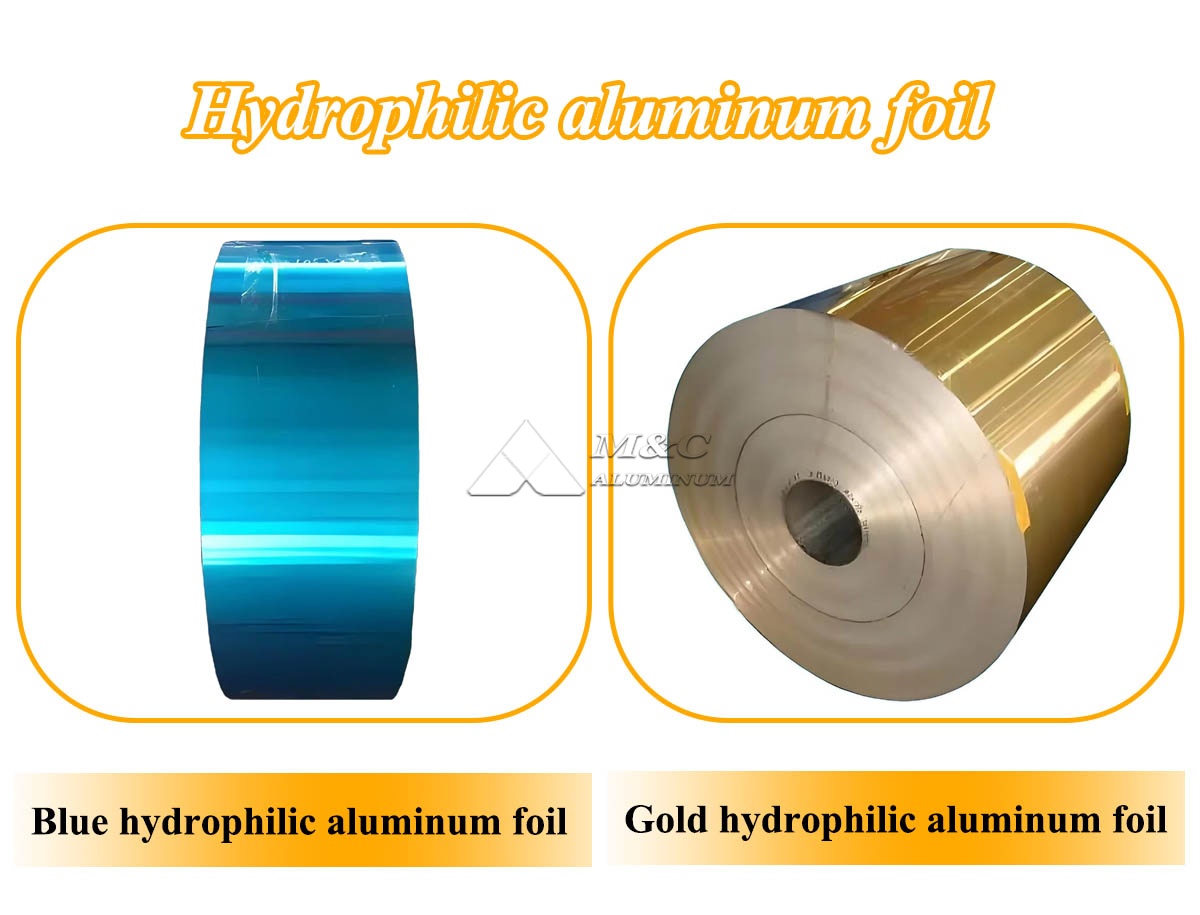
Hydrophilic aluminum foil is produced by applying a functional coating on one or both sides of the aluminum foil surface. The coating reduces the water contact angle, allowing condensed water to spread into a thin film instead of forming droplets. In evaporator fins, this helps reduce water bridging, improves drainage, lowers air resistance, and supports stable heat exchange performance. Depending on the customer specification, the coating may also provide improved corrosion resistance, odor control, and resistance to alkali or organic solvents used in downstream processing.
As a factory, we control the complete production route from rolling to coating and slitting. This integrated process helps maintain coating uniformity, surface cleanliness, and dimensional accuracy. Customers sourcing 8011 Aluminum Foil for fin production can specify bare, blue hydrophilic, gold hydrophilic, or other coating systems based on their heat exchanger design and regional operating environment.
Typical Technical Parameters
The following parameters are typical production ranges for 8011 aluminum foil for air conditioner fins. Final specifications should be confirmed according to the customer drawing, fin press condition, coating requirement, and applicable standard.
| Item | Typical Specification |
|---|---|
| Alloy | 8011 |
| Temper | O, H22, H24, H26, as specified |
| Product type | Bare fin stock, hydrophilic coated aluminum foil |
| Thickness range | 0.080 mm to 0.200 mm |
| Common thickness | 0.095 mm, 0.100 mm, 0.105 mm, 0.110 mm, 0.115 mm, 0.120 mm |
| Width range | 100 mm to 1300 mm, slit to order |
| Inner diameter | 76 mm, 150 mm, 200 mm, 300 mm, 500 mm, as required |
| Outer diameter | According to coil weight and customer line requirement |
| Surface | Bright, matte, degreased, coated |
| Coating type | Hydrophilic coating, anti-corrosion coating, customized functional coating |
| Coating color | Blue, gold, natural, customized by agreement |
| Coating side | Single side or double side |
| Initial hydrophilic angle | Commonly 10 degrees to 25 degrees, according to specification |
| Tensile strength | Controlled by temper and thickness, tested per applicable standard |
| Elongation | Controlled to support fin forming without cracking |
| Thickness tolerance | As agreed by order, typically controlled for fin stock use |
| Width tolerance | Precision slitting according to coil width and edge requirement |
| Edge quality | Trimmed edge, no serious burrs, no telescoping affecting use |
| Packaging | Export seaworthy wooden case or pallet packaging |
Manufacturing Process In Our Factory
The performance of 8011 aluminum foil for air conditioner fins depends on each production step. We manage the process through raw material selection, casting or billet control, hot rolling or continuous casting route, cold rolling, intermediate annealing, final rolling, degreasing, coating, curing, slitting, and packaging.
In rolling production, thickness uniformity is a key factor. Air conditioner aluminum foil is normally used in thin gauges, so small thickness deviations can influence fin height, stacking density, tube expansion, and heat exchanger assembly precision. We use controlled rolling schedules and online thickness monitoring to keep the coil stable across the width and along the length.
Annealing and temper control are also important. If the foil is too soft, it may wrinkle or deform during fin punching. If it is too hard, cracking may occur at louvers, collars, or complex fin geometries. We adjust the temper according to the final fin design and the customer's stamping speed.
For hydrophilic coated foil, surface pretreatment is essential. The aluminum surface must be clean and chemically suitable for coating adhesion. Coating thickness, curing temperature, line speed, and post-curing condition must be controlled to avoid uneven hydrophilicity, peeling, odor, or blocking between coil layers.
Surface Quality Requirements For Aluminum Fin Foil
Surface quality directly affects heat exchanger production and long-term performance. Our 8011 aluminum foil for air conditioner fins is inspected to reduce visible and functional defects such as heavy oil stains, black spots, roll marks, scratches, holes, coating streaks, and severe oxidation.
For bare foil, the surface must be clean enough for downstream coating or direct fin forming. For hydrophilic aluminum foil, coating continuity is especially important. Discontinuous coating can result in poor water spreading and inconsistent drainage behavior across the evaporator surface.
Coil shape is also part of quality control. Tight winding, flat edges, controlled coil hardness, and stable inner diameter are necessary for smooth unwinding at the customer's fin press. Poor coil shape can cause tracking issues, tension fluctuation, or production downtime.
Hydrophilic Performance And Corrosion Resistance
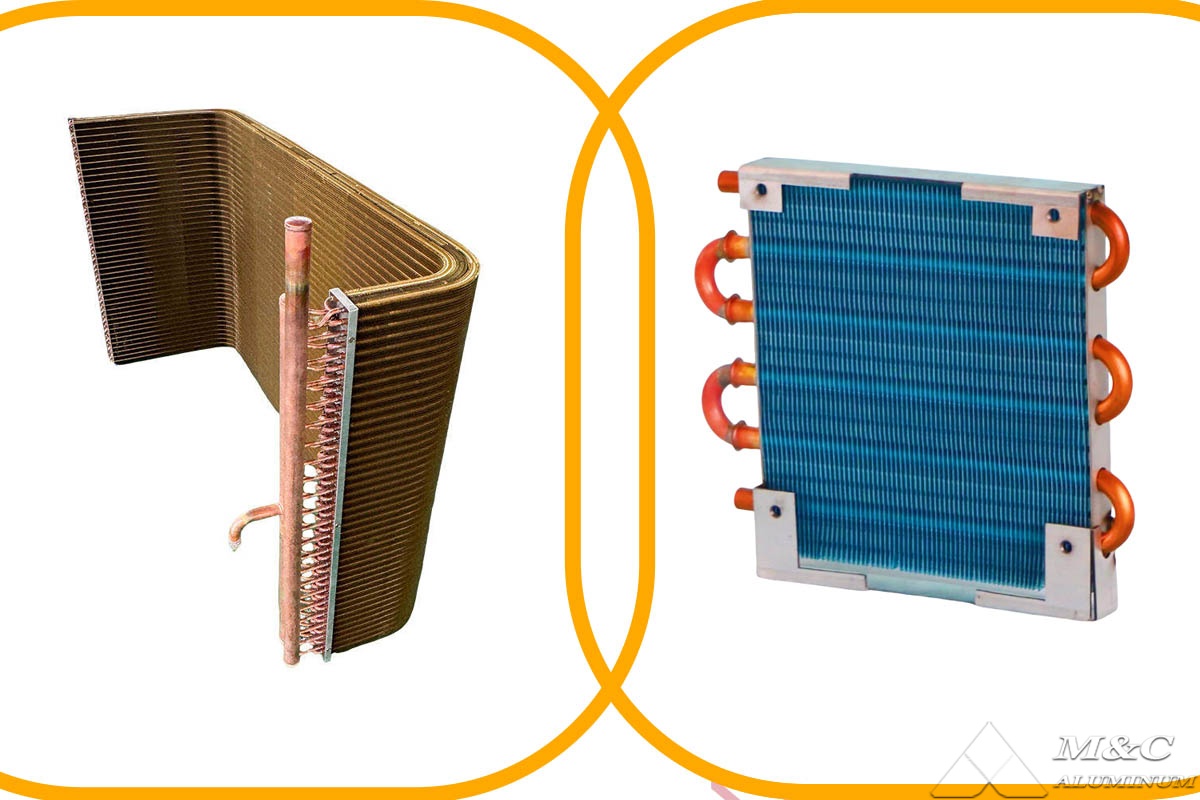
In air conditioning systems, evaporator fins work in a humid environment. Condensate forms continuously on the fin surface. When droplets remain between fins, air flow resistance increases and heat exchange efficiency may decline. Hydrophilic aluminum foil helps the condensed water spread quickly and drain more easily.
Hydrophilic performance is commonly evaluated by water contact angle testing. A lower contact angle indicates better wetting. However, the initial value is not the only consideration. The coating should also maintain acceptable hydrophilicity after repeated wet and dry cycles, heat exposure, and contact with condensate. For this reason, we can test initial contact angle, post-aging contact angle, coating adhesion, boiling water resistance, alkali resistance, and neutral salt spray performance according to agreed methods.
Corrosion resistance requirements vary by market. Coastal areas, high humidity regions, industrial environments, and refrigeration applications may require enhanced anti-corrosion performance. For these applications, we can adjust the coating system or recommend suitable specifications after reviewing the customer's working environment and service expectations.
Selection Considerations For HVAC Manufacturers
When selecting 8011 aluminum foil for air conditioner fins, HVAC manufacturers should consider more than alloy and price. The appropriate specification should match the fin die, fin pitch, louver design, tube arrangement, production speed, and heat exchanger operating conditions.
Thickness is one of the most important factors. Thinner foil can reduce material weight and may increase fin density, but it requires better control of strength and formability. Thicker foil can improve rigidity but may increase material consumption. The best selection depends on the customer's thermal design and manufacturing capability.
Temper selection should be confirmed through trial production when a new fin design is introduced. H22 and H24 are common choices for many fin applications, while other tempers may be used depending on forming depth and strength requirements. For coated foil, the effect of coating and curing on final mechanical behavior should also be considered.
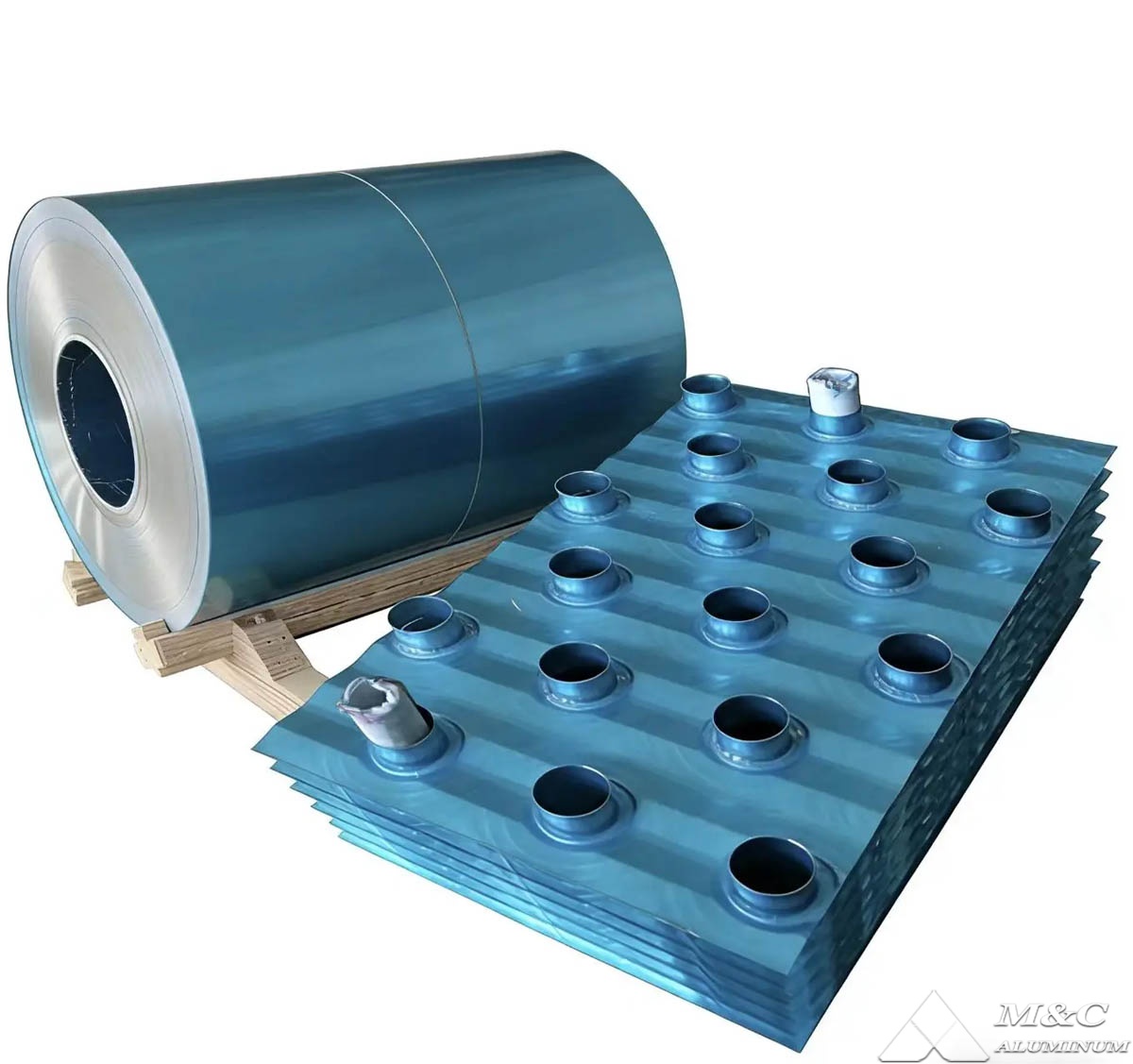
Width and coil size should match the fin press unwinding system. We supply slit coils according to customer drawings, with attention to burr control and edge condition. For large-volume orders, stable coil dimensions help reduce production adjustment and improve line efficiency.
Quality Inspection And Documentation
As a manufacturer, we maintain inspection at multiple stages instead of relying only on final coil checks. Incoming raw materials, rolling process data, annealing records, surface inspection, coating performance, slitting accuracy, and packaging condition are all reviewed before shipment.
Typical inspection items include chemical composition, thickness, width, tensile strength, elongation, surface condition, pinhole inspection where applicable, coating weight, contact angle, adhesion, color uniformity, and coil appearance. Test reports can be supplied according to the purchase order and customer requirements.
For export orders, packaging is designed to protect the coil from moisture, impact, and deformation during long-distance transportation. Coils are wrapped with moisture-proof materials, fixed on pallets or in wooden cases, and marked for easy identification. Proper packaging is essential because thin aluminum fin foil is sensitive to edge damage and coil deformation.
Applications Of 8011 Aluminum Foil In Air Conditioning Systems
8011 aluminum foil for air conditioner fins is used in evaporators, condensers, heat pump units, fan coil units, refrigeration equipment, dehumidifiers, and other heat exchanger products. It is suitable for household air conditioners as well as many commercial and light industrial HVAC systems.
In evaporators, hydrophilic coated 8011 aluminum foil is commonly selected to improve condensate drainage. In condensers, bare or coated foil may be chosen depending on the corrosion environment and design requirements. For special applications, the coating formulation, thickness, and mechanical properties can be adjusted based on the customer's technical specification.
Conclusion
8011 aluminum foil is a practical and widely used material for air conditioner fins because it offers stable formability, suitable strength, good surface processability, and compatibility with hydrophilic coating systems. For HVAC manufacturers, consistent quality is essential for fin forming efficiency, heat exchanger assembly, and long-term operating performance.
As an aluminum foil factory, we manufacture 8011 aluminum foil for air conditioner fins with controlled alloy composition, rolling precision, temper stability, coating performance, slitting quality, and export packaging. Whether the requirement is bare aluminum fin foil or hydrophilic aluminum foil, we can produce according to customer drawings, technical standards, and application conditions.