
Today, armored cables have become an important choice for many engineering projects, including power transmission, petrochemical facilities, marine construction, mining operations, and transportation infrastructure. As the "protective armor" of a cable, the armor layer can effectively improve mechanical strength and environmental resistance.
Among armor materials, 5052 H32 aluminum alloy strip has gradually become one of the important materials for aluminum-alloy armored cables due to its good strength, corrosion resistance, formability, and lightweight properties.
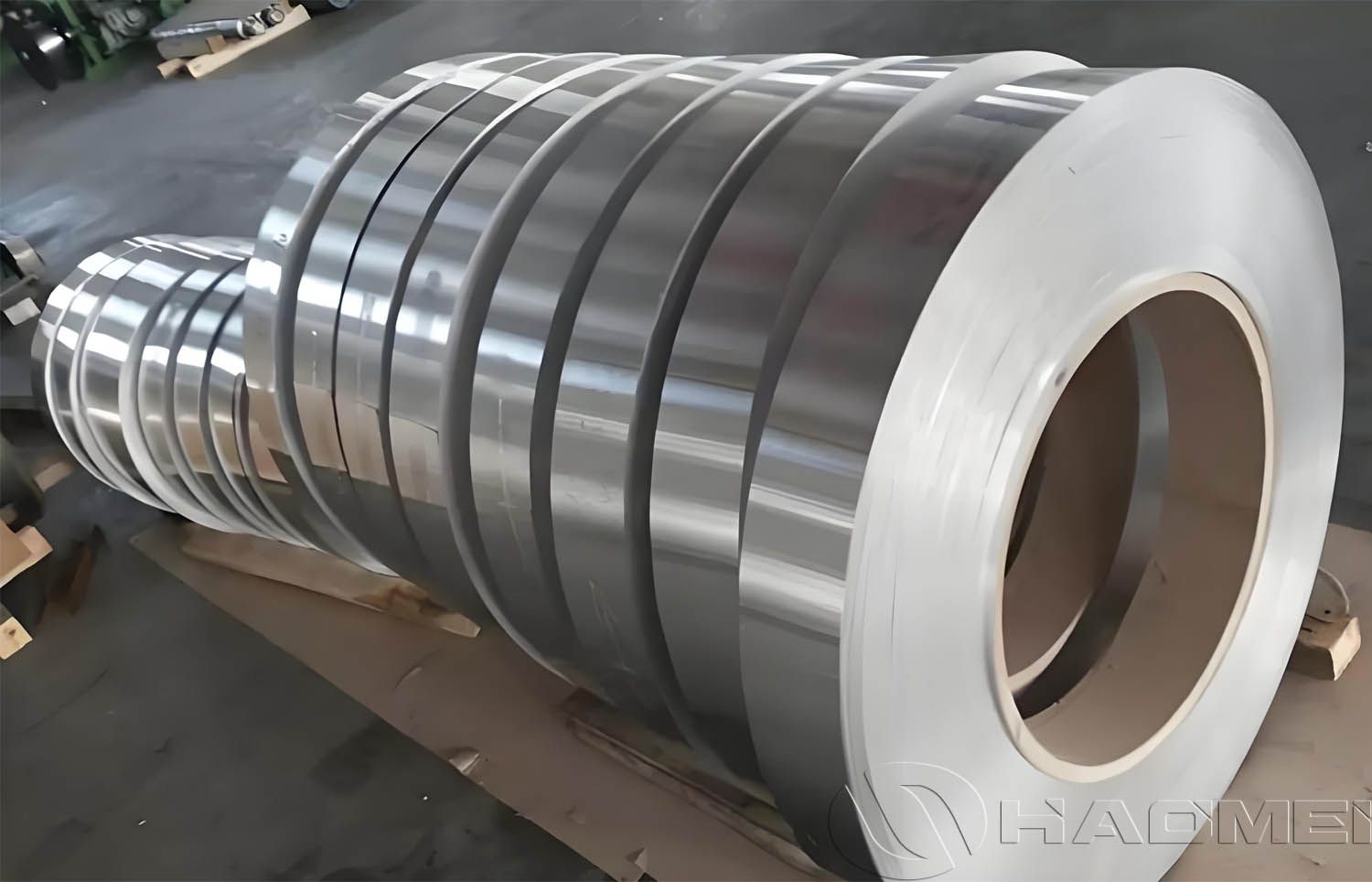
What Is 5052 H32 Aluminum Alloy Strip?
5052 is an Al-Mg series aluminum alloy. Its primary alloying element is magnesium, together with small amounts of other elements. This alloy offers good corrosion resistance, formability, and medium strength. It is widely used in marine, transportation, construction, electrical, and industrial manufacturing applications.
H32 is a strain-hardened and stabilized temper of 5052 aluminum alloy. It indicates that the material has been work-hardened and then stabilized to achieve a balanced level of strength and formability.
Typical Mechanical Properties
| Property | Typical Value |
| Tensile Strength, σb | ≥ 195 MPa |
| Yield Strength, σs | ≥ 110 MPa |
| Elongation, δ | ≥ 12% |
| Electrical Conductivity | Approx. 35% IACS |
Compared with softer tempers of 5052 aluminum strip, 5052 H32 provides higher strength while retaining good ductility and processing performance. It is therefore well suited for cable armor applications that require a certain level of rigidity, impact resistance, and forming capability.
For armored cable production, 5052 H32 aluminum alloy strip is generally processed into continuous coils and formed into an external protective layer through longitudinal wrapping, spiral wrapping, interlocking forming, or other mechanical forming methods.
As a professional manufacturer of aluminum strips for cable armor, HAOMEI supplies not only 5052 aluminum strip but also 5154, 5154A, 5754, and other alloy options. Typical thicknesses range from 0.5 mm to 0.9 mm, while common widths include 9.5 mm, 12.7 mm, 19 mm, and 25.4 mm. Customized specifications are also available according to customer requirements.
Why Choose 5052 H32 Aluminum Alloy Strip for Armored Cables?
Lightweight
Aluminum has a density of approximately one-third that of steel. Cables armored with 5052 H32 aluminum alloy strip are significantly lighter than traditional steel tape armored cables.
Reduced cable weight makes transportation, handling, installation, and routing easier, especially in large-scale infrastructure projects, high-rise buildings, offshore facilities, and confined installation spaces.
Non-Magnetic Performance
Aluminum alloy is a non-magnetic material. It does not generate hysteresis loss or eddy current loss associated with magnetic materials.
This characteristic is particularly beneficial in electrical applications where minimizing magnetic interference and energy loss is important.
Excellent Corrosion Resistance
The surface of aluminum alloy naturally forms a dense and protective oxide film. This film helps resist corrosion caused by salt spray, moisture, humidity, and certain chemical substances.
Compared with conventional steel armor materials, 5052 H32 aluminum strip offers an important corrosion-resistance advantage, especially in marine, coastal, humid, and chemically exposed environments.
Good Strength and Hardness
Due to its semi-hard H32 temper, 5052 aluminum alloy strip has relatively high tensile strength and hardness. It can effectively resist external mechanical damage, impact, compression, and abrasion during cable installation and service.
Relatively Good Electrical Conductivity
Its electrical conductivity is approximately 35% IACS. Although cable armor is primarily used for mechanical protection rather than electrical conduction, this conductivity can be advantageous in certain cable designs and grounding-related applications.
Easy Cold Forming
5052 H32 aluminum strip performs well in cold forming processes, including cold drawing, stamping, bending, and interlocking forming. It can be conveniently formed into different cable armor profiles and structures.
Good Weldability
5052 H32 aluminum alloy strip has good welding performance and may be used in certain cable end connections or related structural components when appropriate welding methods are applied.
Interlocking Armor: The Ideal Application for 5052 H32
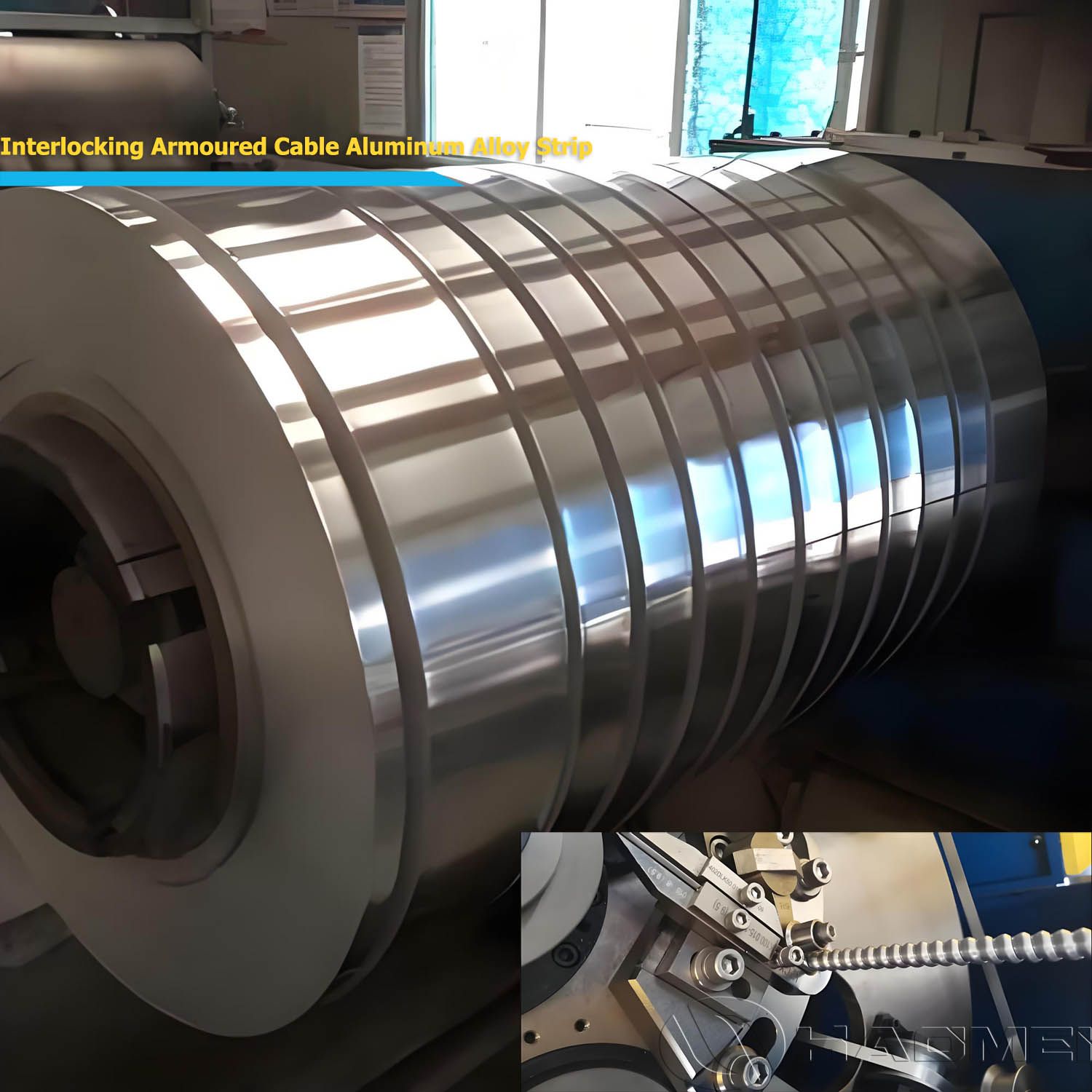
In the armored cable industry, one of the most common applications of 5052 H32 aluminum alloy strip is interlocking armor.
Interlocking armor is a specialized cable armor structure in which aluminum alloy strip is helically wrapped around the cable core using an armoring machine. The strip is formed into an internally interlocked S-shaped or Z-shaped profile.
This structure offers two major benefits: high flexibility and self-locking mechanical strength.
Compared with traditional steel tape armored cables, interlocking armored cables are more flexible and easier to bend and install. This is particularly advantageous in applications with restricted installation space, complex routing paths, or frequent bending requirements.
At the same time, the interlocking profile provides excellent mechanical protection. The armor layer can withstand external pressure, impact, and handling stress while maintaining a relatively lightweight cable construction.
5052 H32 aluminum alloy strip is considered an ideal material for interlocking armor because it provides the ductility needed for interlocking forming while maintaining sufficient strength to ensure the protective function of the armor layer.
Specifications of Aluminum Strip for Cable Armor
| Item | Typical Range / Specification |
| Alloy | 5052 |
| Temper | H32 |
| Thickness | 0.15–3.0 mm |
| Common Thicknesses | 0.20 mm, 0.30 mm, 0.40 mm, 0.50 mm, 0.80 mm, 1.00 mm |
| Width | 10–1500 mm, customizable |
| Length | 1000–16000 mm, customizable |
| Supply Form | Aluminum strip coils or slit coils |
| Surface | Bright finish, mill finish, etc. |
| Edge | Slit edge or processed according to customer requirements |
| Packaging | Moisture-proof, impact-resistant export packaging |
| Applications | Cable armor, interlocking armor, cable protection, etc. |
What Is the Difference Between 5052 H32 Aluminum Strip and Ordinary Aluminum Strip?
Not every type of aluminum strip is suitable for cable armoring.
Cable armor applications place strict requirements on material strength, ductility, thickness tolerance, edge quality, and continuous processing stability.
The advantage of 5052 H32 lies in the fact that 5052 alloy provides good corrosion resistance and formability, while the H32 temper further improves material strength and resistance to deformation.
As a result, it achieves a good balance between lightweight construction and mechanical protection.
If a cable manufacturer uses aluminum strip that is too soft, the finished armor layer may not provide sufficient mechanical protection. On the other hand, if the selected material has excessively high strength but insufficient ductility, it may be difficult to form and may increase the risk of strip breakage during high-speed armoring operations.
Therefore, cable manufacturers should select aluminum armor strip based on the final forming process, cable structure, installation conditions, and required protection level.
Manufacturing Process of 5052 H32 Aluminum Alloy Strip
The manufacturing process of 5052 H32 aluminum strip generally includes the following steps:
1. Alloy Melting
Aluminum, magnesium, manganese, and other alloying elements are melted and processed into molten aluminum alloy with controlled chemical composition.
2. Strip Production
The molten alloy is cast into aluminum slab or coil stock and then processed into wide strip through hot rolling and subsequent rolling operations.
3. Heat Treatment and Temper Control
The aluminum strip is subjected to appropriate processing and stabilization treatment to achieve the H32 temper, ensuring the required balance of strength, ductility, and forming performance.
4. Cold Processing
The strip may undergo cold rolling, slitting, stamping, drawing, or other processing methods to obtain the required thickness, width, shape, and dimensional accuracy for cable armoring.
5. Surface Treatment
Depending on application requirements, the strip surface may be treated through oiling, oxidation protection, or other surface processes to improve corrosion resistance, wear resistance, storage stability, and forming performance.
Typical Application Areas
Thanks to its excellent physical and chemical properties, 5052 H32 aluminum alloy strip is widely used in cable applications with high requirements for safety and reliability.
Interlocking Armored Power Cables
5052 H32 aluminum strip is an ideal interlocking material for MC cables and AC cables, which are widely used in North American and European cable standards.
The material provides a combination of mechanical protection, flexibility, corrosion resistance, and lightweight performance.
Marine and Coastal Engineering Cables
It can be used in cables for offshore wind power projects, coastal terminals, ports, ships, and marine engineering facilities where salt spray corrosion resistance is essential.
Chemical and Mining Cables
5052 H32 aluminum strip is suitable for cable systems operating in environments exposed to corrosive gases, chemical media, high humidity, underground installation conditions, and possible mechanical impact.
Rail Transit and Underground Utility Tunnels
Railway systems, subway projects, and underground utility corridors often require lightweight, vibration-resistant, non-magnetic, and long-service-life cable materials. Aluminum alloy armor made from 5052 H32 strip is a suitable option for these applications.
Quality Control for Aluminum Alloy Strip Used in Cable Armor
Dimensional Tolerance and Flatness
Thickness tolerance and strip flatness are critical factors in cable armor production. In many applications, thickness tolerance is controlled within approximately ±0.02 mm.
Edge burr control is equally important. Excessive burrs may damage the insulation layer or sheath of the internal cable during the armoring process.
Surface Quality
The strip surface should be clean, smooth, and free from oil contamination, deep scratches, oxidation spots, dents, cracks, and other defects.
Stable surface quality helps ensure smooth high-speed forming and reliable performance during cable service.
Consistency of Mechanical Properties
Mechanical properties must remain highly consistent within the same production batch. Tensile strength is generally controlled within an appropriate range, often around 210–260 MPa depending on the product specification and customer requirements.
Stable yield strength, tensile strength, and elongation help prevent strip breakage, poor interlocking, loose engagement, or unstable forming during high-speed cable armoring operations.