
As a manufacturer of precision aluminum foil, we produce etched aluminum foil for supercapacitors designed for use as high-surface-area electrode current collector material. Supercapacitor applications require consistent electrical conductivity, controlled surface morphology, reliable mechanical properties, and clean foil surfaces that support subsequent coating, assembly, and electrolyte compatibility.
Our production process combines aluminum foil rolling, surface cleaning, electrochemical etching, rinsing, drying, slitting, and final inspection. By controlling each stage within our factory, we can supply supercapacitor electrode foil with stable coil-to-coil quality for manufacturers of electric double-layer capacitors, hybrid capacitors, energy storage modules, regenerative braking systems, backup power units, and industrial power electronics.
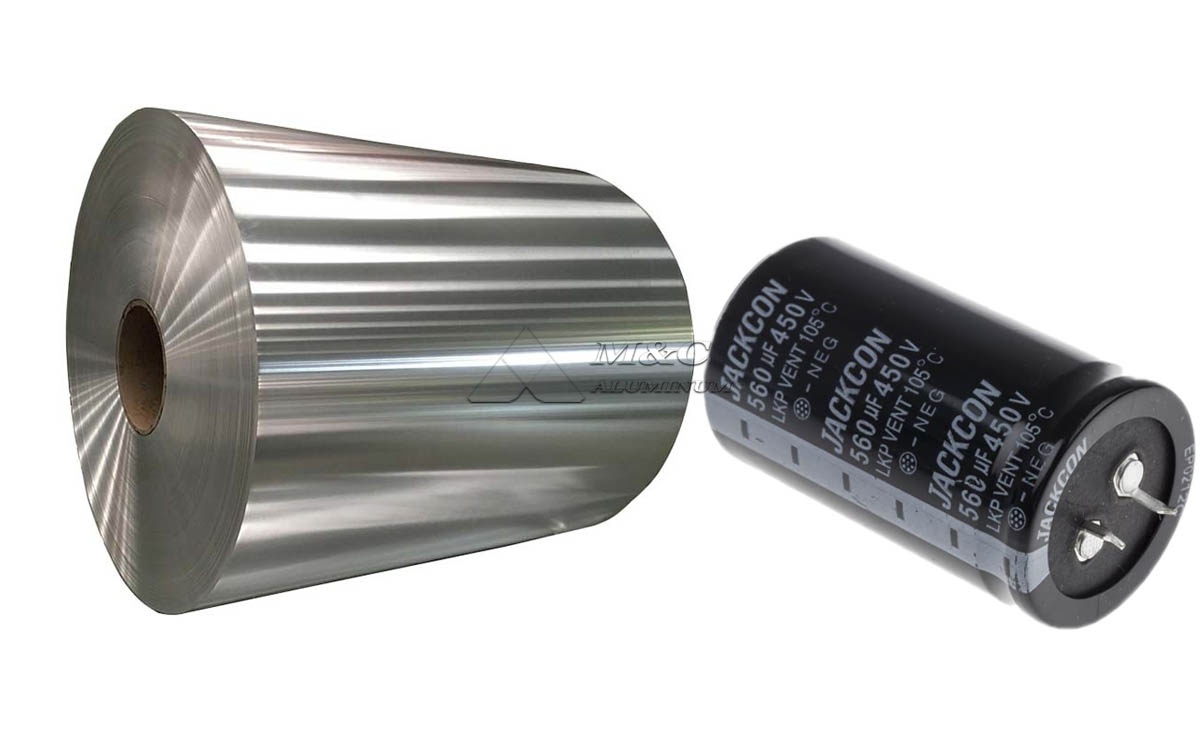
Role of Etched Aluminum Foil in Supercapacitors
Etched aluminum foil is used to increase the effective surface area of an aluminum current collector. During electrochemical etching, a controlled microstructure is formed on the foil surface. This structure provides a larger contact area than smooth rolled aluminum foil, helping support charge storage and electrode coating performance in supercapacitor production.
The performance of etched foil depends on more than surface roughness alone. Foil purity, grain structure, base metal cleanliness, etching uniformity, residual contaminants, oxide behavior, and mechanical strength can all influence processing stability. For supercapacitor manufacturers, inconsistent foil may lead to uneven active material coating, unstable electrical contact, variation in internal resistance, or reduced production yield.
As an etched aluminum foil manufacturer, we focus on producing foil with uniform surface treatment and dependable dimensional control. Our material can be supplied in coils for automated slitting, electrode coating, winding, stacking, and cell assembly lines.
Manufacturing Process for Supercapacitor Etched Foil
Our etched aluminum foil production begins with carefully selected aluminum base foil. High-purity aluminum is preferred where electrical performance, corrosion behavior, and consistent electrochemical response are critical. The base foil is rolled to the required thickness and subjected to cleaning before entering the etching process.
1. Base Foil Selection and Rolling
The starting material must have stable chemical composition and low inclusion content. We control rolling parameters to achieve the required thickness, flatness, tensile characteristics, and surface condition. For customers requiring standard aluminum grades for related industrial applications, our 1100 Aluminum Foil production capability provides a relevant reference for our rolled foil process control.
2. Surface Degreasing and Cleaning
Before etching, oil residues, rolling compounds, dust, and other contaminants must be removed. A clean surface is necessary for a uniform electrochemical reaction. Our cleaning process is controlled to minimize residual surface contamination before etching.
3. Electrochemical Etching
The foil passes through an etching system where electrical current and electrolyte conditions create a controlled surface texture. Etching parameters are adjusted according to the customer's required application, including foil thickness, target surface development, and subsequent electrode manufacturing process.
4. Rinsing, Drying, and Surface Stabilization
After etching, the foil is thoroughly rinsed to remove electrolyte residues. Controlled drying helps maintain clean and stable surfaces before rewinding. Where required, we can discuss additional surface treatment or passivation requirements based on the customer's coating system and cell design.
5. Slitting and Final Coil Inspection
Finished etched foil is slit to the required width and wound under controlled tension. Each coil is inspected for thickness, width, edge condition, surface uniformity, coil appearance, and packaging integrity before shipment.
Typical Technical Parameters
The following table shows typical supply capabilities for etched aluminum foil for supercapacitors. Final parameters should be confirmed according to electrode design, coating process, and end-use operating conditions.
| Parameter | Typical Range or Requirement | Notes |
|---|---|---|
| Aluminum purity | 99.90% to 99.99% | Selected according to electrical and electrochemical requirements |
| Alloy basis | High-purity aluminum, 1xxx series | Customized base foil chemistry available upon review |
| Foil thickness | 10 to 50 microns | Other thicknesses may be evaluated for specific projects |
| Width | 20 to 1,250 mm | Slit width based on electrode production equipment |
| Thickness tolerance | According to agreed specification | Controlled by foil gauge and inspection system |
| Surface condition | Electrochemically etched | Uniform microstructured surface treatment |
| Coil inner diameter | 150 mm, 300 mm, 505 mm | Other core sizes available by agreement |
| Coil outer diameter | According to handling requirement | Determined by thickness, width, and coil weight |
| Coil weight | Customized | Suitable for manual or automated production lines |
| Edge quality | Trimmed, burr-controlled | Important for slitting, winding, and stacking operations |
| Surface cleanliness | Low residual oil and contamination | Verified according to agreed quality standards |
| Packaging | Moisture-resistant export packaging | Protection during international transportation |
Quality Control for Etched Aluminum Foil
Supercapacitor aluminum foil must maintain consistent performance across production batches. Our quality management process includes incoming material verification, in-process monitoring, and final inspection. We use defined control points throughout rolling, cleaning, etching, slitting, and packing operations.
Key quality checks include:
Chemical composition verification of aluminum base material.
Thickness measurement across foil width and coil length.
Width, edge burr, and slit quality inspection.
Surface appearance review for stains, scratches, pinholes, and handling marks.
Etching uniformity assessment according to the agreed product specification.
Coil winding quality inspection, including telescoping and tension condition.
Packaging verification for moisture protection and transport security.
For technical projects, we recommend that customers confirm the evaluation method used for surface structure, electrical resistance, coating adhesion, and electrolyte compatibility before volume production. This helps align the foil specification with the complete supercapacitor manufacturing process rather than assessing the foil in isolation.
Key Selection Factors for Buyers
When selecting suppliers of etched aluminum foil for supercapacitors, purchasing teams should consider the production capability behind the material. A factory should be able to provide clear information about base foil composition, etching process consistency, dimensional tolerances, surface cleanliness, coil format, and traceability.
Base Foil Purity and Metallurgical Consistency
High-purity aluminum supports stable conductivity and predictable electrochemical behavior. The foil should also have controlled grain structure and low levels of inclusions that could affect etching uniformity or mechanical reliability.
Etched Surface Uniformity
Surface structure should be consistent across the coil width and from coil to coil. Non-uniform etching can affect active material deposition, electrical contact, and electrode performance. We maintain controlled etching conditions and inspect finished material according to customer-approved standards.
Dimensional Accuracy
Stable thickness and width are essential for automated electrode production. Thickness variation can influence coating weight, winding tension, and final cell consistency. Accurate slit edges also reduce the risk of short circuits or defects during assembly.
Compatibility With Downstream Processing
The required foil specification depends on whether the customer uses slurry coating, dry electrode processing, winding, stacking, or other electrode manufacturing methods. We work with customers to define practical coil dimensions, surface requirements, and packaging methods compatible with their equipment.
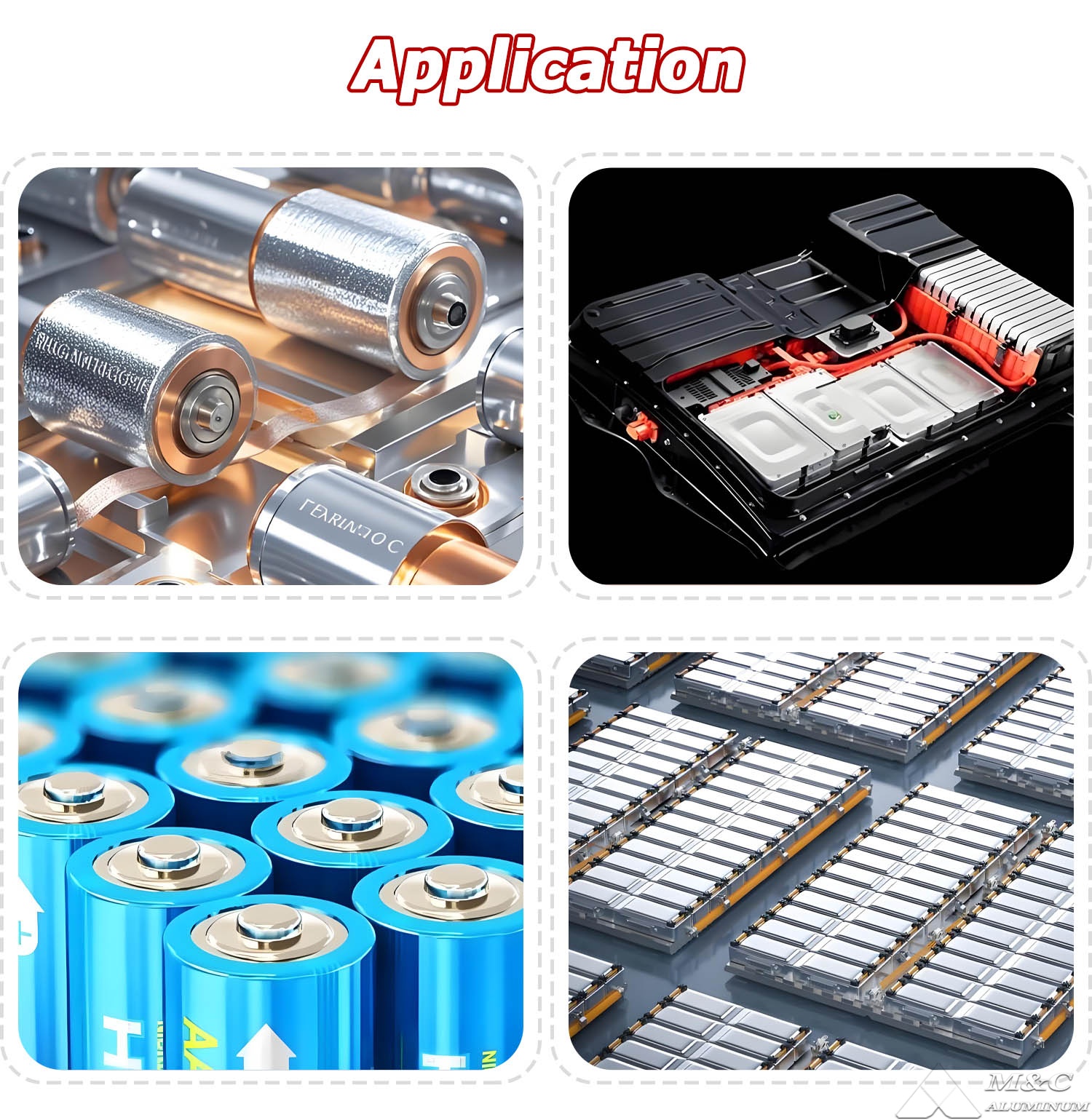
Applications of Our Supercapacitor Etched Aluminum Foil
Our etched aluminum foil is intended for supercapacitor and energy storage applications requiring conductive aluminum collector material with developed surface characteristics. Typical applications include:
Electric double-layer capacitors.
Hybrid supercapacitors.
Industrial backup power systems.
Smart meter and utility energy storage devices.
Automotive regenerative braking modules.
Start-stop and power assist systems.
Renewable energy storage equipment.
Telecommunications backup systems.
High-power pulse discharge devices.
In addition to etched foil, our factory manufactures aluminum foil products for industrial, packaging, and technical applications. Customers sourcing multiple aluminum foil specifications can review our broader Products range for available grades, thicknesses, and processing options.
Packaging and Export Supply
For export orders, etched aluminum foil is packed to reduce risks from moisture, dust, vibration, and coil deformation during transport. Coils are protected with suitable wrapping materials, edge protection, moisture barriers, and reinforced outer packaging according to shipping conditions.
We can provide packaging configurations based on customer requirements, including palletized coils, horizontal or vertical packing orientation, specified core sizes, coil labels, and batch identification. For long-distance sea shipment, appropriate moisture-resistant packing is particularly important because etched surfaces should remain clean before electrode processing.
Working With Our Factory
As a manufacturer, we support customers from material selection through trial orders and regular production supply. To prepare an accurate quotation for etched aluminum foil for supercapacitors, we normally require the target thickness, width, alloy or purity requirement, etched surface requirement, coil weight, core size, quantity, destination port, and applicable inspection standard.
For new developments, we recommend initial sample evaluation under the customer's actual coating and cell assembly conditions. Once the material specification is verified, we can establish stable production parameters for repeat supply. Our objective is to provide consistent etched aluminum foil that supports reliable supercapacitor electrode manufacturing and controlled long-term procurement.