
In the pharmaceutical, healthcare, and high-end consumer goods packaging industries, blister packaging is widely used due to its excellent sealing performance, high safety level, and strong product presentation. Within a blister packaging structure, the performance of the aluminum foil lidding material directly determines the barrier properties, opening behavior, and overall package quality.
Medical Blister Aluminum Foil Overview
In pharmaceutical blister packaging systems, aluminum foil is not merely a sealing material, it is a critical protective barrier for drug safety. Medical aluminum foil is subject to strict and well-established industry standards in terms of alloy selection, thickness control, and performance stability.
Common Alloy Grades
Medical aluminum foil typically uses pure aluminum or high-purity aluminum alloys to ensure excellent ductility, barrier performance, and processing stability. Common alloys include:
1. 8011 Aluminum Foil (Most Widely Used Medical Alloy)
High aluminum content with strict impurity control
Stable mechanical properties and strong pinhole resistance
Excellent surface quality, suitable for heat-seal coating and high-precision printing
Widely used for PTP pharmaceutical foil and blister lidding material
8011 alloy is currently the most widely used and most mature grade in global pharmaceutical blister aluminum foil applications.
2. 8021 Aluminum Foil (High-Barrier and High-Reliability Applications)
Balanced strength and elongation
Lower pinhole rate, suitable for high-barrier and high-stability requirements
Commonly used in high-end pharmaceuticals and export-oriented medical packaging
3. 1235 Aluminum Foil (High-Purity Aluminum Foil)
Aluminum content ≥ 99.35%
Excellent ductility, suitable for deep processing and laminated structures
Mainly used in medical and food packaging requiring high softness
Among medical blister lidding materials, 8011 and 8021 alloys are the most mature and compatible combinations.
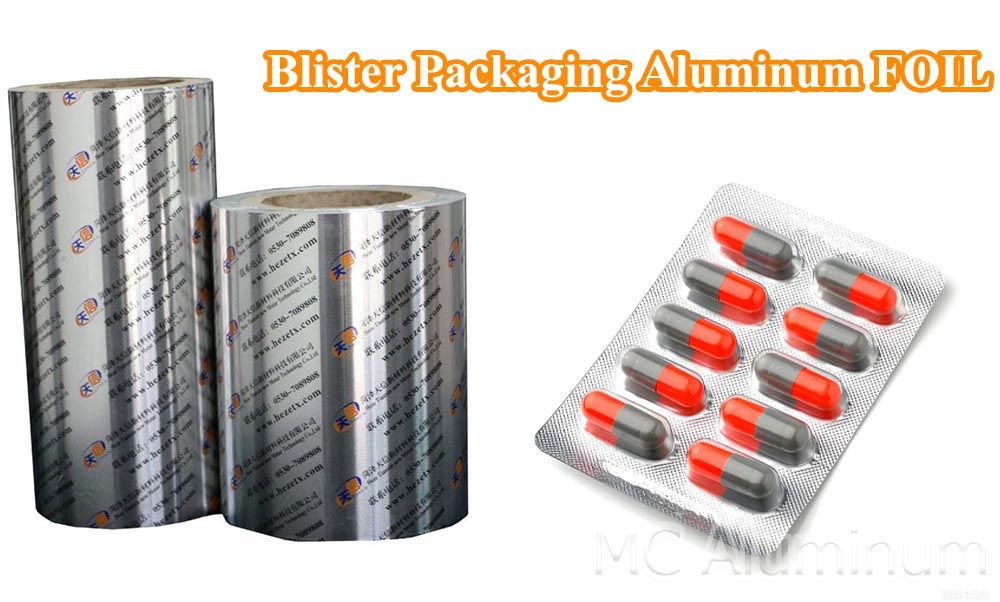
Common Thickness Range for Pharmaceutical Packaging Aluminum Foil
Depending on the drug type, packaging structure, and opening method, the thickness of medical aluminum foil varies:
| Thickness Range | Typical Application Characteristics |
| 16–18 μm | Lightweight packaging, cost-sensitive, limited strength margin |
| 20 μm | Mainstream thickness for medical blister packaging, best overall performance |
| 22–25 μm | High-strength requirements, improved impact and puncture resistance |
| ≥ 30 μm | Special structures or industrial sealing applications, rarely used in medical packaging |
In practical applications, 20 micron aluminum foil has become the industry-standard thickness for medical blister lidding.
Why 20 Microns?
| Item | Explanation |
| Thickness | 20 µm is one of the most commonly used thicknesses in blister packaging, offering sufficient mechanical strength while maintaining lightweight and excellent sealing performance. |
| Barrier Performance | Aluminum foil provides outstanding barriers against gases (oxygen, carbon dioxide), water vapor, and light, effectively extending the shelf life of pharmaceuticals and food products. |
| Printability | Smooth and uniform surface, suitable for water-based, solvent-based, and thermal transfer printing, enabling high-definition graphics and anti-counterfeiting features. |
| Sealing Performance | When heat-sealed with polymer films (such as PVC, PVDC, PE), it forms a tight blister cavity that prevents leakage. |
| Flexibility | Compared with thicker foils, 20 µm aluminum foil offers better flexibility, facilitating blister forming and high-speed packaging machine operation. |
Key Performance Indicators of 20 Micron Aluminum Foil
| Tensile Strength | ≥ 180 MPa |
| Tear Strength | ≥ 30 N/15 mm |
| Water Vapor Transmission Rate (WVTR) | ≤ 0.5 g·m⁻²·day⁻¹ (38 °C, 90% RH) |
| Oxygen Transmission Rate | ≤ 0.01 cm³·m⁻²·day⁻¹·atm⁻¹ |
Alloy Advantages of Blister Packaging Aluminum Foil
1.Barrier Properties:
Aluminum foil provides near-total protection against moisture, oxygen, light, and odors, effectively preserving active ingredients and extending shelf life-especially critical for tablets, capsules, and effervescent products.
2.Heat-Sealing Performance:
With precisely matched heat-seal coating systems, 20 micron aluminum foil achieves strong and uniform seals across various temperatures and pressures, minimizing seal failures and supporting high-speed automated packaging lines.
3.Printing Performance:
High-quality aluminum foil substrate combined with professional coating technology ensures excellent ink adhesion and supports fine multi-color printing, enhancing brand visibility and meeting pharmaceutical labeling requirements.
4.Compliance with Medical and Food Safety Standards:
20 micron blister aluminum foil complies with relevant pharmaceutical packaging and food contact regulations, ensuring safety and reliability throughout the product lifecycle.
5.Recyclability:
Aluminum foil is a recyclable material, with global aluminum recycling rates exceeding 70%.
Typical Applications
Pharmaceutical Industry: Tablets, capsules, pills, dietary supplements
Functional Foods: Nutritional supplements, single-dose food products
High-Value Consumer Goods: Electronic components, moisture-sensitive small items
20 Micron Medical Aluminum Foil Specifications
| Common Alloy Grades | 8011 / 8021 / 1235 |
| Aluminum Content | ≥ 98.5% (8011) / ≥ 99.0% (8021) / ≥ 99.35% (1235) |
| Temper | O (Annealed) |
| Thickness | 16-25 μm |
| Width | 100-1600 mm |
| Length | 1000-16000 mm |
| Thickness Tolerance | ±5% or as required |
| Surface Finish | Matte / Bright |
| Coating Type | Heat-seal coating (compatible with PVC / PVDC / PET / PP) |
| Heat Seal Strength | ≥ 6-10 N/15 mm (customizable) |
| Opening Type | Push-through / Peelable |
| Pinhole Rate | ≤ Medical industry standard (high-barrier grade) |
| Surface Tension | ≥ 32-38 dyn/cm |
| Printing Performance | Suitable for single-color or multi-color pharmaceutical printing |
| Barrier Properties | Complete barrier against moisture, oxygen, and light |
| Hygiene Standard | Compliant with pharmaceutical and food contact regulations |
| Packaging | Moisture-proof packing + wooden pallet / carton |
| Typical Applications | Blister packaging for tablets, capsules, and dietary supplements |