
As power batteries and energy storage systems continue to evolve toward higher energy density and higher power output, thermal management has become a critical factor determining battery safety, service life, and fast-charging performance.
Among various battery cooling solutions, ASTM-standard 1060 O temper aluminum foil has become a preferred material for battery heat spreaders, liquid cooling plate interlayers, and thermal interface pads. Thanks to its excellent thermal conductivity, outstanding flexibility, and cost-effectiveness, it is widely used in modern battery thermal management systems.
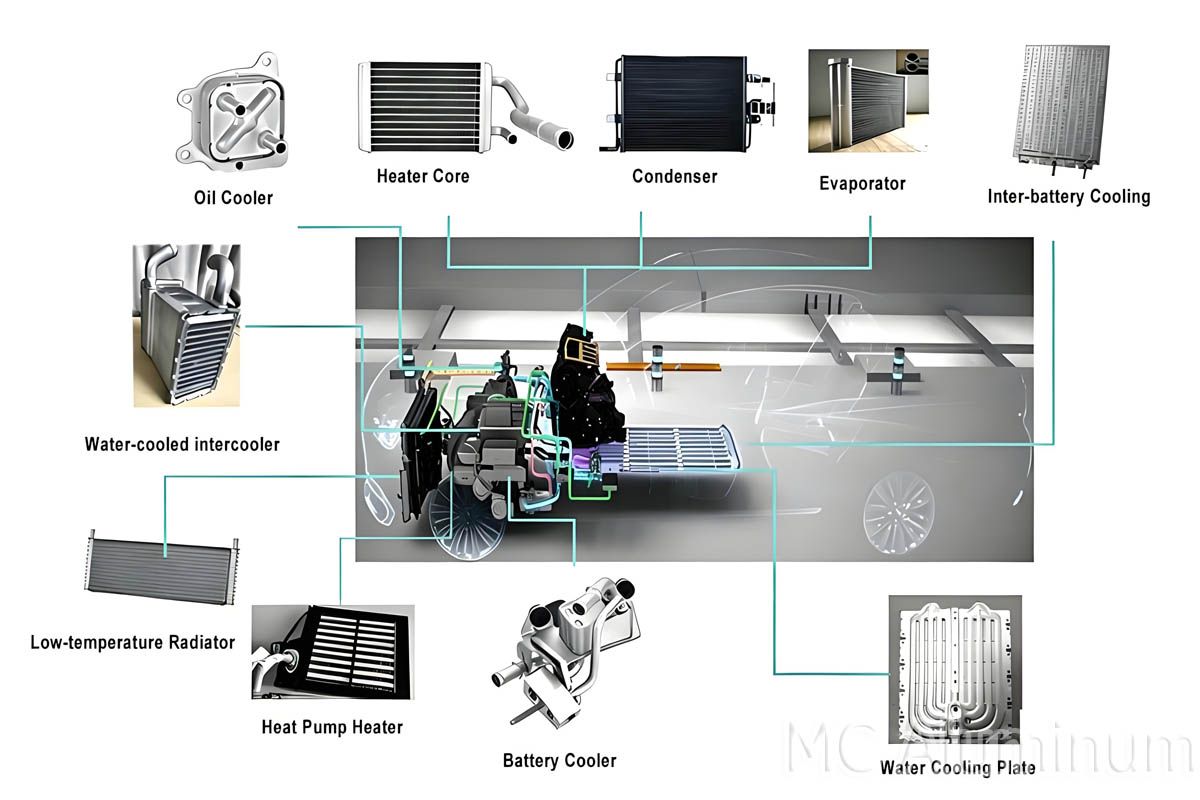
1060 is a typical 1xxx series commercially pure aluminum alloy. Its main characteristics are high aluminum content and a low level of alloying elements. Compared with aluminum alloys that rely on alloying additions to achieve high strength, 1060 aluminum offers superior electrical conductivity, thermal conductivity, ductility, and workability.
The letter "O" refers to the annealed temper.
After annealing, the internal stress in 1060 aluminum foil is relieved. The material becomes softer, while its plasticity and elongation are improved. Therefore, 1060 O temper aluminum foil is particularly suitable for battery thermal management components requiring complex forming.
According to relevant ASTM B209/B209M requirements, 1060 O temper material typically has a tensile strength range of approximately 8–14 ksi. Specific elongation requirements vary depending on material thickness. The common thickness range is 0.016–0.2 mm, and widths can reach 100–1600 mm, with customized dimensions available according to specific application requirements.
Key Properties of ASTM Standard 1060 O Temper Aluminum Foil
1.High Thermal Conductivity
Aluminum has a thermal conductivity of approximately 205 W/(m·K) or higher depending on purity and test conditions. This enables ASTM standard 1060 O temper aluminum foil to efficiently transfer heat generated inside the battery to the outside, helping prevent battery overheating.
2.Low Thermal Expansion
Aluminum has a relatively low coefficient of thermal expansion, which helps maintain the dimensional stability of battery structures during temperature changes.
3.Lightweight
Aluminum has a density of approximately 2.7 g/cm³, making it much lighter than copper. It is therefore well suited for applications where weight reduction is important.
4.Excellent Ductility
O temper aluminum foil has high ductility, allowing it to adapt to complex battery structures and irregular component shapes.
5.Good Processability
Due to its relatively low strength and high flexibility, O temper aluminum foil performs well in stamping, bending, curling, spot welding, laminating, and other fabrication processes.
6.Good Corrosion Resistance
A natural oxide film forms on the aluminum surface, providing good corrosion resistance and protecting the foil from environmental attack under normal service conditions.
7.Chemical Stability
Under normal storage, transportation, and operating conditions, 1060 O temper aluminum foil offers good chemical stability.
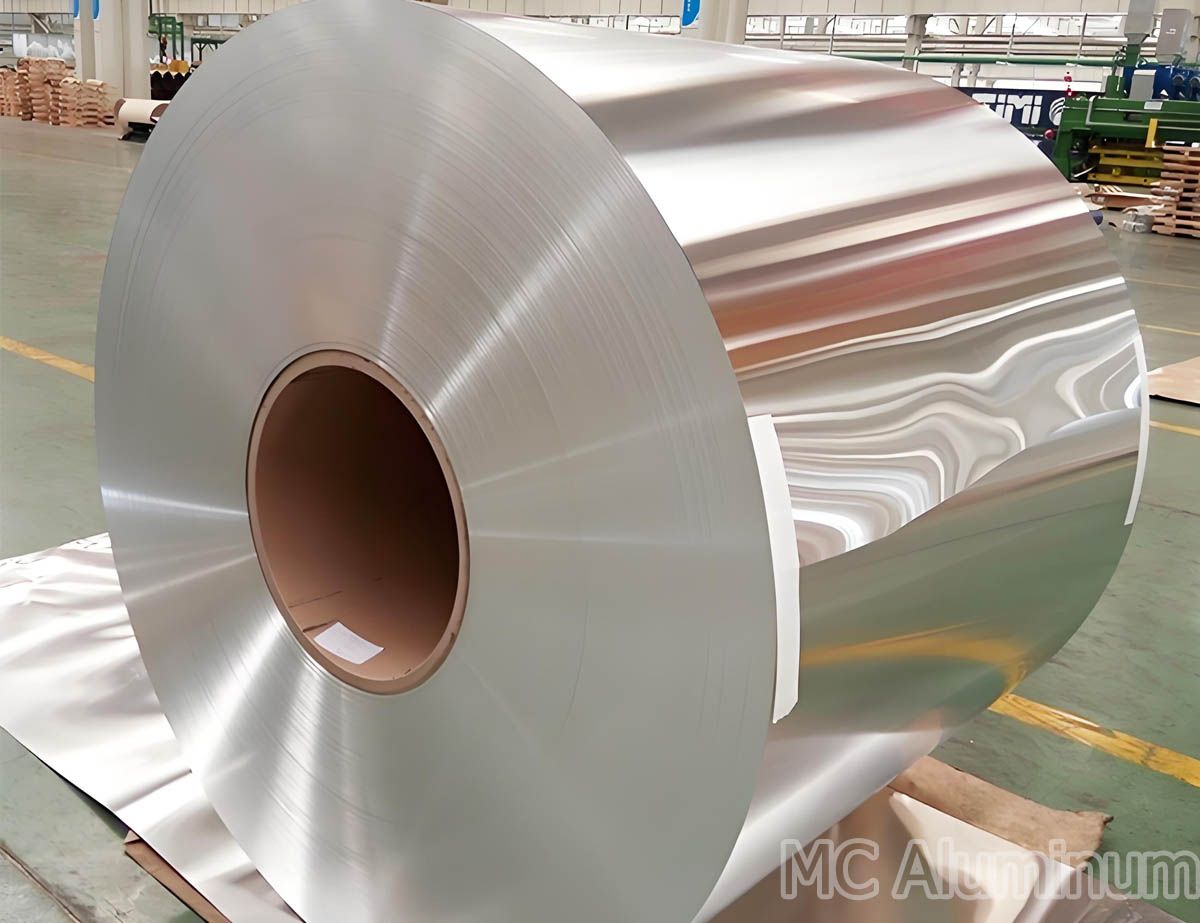
1060 Aluminum Foil Specifications
| Item | Specification |
| Alloy | 1060 |
| Temper | O |
| Thickness | 0.016–0.2 mm |
| Width | 100–1600 mm |
| Length | Customized as required |
| Thickness Tolerance | ±0.05 mm to ±0.13 mm |
| Coil Inner Diameter | 76 mm / 152 mm / 408 mm / 508 mm, or customized |
| Edge Burr | ≤ 0.02 mm |
| Surface Finish | Bright finish, matte finish, double-sided bright finish, single-zero foil, double-zero foil, etc. |
| Supply Form | Coils, slit coils, sheets, die-cut parts, composite materials, etc. |
| MOQ | 3 tons |
Mechanical Properties
| Property | Typical Value |
| Tensile Strength | 60–95 MPa |
| Yield Strength | 15–35 MPa |
| Elongation | 15%–25% |
| Brinell Hardness | Approx. 19 HB |
Physical Properties
| Property | Typical Valu |
| Density | 2.705–2.71 g/cm³ |
| Melting Point | 646–657°C |
| Thermal Conductivity | Approx. 234–237 W/(m·K) |
| Electrical Conductivity | Approx. 61%–62% IACS |
| Coefficient of Thermal Expansion | 23.6 μm/m·K |
| Electrical Resistivity at 20°C | ≤ 0.0282–0.0283 μΩ·m |
Advantages of 1060 Aluminum Foil for Battery Applications
Efficient Heat Dissipation
With excellent thermal conductivity, ASTM standard 1060 O temper aluminum foil can quickly transfer heat generated inside the battery to external cooling structures. This helps reduce battery temperature, improve battery performance, and extend service life.
Lightweight Design
Compared with copper foil, ASTM standard 1060 O temper aluminum foil has a much lower density. This helps reduce the total weight of battery systems, which is especially important in electric vehicles, portable devices, and other weight-sensitive applications.
Excellent Forming Performance
The high ductility and relatively low strength of O temper aluminum foil allow it to adapt to complex battery component geometries. It is easy to process, stamp, bend, and form during manufacturing.
Corrosion Resistance
A dense natural oxide layer forms on the surface of 1060 aluminum foil. This provides good corrosion resistance in ordinary atmospheric environments and supports stable performance during normal storage, transportation, and use.
Cost Efficiency
Aluminum is generally more economical than copper. Therefore, ASTM standard 1060 O temper aluminum foil offers clear cost advantages and is suitable for large-scale battery manufacturing applications.
Material Compatibility
ASTM standard 1060 O temper aluminum foil is compatible with many battery packaging and thermal interface materials. It can be readily integrated into existing battery pack and battery module designs.
Typical Applications in Battery Thermal Management
ASTM 1060 O temper aluminum foil is mainly used in the following battery thermal management applications.
Battery Flexible Busbars
This is one of the most important applications of 1060 O temper aluminum foil in battery systems. Flexible busbars for power batteries are commonly made from 1060 aluminum foil with thicknesses ranging from 0.05 mm to 0.3 mm.
Multiple layers of aluminum foil are stacked and bonded through polymer diffusion welding or pressure welding processes. These flexible connectors not only carry electrical current but also serve as important heat transfer paths. The high electrical conductivity of 1060 aluminum foil, approximately 61% IACS, together with its excellent thermal conductivity, supports efficient current transmission and heat dissipation.
Battery Cooling Fins
1060 aluminum foil can be used to manufacture cooling fins inside battery modules, typically with thicknesses ranging from 0.08 mm to 0.15 mm. Its high thermal conductivity and excellent stamping formability make it an ideal material for this application.
Battery Enclosures and Packaging Materials
1060 aluminum foil can also be used in flexible battery packaging materials or battery enclosure components requiring a certain degree of bending performance. In aluminum-plastic composite films for batteries, the aluminum foil layer can provide both barrier properties and heat dissipation capability.
Consumer Electronics
For laptops, tablets, smart terminals, and other electronic devices, internal space is limited. Therefore, thermal management materials must provide effective heat dissipation while remaining as thin and lightweight as possible. 1060 O temper aluminum foil is well suited for these compact thermal management structures.
Comparison Between 1060 O Temper Aluminum Foil and Other Common Aluminum Materials
In addition to 1060 O temper aluminum foil, common aluminum materials for battery thermal management include 1050, 1070, 1100, 3003, and 5052 alloys. Each alloy is suitable for different application requirements.
1060 vs. 1050 and 1070 Aluminum Foil
1050, 1060, and 1070 all belong to the 1xxx series of commercially pure aluminum. Their thermal conductivity, corrosion resistance, and workability are generally similar.
1050 aluminum foil: High purity and balanced overall performance.
1060 aluminum foil: Widely available, mature in supply, and highly cost-effective.
1070 aluminum foil: Higher aluminum purity and generally better electrical and thermal conductivity, although the cost may also be higher.
For applications requiring extremely high thermal conductivity, higher-purity aluminum such as 1070 may be considered. For projects that prioritize cost, supply stability, and standard processing performance, 1060 is often a more competitive choice.
1060 vs. 3003 Aluminum Foil
3003 aluminum alloy contains manganese, which generally provides higher strength than 1060. However, its thermal conductivity and ductility may be lower than those of commercially pure aluminum.
Choose 3003 when higher strength and improved impact resistance are required.
Choose 1060 O temper when thermal conductivity, soft conformability, and deep drawing or complex forming performance are more important.
1060 vs. 5052 Aluminum Foil
5052 is an aluminum-magnesium alloy with good strength, corrosion resistance, and fatigue resistance. It is commonly used for components requiring greater structural performance.
However, for ultra-thin heat dissipation foil, flexible thermal conduction layers, or large-area conformable bonding structures, 1060 O temper aluminum foil is generally easier to process and often provides better cost efficiency.