
As a manufacturer of precision rolled aluminum foil, we are frequently asked whether aluminum foil can replace copper foil for battery anodes. The answer depends on the battery chemistry, electrode potential, electrolyte system, and intended operating conditions. In conventional lithium-ion batteries using graphite or silicon-carbon anodes, copper foil remains the standard anode current collector. Aluminum foil is generally used as the cathode current collector.
However, aluminum foil can be a technically valid anode current collector in certain battery systems, especially where the anode operating potential remains above the lithium-aluminum alloying range. Selecting between aluminum foil and copper foil for battery anodes therefore requires more than comparing material cost or weight. It requires an electrochemical and manufacturing assessment of the complete cell design.
This article explains the key differences between aluminum foil and copper foil for battery anodes from the perspective of a foil manufacturer serving battery material producers, electrode coating lines, and cell manufacturers.
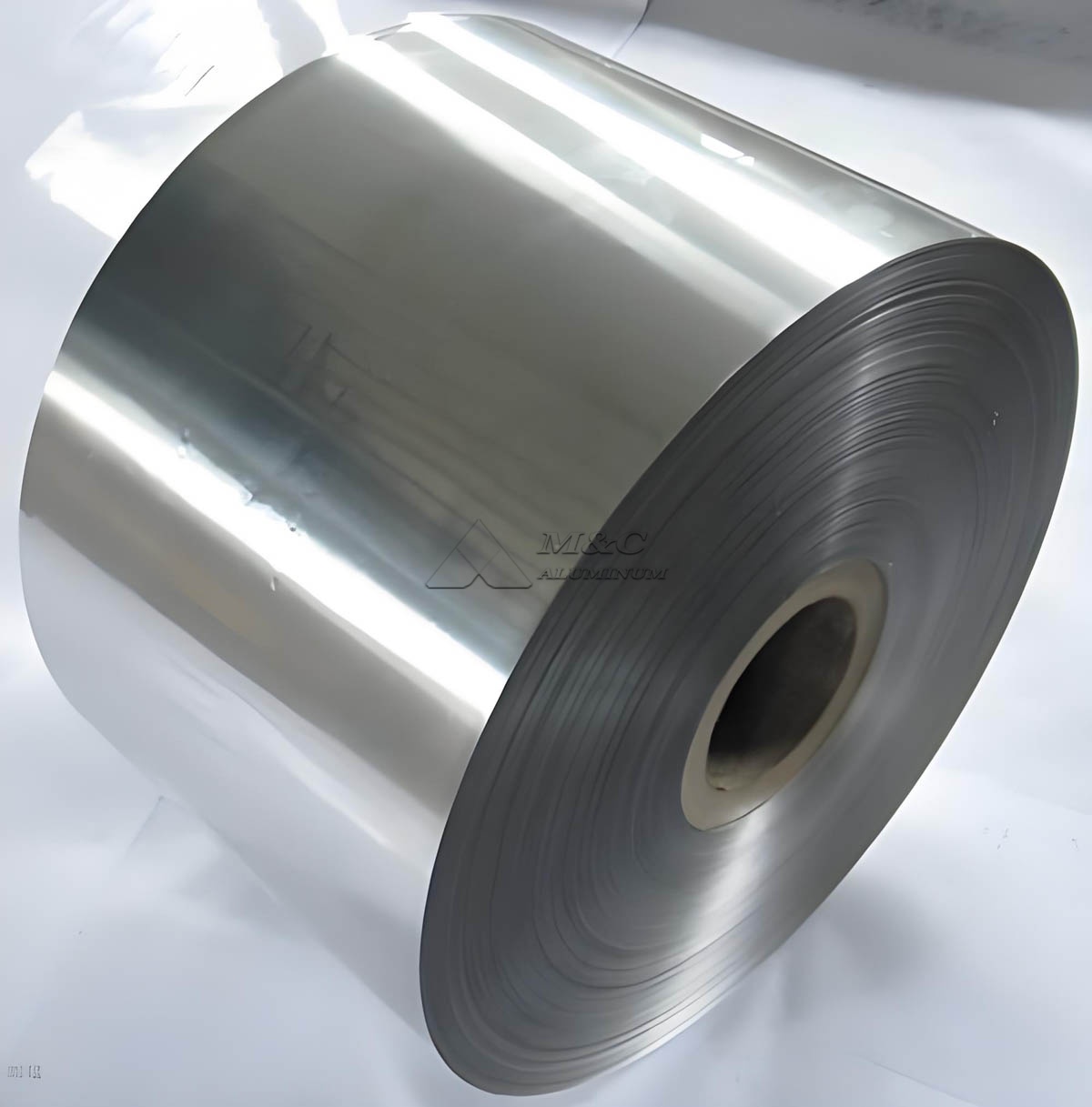
The Primary Role of Current Collector Foil
A current collector provides an electrically conductive substrate for the active material coating. In a lithium-ion cell, it must maintain electrical continuity between the electrode coating and the external circuit while supporting high-speed coating, drying, calendaring, slitting, winding, or stacking operations.
For anode current collectors, the foil must offer the following properties:
Stable electrochemical behavior within the anode voltage range.
Low electrical resistance for efficient current transport.
Sufficient tensile strength and elongation for electrode processing.
Appropriate surface condition for slurry adhesion.
Controlled thickness and flatness for uniform coating weight.
Resistance to corrosion from electrolyte, moisture, and processing residues.
The fundamental reason copper is widely used for battery anodes is its stability at the low potentials reached by graphite and silicon-based materials during charging. Aluminum can alloy with lithium at low potential, which can lead to structural damage, reduced conductivity, and loss of current collection performance.
Aluminum Foil vs Copper Foil: Core Material Properties
The following table summarizes the principal differences relevant to battery anode current collector selection. Actual values vary with alloy, temper, thickness, surface treatment, and foil production method.
| Parameter | Aluminum Foil | Copper Foil |
|---|---|---|
| Typical density | Approximately 2.70 g/cm3 | Approximately 8.96 g/cm3 |
| Electrical conductivity | Approximately 35 to 38 MS/m | Approximately 55 to 59 MS/m |
| Relative weight at equal thickness | Low | About 3.3 times aluminum |
| Typical conventional battery role | Cathode current collector | Anode current collector |
| Low-voltage stability vs lithium | Limited due to lithium alloying risk | Generally stable for graphite and silicon anodes |
| Corrosion resistance at cathode potentials | Good in common lithium-ion systems | Less suitable at high cathode potentials |
| Common foil thickness range | 10 to 20 microns for battery applications | 4.5 to 12 microns for battery applications |
| Material cost sensitivity | Generally lower and less dense | Higher density and typically higher cost exposure |
| Processability | Good rolling, slitting, and coating characteristics | Good strength and electrical performance at thin gauges |
From a mass perspective, aluminum offers an important advantage. At the same thickness, aluminum foil is substantially lighter than copper foil. This advantage can be relevant in specialized battery chemistries or applications where current collector mass has a significant effect on gravimetric energy density.
However, conductivity and electrochemical stability are more important than density alone when selecting an anode current collector. A lighter foil does not provide a practical benefit if it becomes unstable during cycling.
Why Copper Foil Is Standard for Graphite and Silicon Anodes
Graphite anodes typically operate close to 0 V versus Li/Li+. Silicon and silicon-carbon anodes also reach low potentials during lithiation. Under these conditions, aluminum may react with lithium and form lithium-aluminum alloys. This process can create local deformation, cracking, delamination, and electrical discontinuity in the electrode structure.
Copper has a much more favorable stability range for these low-potential anode systems. For this reason, copper foil is the established current collector for:
Natural graphite anodes.
Artificial graphite anodes.
Silicon-carbon composite anodes.
Silicon oxide composite anodes.
Lithium metal anode designs using copper as a substrate.
Many hard carbon anodes in lithium-ion and sodium-ion development programs.
Copper also provides higher electrical conductivity than aluminum. This can reduce in-plane resistance across wide electrodes and support uniform current distribution, especially in high-power cells, thick coatings, and fast-charge applications.
For conventional lithium-ion battery anodes, our technical recommendation is clear: copper foil should normally be retained unless cell testing confirms that the selected aluminum foil and battery chemistry are electrochemically compatible.
When Aluminum Foil Can Be Used for Battery Anodes
Aluminum foil can be considered for anode current collector applications when the anode potential remains sufficiently high to avoid problematic lithium-aluminum alloying. Lithium titanate, commonly called LTO, is the most widely recognized example.
LTO anodes operate at approximately 1.55 V versus Li/Li+, well above the potential range where aluminum alloying becomes a primary concern. In LTO battery designs, aluminum foil may be used on both the anode and cathode sides, subject to electrolyte compatibility and full-cell validation.
Potential applications for aluminum foil as an anode current collector include:
Lithium titanate battery systems.
Certain high-voltage anode materials.
Selected sodium-ion battery architectures.
Research-stage electrode systems with controlled potential windows.
Specialized energy storage devices requiring reduced collector weight.
Even in these cases, aluminum foil selection should not be based only on nominal alloy composition. Surface oxide condition, residual rolling oil, roughness, pinhole level, tensile properties, and coating adhesion all influence electrode manufacturing yield and cycle stability.
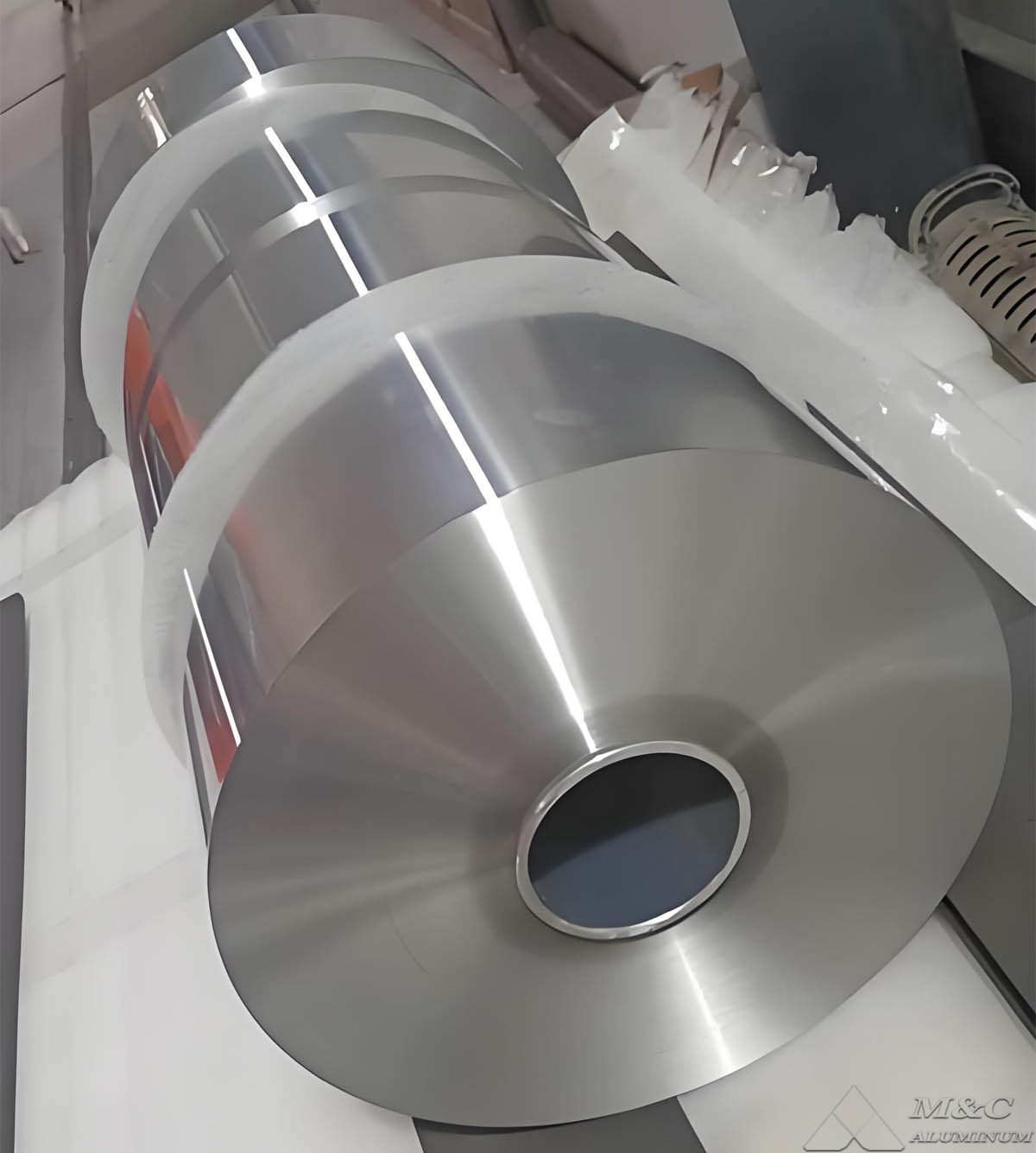
Manufacturing Considerations for Battery Aluminum Foil
As a foil manufacturer, we control several production variables that directly affect battery electrode processing. Battery-grade foil requires tighter consistency than general packaging or industrial foil because minor variations can affect coating uniformity, web handling, and cell performance.
Important manufacturing controls include the following.
Thickness Tolerance and Gauge Uniformity
Uniform foil thickness supports stable slurry coating and consistent electrode density after calendaring. Local gauge variation can contribute to uneven coating weight, drying variation, and inconsistent electrical resistance. For battery applications, the target thickness and tolerance should be jointly defined according to the coating line capability and final cell design.
Surface Cleanliness
Residual rolling oil, dust, metallic particles, and handling contamination can reduce binder adhesion and increase defect risk. We apply controlled degreasing and inspection procedures to provide a clean foil surface suitable for electrode coating processes.
Surface Roughness and Coating Adhesion
The foil surface must provide reliable adhesion without creating excessive roughness that may increase localized coating variation. Depending on the battery design, customers may require smooth foil, treated foil, or a surface profile optimized for water-based or solvent-based electrode slurry systems.
Mechanical Properties
Tensile strength and elongation must be balanced. Foil that is too soft may wrinkle during coating and slitting. Foil that is too hard may have limited tolerance during winding, folding, or high-compression calendaring. We specify temper and mechanical property ranges according to thickness and customer processing requirements.
Edge Quality and Flatness
Clean slit edges reduce particle generation and help prevent web breaks. Flatness and coil profile are also important for stable unwinding on high-speed electrode coating lines. These requirements become increasingly strict as foil thickness decreases.
Our 1100 Aluminum Foil production experience provides a foundation for controlling purity, rolling behavior, and surface quality, although battery current collector foil must always be specified and qualified separately for electrochemical use.
Technical Selection Criteria for Anode Current Collectors
When evaluating aluminum foil vs copper foil for battery anodes, battery manufacturers should assess the complete operating environment rather than treating foil as a simple commodity material.
| Selection Factor | Aluminum Foil Assessment | Copper Foil Assessment |
|---|---|---|
| Graphite anode compatibility | Not generally recommended | Standard choice |
| Silicon-containing anode compatibility | Not generally recommended | Standard choice |
| LTO anode compatibility | Often suitable after validation | Also possible, but heavier |
| Weight reduction potential | High | Limited |
| Electrical conductivity requirement | Suitable for moderate resistance needs | Preferred for low-resistance anode designs |
| High-rate discharge and charging | Requires careful design validation | Strong performance basis |
| Electrolyte compatibility | Must be verified for each system | Must also be verified, especially under abnormal conditions |
| Recycling and material recovery | Aluminum recovery route required | Established copper recovery value |
In addition to these criteria, manufacturers should evaluate foil behavior after electrolyte soaking, heat exposure, formation cycling, long-term cycling, overcharge or overdischarge events, and mechanical abuse testing.
Aluminum Foil Quality Requirements for Battery Programs
For customers developing LTO cells or other battery systems that can use aluminum anode current collectors, we recommend defining a detailed technical specification before pilot production. A specification should include foil alloy, temper, thickness, width, coil inner diameter, maximum outer diameter, surface cleanliness, roughness target, tensile strength, elongation, pinhole requirement, and packaging method.
Typical quality verification may include:
Thickness measurement across strip width.
Surface inspection for scratches, dents, oil marks, and inclusions.
Tensile testing in the rolling direction.
Surface cleanliness or residual oil testing.
Roughness measurement where required.
Slit-edge and burr inspection.
Coil winding quality inspection.
Electrochemical compatibility testing by the battery manufacturer.
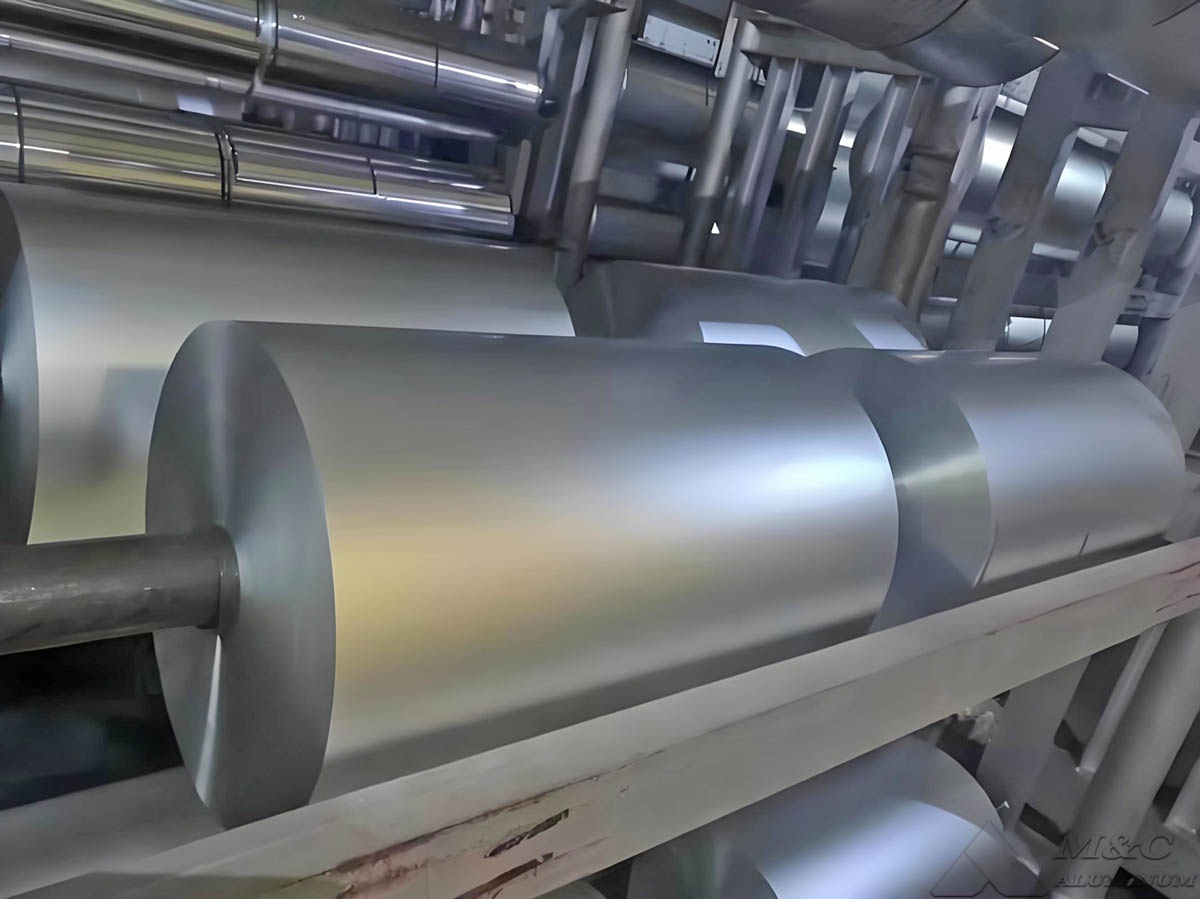
Foil suppliers should provide stable lot-to-lot control, traceability, and documentation appropriate for battery material qualification. In our manufacturing process, we emphasize consistent rolling, slitting, inspection, and packing because electrode production lines depend on stable incoming foil performance.
Conclusion
For most lithium-ion battery anodes, copper foil remains the technically appropriate current collector because it is stable at the low potentials of graphite and silicon-based anodes. Aluminum foil should not be considered a direct replacement in these conventional cell designs.
Aluminum foil can be a suitable battery anode current collector for specific higher-potential systems, particularly LTO batteries, where its low density and good processability can offer practical value. The final decision should be based on battery chemistry, voltage window, electrode formulation, electrolyte behavior, production process, and full-cell validation.
As a manufacturer, we support customers by supplying aluminum foil with controlled thickness, surface condition, mechanical properties, and coil quality for qualified battery applications. Proper material specification and electrochemical testing are essential before moving from laboratory evaluation to volume cell production.