
As an aluminum foil manufacturer, we produce 3003 H22 aluminum foil for lunch boxes with controlled alloy composition, stable mechanical properties, clean surfaces, and consistent forming performance. This material is widely used for disposable aluminum lunch boxes, airline food containers, takeaway meal trays, baking containers, and other semi-rigid food packaging products.
Lunch box production requires aluminum foil that can withstand deep drawing, stamping, rim curling, stacking, sealing, heating, and transportation. The foil must also meet food contact requirements and maintain reliable dimensional stability during high-speed container forming. For these reasons, 3003 H22 aluminum foil is one of the commonly selected materials for medium-strength food container applications.
What Is 3003 H22 Aluminum Foil?
3003 aluminum foil is an Al-Mn alloy foil. Manganese improves strength compared with pure aluminum grades such as 1050, 1060, and 1100, while maintaining good elongation, corrosion resistance, and formability. The H22 temper means the foil has been strain hardened and partially annealed to achieve a controlled balance between hardness and ductility.
For lunch box manufacturing, this balance is important. If the foil is too soft, the formed container may lack rigidity and deform easily during filling or transportation. If it is too hard, cracks, wrinkles, or uneven drawing may occur during stamping. 3003 H22 aluminum foil provides moderate strength with suitable elongation, making it appropriate for many container structures with sidewalls, corners, compartments, and curled edges.
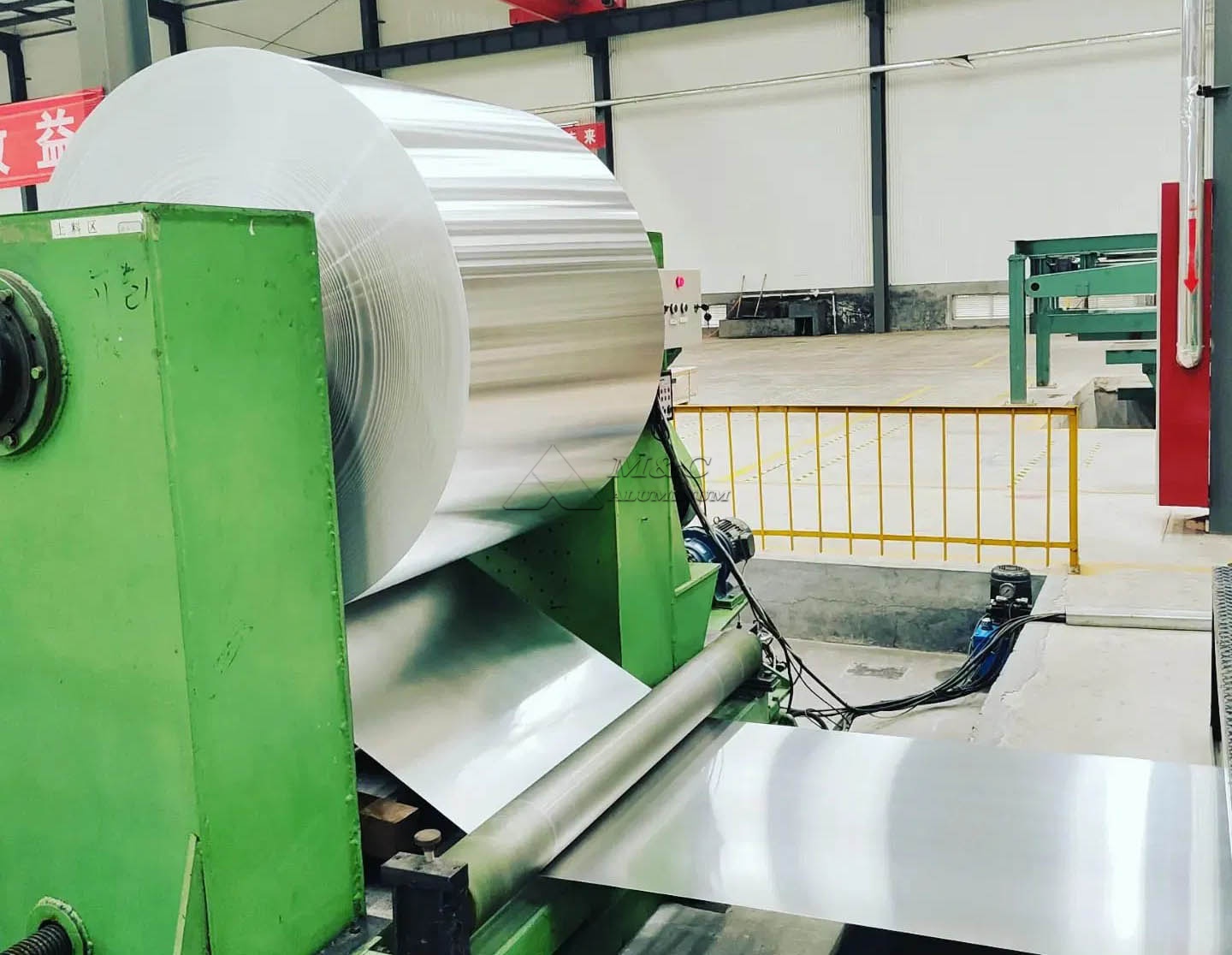
We manufacture 3003 Aluminum Foil in coil form for automatic container production lines. Thickness, width, surface condition, and mechanical properties can be adjusted according to the customer's mold design, container depth, and production speed.
Why 3003 H22 Is Used for Lunch Boxes
The performance of lunch box aluminum foil depends not only on alloy grade, but also on rolling process, annealing control, trimming accuracy, surface cleanliness, and packaging protection. As a factory, we focus on these production details to ensure that each coil performs consistently during downstream forming.
Good Formability for Stamping and Drawing
3003 H22 aluminum foil can be formed into various lunch box shapes, including rectangular trays, round bowls, multi-compartment trays, and deep food containers. The material has sufficient elongation to reduce cracking at corners and sidewalls. Stable temper control also helps reduce wrinkling and uneven deformation during continuous stamping.
Better Strength Than Pure Aluminum Foil
Compared with 8011 O or 1100 O soft foil used in some light-duty applications, 3003 H22 offers higher strength and better structural support after forming. This is useful for lunch boxes that need to hold cooked food, sauces, rice, meat, vegetables, or frozen meals. Higher rigidity can improve the handling experience and reduce deformation during packing and delivery.
Suitable Corrosion Resistance
3003 aluminum foil has good resistance to atmospheric corrosion and many food packaging environments. For lunch box applications, the surface can be plain, lubricated, or coated according to the forming and end-use requirements. When used properly, it can help protect food during storage, reheating, and transport.
Compatibility With Food Container Production
High-speed container lines require stable coil winding, accurate width tolerance, controlled pinhole level, and a clean surface. Our 3003 H22 aluminum foil for lunch boxes is produced with attention to flatness, edge quality, and oil control to support smooth unwinding, stamping, stacking, and packing.
Typical Technical Parameters
The following table shows common specifications for 3003 H22 aluminum foil used in lunch box and food container production. Final values can be customized according to the order requirements, applicable standards, and container design.
| Item | Typical Specification |
|---|---|
| Product name | 3003 H22 aluminum foil for lunch boxes |
| Alloy | 3003 |
| Temper | H22 |
| Main elements | Aluminum, manganese |
| Thickness range | 0.035 mm to 0.120 mm |
| Common thickness | 0.045 mm, 0.050 mm, 0.060 mm, 0.070 mm, 0.080 mm |
| Width range | 100 mm to 1600 mm |
| Coil ID | 76 mm, 152 mm, or according to requirement |
| Coil OD | According to order and equipment requirement |
| Surface | Plain, one side bright, or both sides bright depending on rolling process |
| Surface treatment | Degreased, lubricated, or coated upon request |
| Application | Lunch boxes, food trays, airline containers, baking trays, takeaway containers |
| Tensile strength | Typically 125 MPa to 180 MPa, subject to thickness and standard |
| Elongation | Controlled according to thickness and forming requirement |
| Standards | ASTM B479, EN 546, GB/T 3198, or customer technical specification |
| Packaging | Export wooden case, moisture-proof wrapping, protective edge board |
Manufacturing Control in Our Factory
We produce aluminum foil through controlled casting, hot rolling or continuous casting rolling, cold rolling, foil rolling, annealing, slitting, inspection, and export packing. For 3003 H22 aluminum foil, the key point is to maintain uniform mechanical properties across the coil and from batch to batch.
Alloy Composition Control
The composition of 3003 alloy directly affects strength, elongation, and corrosion resistance. We control raw material selection and melting composition to meet the required standard range. Stable manganese content is important for achieving the expected mechanical properties after rolling and annealing.
Rolling and Thickness Accuracy
Lunch box molds are sensitive to thickness variation. If thickness is unstable, the container may show uneven wall distribution, poor rim curling, or inconsistent stacking height. Our rolling process uses gauge control and surface inspection to keep thickness tolerance within the agreed range. Accurate thickness also helps customers control material cost per container.
Temper and Annealing Control
H22 temper requires precise control of strain hardening and partial annealing. The annealing process must be stable enough to avoid excessive softness or brittleness. We monitor temperature, time, coil position, and mechanical test results to ensure that each coil has suitable tensile strength and elongation for container forming.
Surface Cleanliness
Food packaging foil should have a clean surface without obvious oil stains, black spots, heavy scratches, corrosion, or foreign matter. For container production, surface cleanliness also affects coating, printing, sealing, and appearance. We inspect the foil surface during production and before packing.
Lunch Box Applications
3003 H22 aluminum foil is used in many food packaging formats where strength and formability are both required. Typical applications include:
Disposable aluminum lunch boxes for catering and takeaway service
Airline meal trays and institutional food containers
Multi-compartment food trays for prepared meals
Ovenable and reheatable food containers
Baking trays for cakes, bread, and cooked foods
Frozen meal trays requiring dimensional stability
For customers producing a wider range of tray and container products, our Container foil can be supplied in different alloys, tempers, and thicknesses to match various forming depths and end-use conditions.
Comparison With Other Aluminum Foil Grades
Different aluminum foil grades are used in food packaging. The correct choice depends on container design, production process, and strength requirement.
8011 aluminum foil is widely used for food containers, household foil, and packaging foil. It has good formability and is suitable for many general-purpose applications. 1100 and 1060 aluminum foils are purer aluminum grades with excellent softness and corrosion resistance, often used where high ductility is required. 3003 aluminum foil, with manganese as the main alloying element, provides higher strength and better container rigidity.
For lunch boxes that require improved stiffness, shape retention, and resistance to deformation, 3003 H22 is often preferred. For very shallow trays or lighter-duty containers, other alloys may also be considered. As a manufacturer, we can recommend the appropriate alloy and temper based on the customer's sample, drawing, mold depth, and forming speed.
Surface Options and Lubrication
Lunch box aluminum foil can be supplied with different surface conditions depending on the production line. Some customers require plain foil for direct stamping. Others need controlled lubrication to reduce friction between foil and mold. Lubrication can improve forming performance, reduce tearing, and help maintain production speed.
If the lunch box will be coated, lacquered, or printed after forming, the surface condition must be selected carefully. Excessive oil may affect coating adhesion, while insufficient lubrication may affect stamping. We discuss the forming process and downstream treatment with customers before confirming the technical specification.
Quality Inspection Before Shipment
Before shipment, we inspect 3003 H22 aluminum foil coils according to agreed standards and order requirements. Our inspection generally includes:
Chemical composition verification
Thickness and width measurement
Tensile strength and elongation testing
Surface quality inspection
Edge condition and burr inspection
Pinhole inspection according to thickness requirement
Coil winding quality inspection
Packing and label verification
Inspection records can be provided for export orders when required. For long-term customers, we keep production traceability by batch number, coil number, specification, and test result.
Packaging for Export Delivery
Aluminum foil for lunch boxes must be protected from moisture, collision, and edge damage during transportation. We use moisture-proof film, desiccant when required, edge protection, paper core or metal core support, wooden case packing, and clear external labels. The packing method is selected according to coil size, shipping route, and unloading conditions.
Proper packaging helps prevent oxidation spots, telescoping, loose winding, and edge dents. This is especially important for customers using automatic feeding and high-speed stamping equipment, where coil damage can cause production interruption.
Ordering Information
To help us prepare an accurate quotation and technical proposal, customers are advised to provide the following information:
Alloy and temper, such as 3003 H22
Required thickness and tolerance
Required width and tolerance
Coil inner diameter and maximum outer diameter
Surface requirement, such as plain, lubricated, or coated
Container type, drawing depth, and mold design if available
Mechanical property requirement if specified
Applicable standard or food contact requirement
Monthly quantity and delivery schedule
With this information, our engineering and production teams can recommend a suitable specification and production plan.
Conclusion
3003 H22 aluminum foil for lunch boxes is a practical material for food container manufacturers that require reliable formability, moderate strength, good corrosion resistance, and stable coil quality. As a factory, we control alloy composition, rolling accuracy, temper, surface cleanliness, slitting, inspection, and export packaging to support consistent performance on customer production lines.
For lunch box, meal tray, and food container production, 3003 H22 aluminum foil offers a balanced combination of rigidity and workability. By selecting the correct thickness, width, surface condition, and mechanical property range, manufacturers can improve forming stability, reduce production loss, and produce containers with consistent quality.