
As a specialized aluminum foil manufacturer, we produce 3003 epoxy resin coated aluminum foil for industrial applications requiring stable corrosion protection, reliable coating adhesion, and good forming performance. This material combines the strength and corrosion resistance of 3003 aluminum alloy with a controlled epoxy resin coating system applied on one or both sides.
Our production process is designed for customers using aluminum foil in heat exchangers, insulation systems, industrial laminates, battery-related components, electrical assemblies, and other fabricated products exposed to moisture, chemicals, or demanding service environments. By controlling substrate quality, surface preparation, coating weight, curing conditions, and slit-edge condition in-house, we provide epoxy coated aluminum foil that is suitable for further forming, bonding, stamping, and assembly.
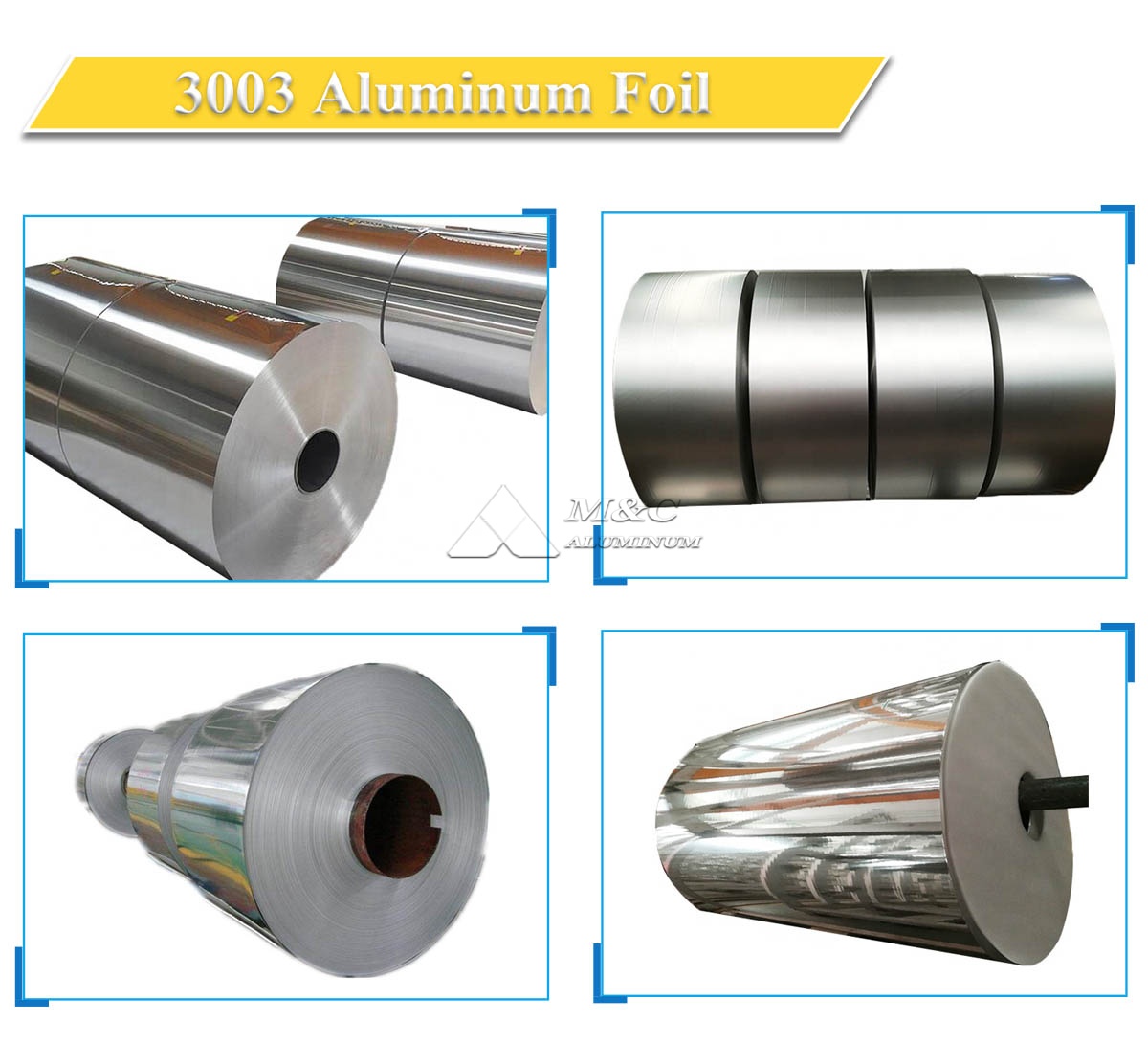
What Is 3003 Epoxy Resin Coated Aluminum Foil?
3003 epoxy resin coated aluminum foil is an aluminum foil product manufactured from AA 3003 alloy and coated with an epoxy-based protective layer. Alloy 3003 is an aluminum-manganese alloy with higher strength than commercially pure aluminum grades. It offers good workability, weldability, and resistance to general atmospheric corrosion.
The epoxy coating is applied to improve surface protection and functional performance. Depending on the final application, the coating may serve as a barrier against moisture, weak acids, alkalis, oils, salt spray, or process chemicals. It can also improve adhesion between the foil and a secondary material such as foam, adhesive, polymer film, insulation material, or composite structure.
We manufacture the base foil from controlled rolling stock and process it through cleaning, chemical pretreatment, roll coating, thermal curing, inspection, slitting, and packing. This integrated approach allows us to match the finished 3003 epoxy resin coated aluminum foil to the mechanical, dimensional, and coating requirements of each project.
Why We Use 3003 Aluminum Alloy as the Substrate
The selection of foil alloy has a direct effect on the durability and fabrication performance of coated aluminum products. 3003 aluminum foil contains manganese as its principal alloying element, giving it improved strength while maintaining the ductility needed for forming operations.
Compared with softer pure aluminum grades, 3003 foil provides better resistance to deformation during handling and assembly. It is widely selected where the product must maintain shape after bending, corrugating, embossing, or controlled stamping. The alloy also provides a stable surface for epoxy resin coating when the substrate is properly degreased and pretreated.
For projects requiring an uncoated substrate or different thickness options, customers may also review our 3003 Aluminum Foil range. We can recommend the appropriate foil temper and coating construction based on the final fabrication method.
Technical Parameters
The following specifications represent common production ranges. Final specifications can be adjusted according to order quantity, end use, coating system, and applicable technical standards.
| Parameter | Typical Specification | Remarks |
|---|---|---|
| Aluminum alloy | AA 3003 | Aluminum-manganese alloy |
| Temper | O, H14, H16, H18, H22, H24 | Selected according to forming requirements |
| Foil thickness | 0.020 mm to 0.200 mm | Other gauges available by agreement |
| Foil width | 20 mm to 1,600 mm | Slit coils or jumbo coils |
| Coil inner diameter | 150 mm, 300 mm, 505 mm | Customized core sizes available |
| Coil outer diameter | Up to 1,400 mm | Subject to thickness and coil weight |
| Epoxy coating side | One side or two sides | Different coating functions possible |
| Dry coating weight | 1.0 g/m2 to 10.0 g/m2 per side | Customized by protection requirement |
| Coating color | Clear, gold, white, gray, blue, or customized | Color matching available for volume orders |
| Surface finish | Mill finish, degreased, chemically pretreated | Prepared for coating adhesion |
| Adhesion | No peeling after specified bend test | Tested according to agreed method |
| Heat resistance | Typically 120 deg C to 200 deg C | Depends on epoxy formulation |
| Corrosion resistance | Enhanced by epoxy barrier layer | Validation based on application conditions |
| Packing | Export seaworthy packing | Moisture-proof and edge-protected |
Epoxy Coating System and Performance Control
The coating system is as important as the aluminum substrate. We select epoxy resin systems according to the required balance of adhesion, flexibility, chemical resistance, thermal stability, and coating appearance. A coating that performs well in a flat panel may not be suitable for deep drawing or repeated bending. Therefore, we evaluate the intended fabrication process before confirming the coating design.
Our standard production sequence begins with foil surface cleaning to remove rolling oil and contaminants. The aluminum foil then receives a conversion or pretreatment layer where required. This stage improves the bond between the aluminum surface and epoxy resin coating. The epoxy is applied through precision roll coating equipment, followed by controlled oven curing to develop the specified film properties.
During manufacturing, we monitor coating weight, color consistency, curing condition, pinhole control, surface defects, and adhesion. Finished coils are inspected for wrinkles, telescoping, edge damage, loose winding, and foreign particles. These controls help ensure that the epoxy coated aluminum foil performs consistently during our customers' converting operations.
Key Advantages of Our Epoxy Coated Aluminum Foil
Corrosion Protection
The cured epoxy resin layer separates the aluminum surface from moisture and corrosive media. This is particularly valuable in equipment operating in humid, condensing, or chemically exposed environments. The coating system can be developed to meet different salt spray, humidity, or chemical exposure requirements when the operating conditions are clearly defined.
Strong Coating Adhesion
Good adhesion is essential for downstream bending, stamping, folding, and laminating. Our surface pretreatment and curing process are controlled to reduce the risk of delamination. We can perform bend, cross-hatch, solvent resistance, and tape adhesion tests according to mutually agreed acceptance criteria.
Good Fabrication Performance
3003 alloy provides a useful combination of strength and ductility. With suitable temper and coating flexibility, the foil can be processed through slitting, corrugation, bonding, shaping, and moderate forming operations. For highly complex drawing requirements, we recommend confirming the forming radius, tool design, lubrication method, and coating thickness during sample evaluation.
Consistent Coil Quality
Industrial users require stable coil geometry and controlled surface conditions. We manufacture aluminum foil coils with attention to thickness tolerance, width tolerance, edge quality, winding tension, and packaging protection. This supports efficient processing on automated customer lines.
Typical Applications
3003 epoxy resin coated aluminum foil is used in a wide range of industrial systems. The final coating selection should always be based on the actual operating temperature, chemical exposure, electrical requirements, and forming process.
Common applications include:
Heat exchanger fins and moisture-exposed HVAC components.
Insulation facings and vapor barrier laminate structures.
Industrial ducting and corrosion-resistant wrapping materials.
Electrical insulation and coated conductive assemblies.
Foam bonding and composite panel manufacturing.
Chemical equipment liners and protective foil layers.
Automotive and transportation insulation components.
Appliance parts requiring coated aluminum surfaces.
For applications in HVAC systems where water management and surface wettability are especially important, our hydrophilic coating solutions may also be relevant. The coating type should be selected according to whether the design requires corrosion protection, controlled water spreading, or both.
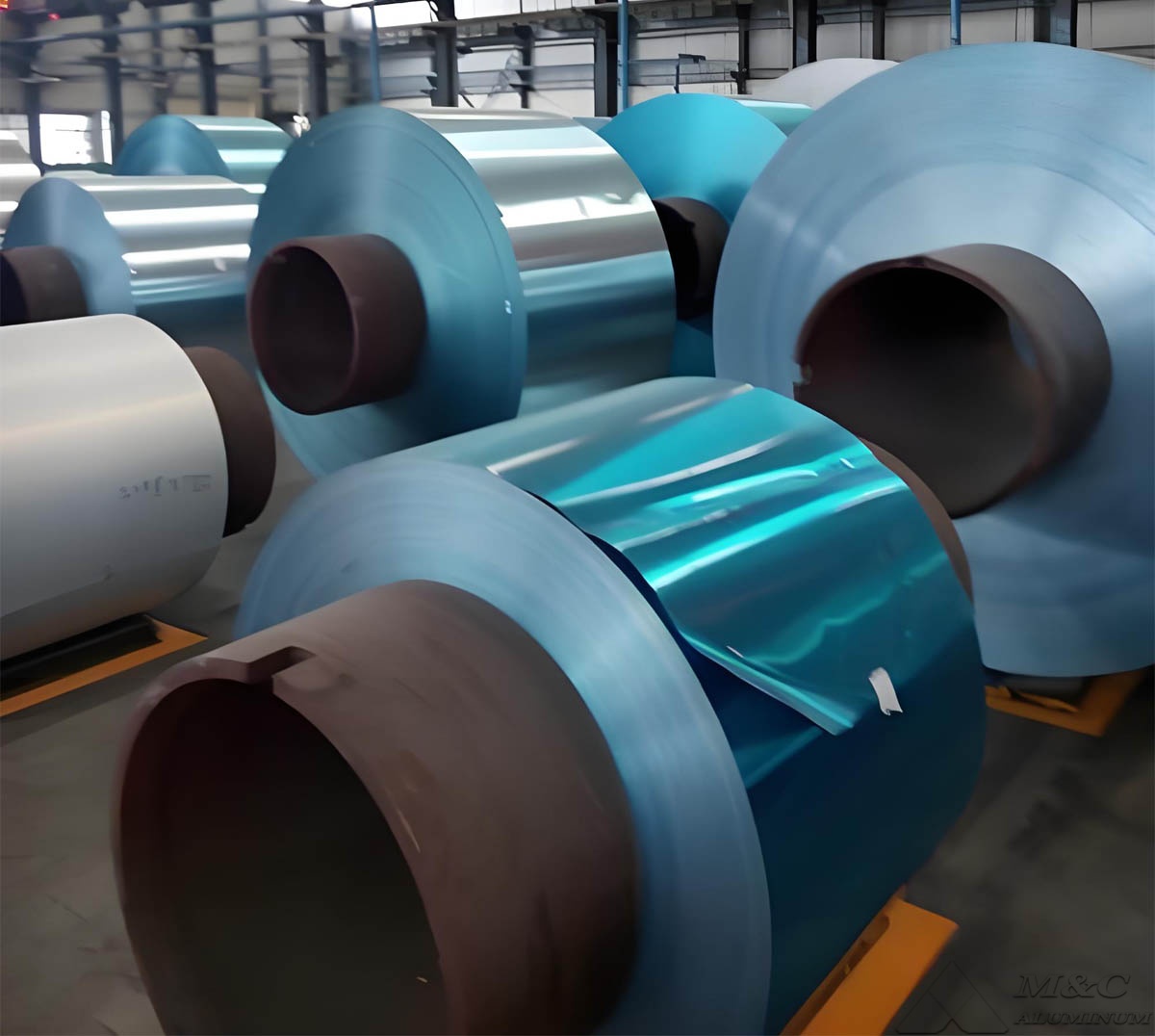
Custom Manufacturing Options
As a factory, we understand that standard foil dimensions do not always meet the requirements of engineering projects. We provide customization for alloy temper, thickness, width, coil weight, coating side, coating color, coating weight, and packing configuration.
For example, a customer producing laminated insulation may require a softer O temper foil with a single-side epoxy coating optimized for adhesive bonding. A manufacturer of formed industrial components may instead require H14 or H24 temper material with a flexible coating that withstands bending without cracking. By reviewing these conditions before production, we can provide a more suitable 3003 epoxy resin coated aluminum foil specification.
We also support trial coil production for qualification. Before commercial supply, customers may evaluate material appearance, coating adhesion, corrosion resistance, forming behavior, and compatibility with their own adhesives or processing equipment. This is especially useful for projects involving non-standard chemicals, high temperatures, or demanding assembly conditions.
Quality Assurance and Inspection
Our quality control process covers incoming aluminum coil, rolling condition, foil thickness, surface cleanliness, coating application, curing, slitting, and final packing. Each production batch is managed with traceable process records.
Typical inspection items include:
Alloy and temper verification.
Thickness and width measurement.
Coating weight measurement.
Surface appearance inspection.
Coating adhesion testing.
Bend resistance testing.
Solvent resistance testing where specified.
Coil winding and edge condition inspection.
Packing integrity verification before shipment.
Where customers have specific standards or testing protocols, we can align inspection methods with agreed technical documents. For critical applications, samples can be retained for reference and batch traceability.
Storage and Processing Recommendations
To preserve coating performance, epoxy resin coated aluminum foil should be stored in a dry, clean warehouse away from direct sunlight, aggressive chemicals, and large temperature fluctuations. Coils should remain in their original moisture-proof packaging until use. Condensation should be avoided, particularly when coils are moved from a cold environment into a warm and humid workshop.
During converting, users should ensure that rollers, dies, and work surfaces are clean. Excessive forming stress, sharp tool radii, or unsuitable lubricants may damage the coating layer. We recommend conducting production trials when the foil will be exposed to severe bending, stamping, high heat, or chemical contact.
Partner With a 3003 Aluminum Foil Manufacturer
We manufacture 3003 epoxy resin coated aluminum foil for customers who require controlled material quality and practical technical support from the production source. Our capability covers aluminum foil substrate selection, epoxy coating development, precision slitting, inspection, and export packaging.
Whether your project requires corrosion resistant aluminum foil for heat exchangers, protective laminates, insulation systems, or formed industrial components, we can evaluate your drawings and specifications to recommend a suitable foil and coating combination. Our objective is to supply stable, process-ready material that supports reliable downstream manufacturing.