
As an aluminum foil manufacturer, we are often asked by customers to compare 3003 aluminum foil and 3004 aluminum foil for food containers, heat exchanger fins, honeycomb core, packaging, and industrial forming applications. Both alloys belong to the 3xxx aluminum manganese series. They have good corrosion resistance, stable formability, and better mechanical strength than pure aluminum foil such as 1050, 1060, 1100, and 1235.
However, 3003 and 3004 are not the same material. Their chemical composition, strength level, deep drawing behavior, and application focus are different. Selecting the correct alloy affects stamping performance, wall thickness control, surface quality, production yield, and final product reliability. This article explains the difference from a factory perspective, based on material production, rolling control, and downstream processing requirements.

Overview of 3003 Aluminum Foil
3003 aluminum foil is an Al-Mn alloy with manganese as the main strengthening element. It is one of the most widely used medium strength aluminum foil materials. Compared with 1xxx pure aluminum foil, 3003 aluminum foil provides higher tensile strength while maintaining good elongation and corrosion resistance.
In our production line, 3003 aluminum foil is commonly supplied in O, H12, H14, H16, H18, H22, H24, and H26 tempers, depending on the required hardness and forming depth. For deep drawing and container production, O temper or H22/H24 temper is frequently selected. For honeycomb core and heat exchanger applications, the temper and thickness tolerance are controlled according to bonding, expansion, or fin forming requirements.
Customers looking for a stable general purpose 3xxx material often choose 3003 Aluminum Foil because it offers a good balance between cost, processability, and service performance.
Overview of 3004 Aluminum Foil
3004 aluminum foil is also an Al-Mn alloy, but it contains magnesium in addition to manganese. The addition of magnesium increases the strength of the alloy compared with 3003. This makes 3004 aluminum foil suitable for applications requiring higher rigidity, better dent resistance, or thinner gauge designs with sufficient strength.
3004 aluminum foil is widely used in food container foil, lunch box material, container lids, semi-rigid packaging, and deep drawn parts. It is also used where higher mechanical strength is required than standard 3003 foil can provide. In container production, 3004 is often selected when the product has a deeper cavity, thinner wall, or more demanding stacking strength.
From a manufacturing viewpoint, 3004 requires careful control of rolling reduction, intermediate annealing, and final temper to maintain good formability while achieving its higher strength target.
Chemical Composition Comparison
The most important metallurgical difference between 3003 aluminum foil and 3004 aluminum foil is the magnesium content. 3003 mainly uses manganese for strengthening, while 3004 uses both manganese and magnesium. This gives 3004 higher strength but also requires stricter control during rolling and annealing.
The following table shows typical composition ranges according to common international alloy standards. Actual production specifications can be adjusted within standard limits according to customer requirements.
| Element | 3003 Aluminum Foil, % | 3004 Aluminum Foil, % | Technical Influence |
|---|---|---|---|
| Si | Up to 0.60 | Up to 0.30 | Affects surface quality and formability |
| Fe | Up to 0.70 | Up to 0.70 | Influences grain structure and pinhole tendency |
| Cu | 0.05 to 0.20 | Up to 0.25 | May improve strength slightly |
| Mn | 1.00 to 1.50 | 1.00 to 1.50 | Main strengthening element in both alloys |
| Mg | Not specified or trace | 0.80 to 1.30 | Increases strength in 3004 |
| Zn | Up to 0.10 | Up to 0.25 | Controlled impurity element |
| Al | Balance | Balance | Matrix material |
Because 3004 contains magnesium, it usually shows higher tensile strength under the same temper. However, higher strength does not always mean better performance. For some forming operations, 3003 may provide easier forming and lower die wear, especially when the part design is not highly demanding.
Mechanical Properties and Technical Parameters
Mechanical properties depend on thickness, temper, annealing process, and final application. The data below are typical reference values used in engineering communication. Final values should be confirmed according to the purchase specification, applicable standard, and product thickness.
| Item | 3003 Aluminum Foil | 3004 Aluminum Foil |
|---|---|---|
| Alloy series | 3xxx Al-Mn | 3xxx Al-Mn-Mg |
| Typical tempers | O, H12, H14, H16, H18, H22, H24 | O, H12, H14, H16, H18, H22, H24 |
| Typical thickness range | 0.020 mm to 0.200 mm | 0.030 mm to 0.200 mm |
| Tensile strength, O temper | Approx. 95 to 130 MPa | Approx. 120 to 160 MPa |
| Tensile strength, H24 temper | Approx. 145 to 185 MPa | Approx. 170 to 220 MPa |
| Elongation | Good | Moderate to good |
| Corrosion resistance | Very good | Very good |
| Formability | Excellent | Good, higher strength |
| Surface finish | Mill finish, bright side, matte side | Mill finish, bright side, matte side |
| Typical applications | Honeycomb core, container foil, heat exchanger foil, packaging | Food containers, lids, deep drawn parts, stronger semi-rigid packaging |
In practice, 3003 is preferred when the customer needs easier forming, stable elongation, and good surface flatness. 3004 is preferred when higher strength is required and the forming process can accommodate slightly higher material resistance.
Manufacturing Control in Our Factory
For both 3003 aluminum foil and 3004 aluminum foil, production stability depends on the entire manufacturing route, not only the alloy name. Our process control usually includes raw material inspection, melting and casting, homogenization, hot rolling or cast rolling, cold rolling, intermediate annealing, foil rolling, final annealing, slitting, surface inspection, and packaging.
For 3003 foil, we focus on grain uniformity, clean surface, thickness stability, and pinhole control. These factors are critical for honeycomb bonding, container stamping, and laminated packaging.
For 3004 foil, we pay particular attention to work hardening behavior and final temper control. Because magnesium increases strength, the rolling schedule must avoid excessive hardness variation across the coil width. For deep drawn container foil, uneven mechanical properties can cause earing, cracking, or inconsistent wall thickness.
Our quality inspection normally includes thickness tolerance, width tolerance, tensile strength, elongation, surface defects, wettability if required, pinhole inspection for thin gauges, and coil edge quality. For export orders, we provide coil identification, test reports, and packaging suitable for long distance sea transportation.
Difference in Formability
Formability is one of the main reasons customers compare 3003 aluminum foil vs 3004 aluminum foil. 3003 has lower strength and better plastic deformation capacity, making it suitable for parts with moderate forming depth and applications where smooth forming is important.
3004 has higher strength, so it can support thinner design or higher rigidity after forming. However, it may require optimized die clearance, lubrication, blank holder pressure, and forming speed. If the equipment is designed for 3003 and the customer changes to 3004 without process adjustment, cracking or wrinkle control issues may appear.
For this reason, we recommend confirming the final part drawing, forming depth, corner radius, and production speed before selecting the alloy. A sample coil trial is often the most efficient method for validating the correct temper and thickness.
Application Comparison
3003 aluminum foil has broad use in honeycomb core, air conditioner fins, heat exchangers, food trays, insulation material, and industrial packaging. Its stable performance and moderate strength make it suitable for continuous production lines requiring good flatness and uniform mechanical behavior.
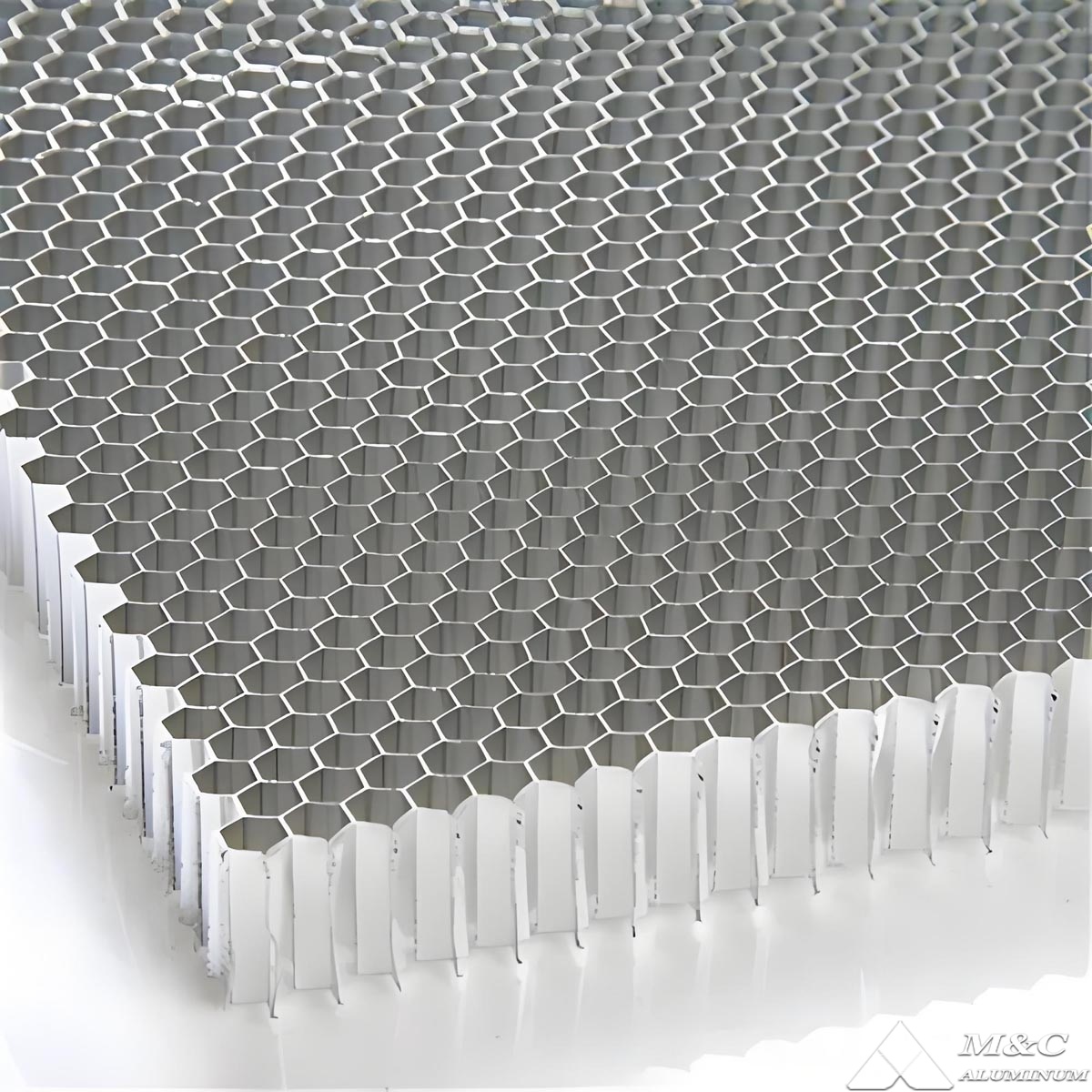
For honeycomb applications, foil thickness uniformity, surface cleanliness, and bonding performance are essential. 3003 is commonly used, while some projects may specify other alloys according to core strength and corrosion requirements. For customers in this field, our Honeycomb aluminum foil is produced with attention to adhesive compatibility and expansion consistency.
3004 aluminum foil is more focused on food container foil, deeper drawn lunch boxes, container lids, and high strength semi-rigid packaging. In these applications, the final product must resist deformation during filling, sealing, transportation, and stacking. The higher strength of 3004 can help improve container rigidity while maintaining a relatively light structure.
Surface Quality and Thickness Tolerance
Both alloys can be supplied with one bright side and one matte side after double rolling, or with a specified surface condition according to the rolling process. For packaging and container applications, surface quality directly affects appearance, lubrication, coating, printing, and sealing performance.
In factory production, common surface requirements include no oil stain, no corrosion, no serious roll mark, no black line, no wrinkle, no split edge, and no obvious color difference. For thin aluminum foil, pinhole control is also important, especially when the material is used for barrier packaging or laminated structures.
Thickness tolerance is another key factor. A narrow tolerance improves downstream forming stability and helps customers control material consumption. For container foil, excessive thickness variation may cause inconsistent wall strength or poor stacking performance. For honeycomb foil, it may affect core density and expansion behavior.
Cost and Procurement Considerations
3003 aluminum foil is generally more economical than 3004 aluminum foil because the alloy design is simpler and the strength requirement is lower. It is a practical choice for many standard applications where very high strength is not necessary.
3004 aluminum foil may have a higher material cost, but it can reduce total cost in some projects if it allows thinner gauge design or improves container performance. The correct evaluation should consider not only price per ton, but also yield rate, forming scrap, product weight, packing efficiency, and final customer requirements.
When customers request a quotation, we usually confirm alloy, temper, thickness, width, coil inner diameter, coil outer diameter, surface requirements, packing method, annual quantity, and applicable standards. These details help us recommend the most suitable 3003 or 3004 aluminum foil specification.
How to Choose Between 3003 and 3004 Aluminum Foil
If the application requires excellent formability, stable processing, and general medium strength, 3003 aluminum foil is often the preferred choice. It is suitable for honeycomb core, heat exchanger foil, general container foil, and many industrial uses.
If the application requires higher strength, better rigidity, or deeper drawn food containers, 3004 aluminum foil is usually more suitable. It is especially useful where the final product must maintain shape under stacking or handling pressure.
In simple terms, 3003 is the more formable and versatile option, while 3004 provides higher strength for more demanding semi-rigid products. The final selection should be based on the actual forming process, product structure, required temper, and quality standard.
Conclusion
3003 aluminum foil and 3004 aluminum foil are both important 3xxx series aluminum manganese alloy foils, but they serve different engineering needs. 3003 offers excellent formability, corrosion resistance, and balanced cost. 3004 provides higher strength through magnesium addition and is better suited for deep drawn containers and stronger packaging structures.
As a manufacturer, our recommendation is to define the application first, then select the alloy, temper, thickness, and tolerance. Proper material selection reduces forming problems, improves production efficiency, and supports consistent product quality in international supply chains.