
As an aluminum foil manufacturer, we produce 3003 aluminum foil for semi-rigid containers with controlled alloy chemistry, rolling precision, surface cleanliness, and forming performance. Semi-rigid aluminum containers are widely used for ready meals, bakery trays, airline catering, household roasting pans, takeaway food packaging, and frozen food packaging. In these applications, the foil must not only meet dimensional requirements, but also withstand stamping, flanging, curling, stacking, sealing, heating, freezing, and distribution.
3003 aluminum foil is one of the most commonly specified materials for semi-rigid aluminum containers because it provides a practical balance of strength, formability, corrosion resistance, and cost efficiency. Compared with many pure aluminum grades, 3003 alloy has higher mechanical strength due to manganese addition, while still maintaining good ductility for deep drawing and container forming. For container foil producers and food packaging converters, this balance is important for stable production efficiency and consistent container shape.
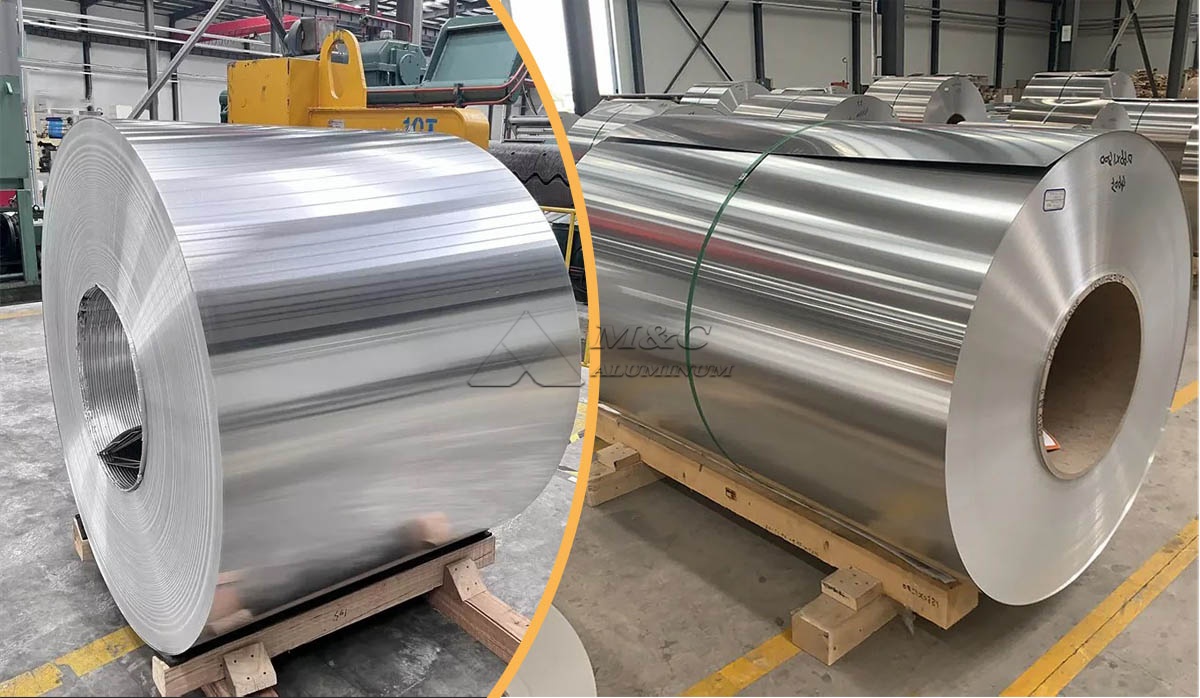
What Is 3003 Aluminum Foil
3003 aluminum foil is an Al-Mn series alloy foil. The main alloying element is manganese, with small amounts of iron, silicon, copper, and zinc controlled according to international standards or customer specifications. In semi-rigid container applications, 3003 aluminum foil is usually supplied in O, H22, H24, or H26 temper depending on the forming depth, sidewall height, lid compatibility, and final rigidity required by the container design.
From our production experience, 3003 aluminum foil is often selected when the container needs better stiffness than 8011 or 1235 in comparable thickness, especially for medium and large trays. It is also suitable for containers that require clean appearance, stable earing performance, and reliable resistance to deformation during handling. For customers evaluating alloy options, our 3003 Aluminum Foil product range can be specified according to thickness, width, temper, and surface condition.
Why 3003 Alloy Is Suitable for Semi-Rigid Containers
Semi-rigid containers require a material that can be formed into a defined shape and retain that shape under load. The material must have enough elongation to avoid cracking during stamping, but it must also have enough yield strength to prevent easy collapse. 3003 aluminum foil meets these requirements through its Al-Mn alloy structure and controlled cold rolling process.
For food container production, typical advantages of 3003 aluminum foil include good forming stability, moderate strength, uniform surface quality, and compatibility with common lubricating, lacquering, printing, and sealing processes. The alloy is also suitable for high-temperature cooking and low-temperature storage, provided the container is designed and processed according to the intended food contact and thermal requirements.
In semi-rigid aluminum containers, the final performance depends not only on the alloy grade, but also on thickness tolerance, temper uniformity, surface oil control, pinhole level, edge quality, and coil flatness. As a factory, we manage these factors throughout melting, casting, rolling, annealing, slitting, and final inspection.
Typical Technical Parameters
The following table shows common supply parameters for 3003 aluminum foil used in semi-rigid container applications. Final values can be adjusted according to the container size, drawing depth, press speed, and tooling design.
| Item | Typical Specification |
|---|---|
| Alloy | 3003 |
| Temper | O, H22, H24, H26 |
| Thickness | 0.030 mm to 0.200 mm |
| Width | 100 mm to 1600 mm, customized by order |
| Inner Diameter | 76 mm, 152 mm, or customer specified |
| Surface | One side bright, one side matte, or both sides bright by process |
| Surface Condition | Clean, flat, free from obvious oil stain, black spot, wrinkle, and serious scratch |
| Edge | Slit edge, burr controlled for automatic forming lines |
| Application | Semi-rigid food containers, trays, meal boxes, baking pans, lids, airline meal containers |
| Packaging | Export seaworthy wooden case or suspended pallet packaging |
Chemical Composition Reference
We control alloy composition according to applicable standards and customer technical agreements. The chemical composition of 3003 aluminum foil is important because manganese improves strength while maintaining adequate formability.
| Element | Typical Range, % |
|---|---|
| Si | 0.60 max |
| Fe | 0.70 max |
| Cu | 0.05 to 0.20 |
| Mn | 1.00 to 1.50 |
| Zn | 0.10 max |
| Others, each | 0.05 max |
| Others, total | 0.15 max |
| Al | Balance |
Mechanical Properties by Temper
The selection of temper is one of the most important decisions for 3003 aluminum foil for semi-rigid containers. Softer tempers are better for deep drawing and complex shapes, while harder tempers support higher stiffness and better shape retention. The values below are typical reference ranges and may vary according to thickness and final technical agreement.
| Temper | Tensile Strength, MPa | Elongation, % | Typical Use |
|---|---|---|---|
| O | 95 to 135 | 12 to 22 | Deep drawn trays, complex container shapes |
| H22 | 115 to 155 | 6 to 14 | General food containers requiring moderate rigidity |
| H24 | 135 to 175 | 4 to 10 | Semi-rigid containers with higher stiffness requirements |
| H26 | 155 to 195 | 2 to 7 | Shallow trays and products requiring higher resistance to deformation |
For high-speed container manufacturing, we usually recommend verifying temper and thickness together. A container that cracks at the corner may require a softer temper or optimized lubrication, while a tray with weak sidewalls may need a harder temper, greater thickness, or tooling adjustment.
Manufacturing Process in Our Factory
Our production of 3003 aluminum foil begins with raw material control and alloy melting. The molten aluminum is refined, filtered, and cast into strip or slab according to the production route. During rolling, the material is progressively reduced to the required thickness with controlled reduction rates. Intermediate and final annealing are used to obtain the required temper and mechanical properties.
After foil rolling, the coil is inspected for thickness, surface defects, flatness, pinholes, and edge condition. Slitting is performed according to the customer roll width and forming line requirements. For container foil, we pay particular attention to edge burr and telescoping because these issues can affect automatic feeding and press stability.
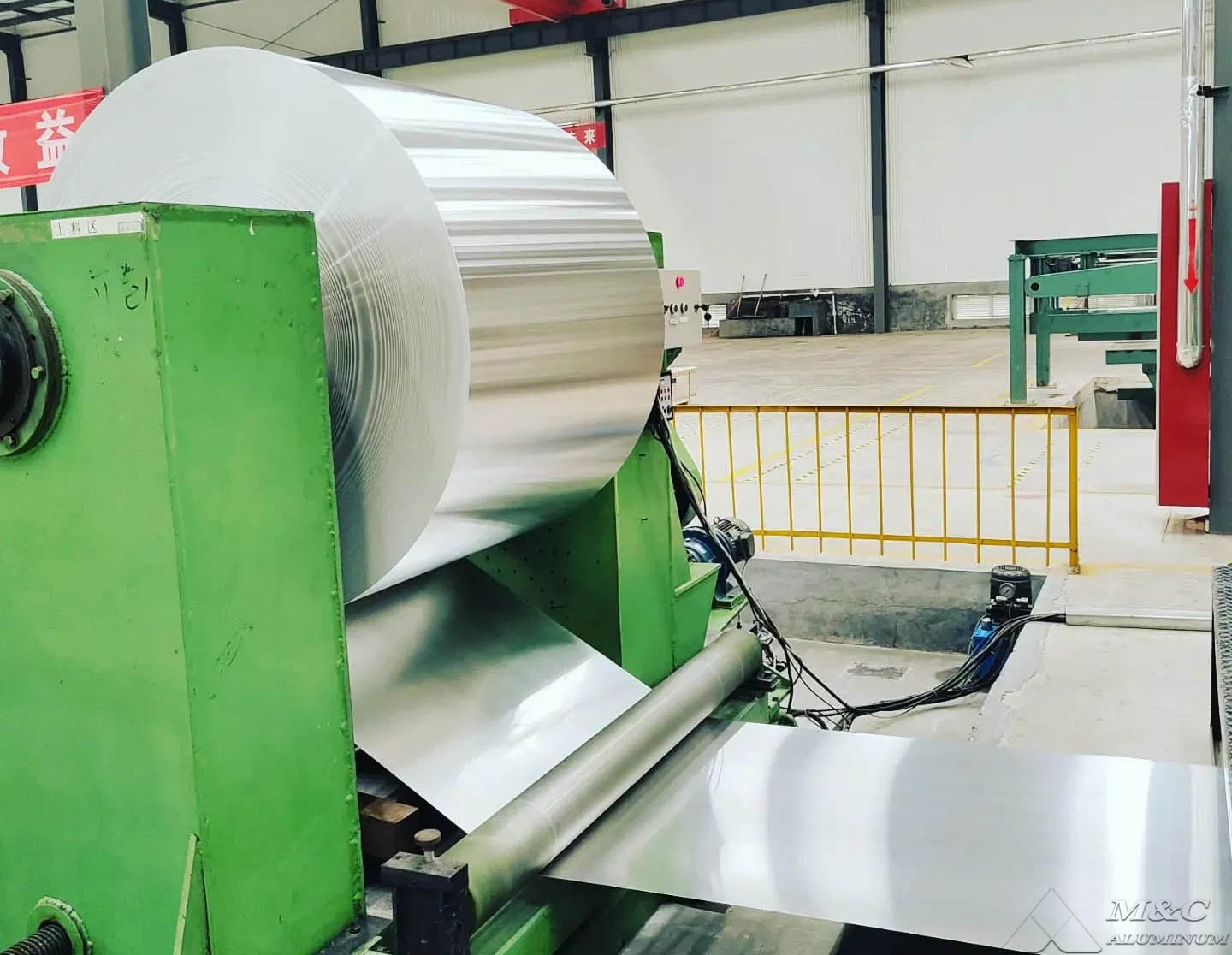
As a manufacturer, we do not treat container foil as a general commodity coil. Each production order is reviewed according to the final application. If the customer produces smooth-wall containers, wrinkle-wall containers, airline meal trays, pet food trays, or bakery containers, we adjust the production parameters and inspection focus accordingly. This approach helps reduce forming defects and improves coil-to-coil consistency.
Surface Quality and Food Packaging Requirements
For aluminum foil for food containers, surface cleanliness is a key requirement. The surface must be suitable for direct forming and, where required, later coating, printing, embossing, or sealing. Excessive rolling oil residue, dark marks, metal particles, or scratches can cause appearance defects or operational problems during forming.
Our container foil surface control includes rolling oil management, filtration, surface inspection, and controlled packaging after slitting. The material is protected from moisture, dust, and mechanical damage during storage and transportation. For food packaging converters, we can provide documentation according to order requirements, including chemical composition, mechanical properties, and inspection reports.
The surface of 3003 aluminum foil is also suitable for many coating systems used for food packaging, subject to compatibility testing by the coating supplier and container manufacturer. If the final product involves acidic, salty, or high-moisture food, lacquer selection and container design should be evaluated together with the foil specification.
Thickness Selection for Semi-Rigid Containers
The suitable thickness of 3003 aluminum foil depends on container volume, sidewall height, bottom area, load-bearing requirement, and whether the container is used with a lid. Thin foil improves material utilization and lowers unit cost, but it may reduce stacking strength and resistance to deformation. Thicker foil improves rigidity, but increases material consumption and may require higher forming force.
Common thickness ranges include 0.040 mm to 0.070 mm for small trays and lids, 0.070 mm to 0.120 mm for general meal containers, and 0.120 mm to 0.200 mm for large or heavy-duty semi-rigid containers. For deep or complex shapes, the final thickness should be confirmed by forming trials because local thinning at corners and sidewalls can affect performance.
Customers producing multiple container models often choose different specifications for each product rather than using one general foil for all designs. This is usually more efficient in the long term because it balances forming quality, rigidity, and material cost.
Comparison with Other Container Foil Alloys
3003 aluminum foil is not the only alloy used for container foil, but it is often preferred when higher strength and stable semi-rigid performance are required. 8011 aluminum foil is also widely used for container applications and can be suitable for many trays and lids. However, 3003 may provide better rigidity in certain designs, especially for larger trays or containers that require improved shape retention.
For customers comparing specifications, our Container foil supply includes multiple alloy and temper options. The final selection should be based on container forming depth, press speed, stacking requirements, food type, heating method, and cost target.
| Alloy | General Characteristics | Typical Container Use |
|---|---|---|
| 3003 | Good strength, good formability, stable rigidity | Semi-rigid trays, meal containers, baking pans |
| 8011 | Good formability, widely used, flexible specification range | General containers, lids, household foil products |
| 8079 | Excellent ductility in selected applications | Flexible packaging and special foil uses |
| 1100 | High aluminum purity, good corrosion resistance | Light forming and specialty applications |
Forming Performance Considerations
During stamping, 3003 aluminum foil is subjected to tensile stress, compression, bending, and friction. Defects such as cracking, orange peel, wrinkles, uneven sidewalls, or excessive earing may occur if the foil, tooling, lubrication, or press parameters are not matched. Stable foil properties help reduce these risks, but the forming process must also be optimized.
Key forming factors include die radius, blank holder pressure, lubrication amount, forming speed, and blank size. In our technical communication with customers, we often request details such as container drawing, forming depth, press type, and current alloy specification. With this information, we can recommend a more suitable thickness and temper range.
A well-matched 3003 aluminum foil specification helps the container maintain clean edges, complete corners, uniform sidewalls, and reliable stacking performance. This is especially important for automated production lines where coil stability directly affects output and scrap rate.
Quality Control for Export Orders
For international B2B customers, stable quality and documentation are essential. Our factory applies process control from raw material to final coil packaging. Each batch is traceable through production records and inspection data.
| Inspection Item | Control Purpose |
|---|---|
| Chemical Composition | Confirm alloy compliance and batch stability |
| Thickness Tolerance | Ensure forming consistency and material planning accuracy |
| Width and Edge Quality | Support automatic feeding and reduce burr-related issues |
| Tensile Strength | Verify temper and mechanical performance |
| Elongation | Evaluate formability for drawing and stamping |
| Surface Inspection | Identify oil stain, scratch, wrinkle, black spot, and other visible defects |
| Pinhole Inspection | Control barrier and appearance performance according to thickness |
| Coil Shape | Prevent telescoping, loose winding, and handling damage |
Before shipment, coils are packed with moisture protection, edge protection, and suitable wooden cases or pallets for sea transportation. Packaging can be adjusted for container loading, warehouse handling, and customer unloading conditions.
Applications of 3003 Aluminum Foil for Semi-Rigid Containers
3003 aluminum foil is used in a broad range of semi-rigid packaging products. Typical applications include takeaway meal boxes, airline catering trays, bakery pans, barbecue trays, frozen food containers, pet food trays, institutional catering containers, and household roasting pans. It is also used where the container must tolerate heating in conventional ovens, provided that the container design and food contact regulations are properly followed.
The material is valued in these applications because aluminum provides excellent thermal conductivity, light weight, recyclability, and barrier performance. For food processors, uniform heating and freezing performance can improve product handling. For container manufacturers, consistent foil properties support efficient stamping and reduce production interruptions.
Ordering Information
To specify 3003 aluminum foil for semi-rigid containers accurately, customers should provide alloy, temper, thickness, width, inner diameter, outer diameter or coil weight, surface requirement, application, and annual or batch quantity. If possible, container drawings or samples are useful for confirming the forming requirement. For coated or printed containers, coating compatibility and surface requirements should be discussed before mass production.
As a factory, our role is to supply stable 3003 aluminum foil coils that match the real processing conditions of container manufacturers. By controlling alloy composition, rolling process, annealing, slitting, and inspection, we help customers obtain reliable container forming performance and consistent finished product quality.
Conclusion
3003 aluminum foil for semi-rigid containers offers a strong combination of formability, rigidity, corrosion resistance, and production reliability. It is especially suitable for food trays and containers that require stable shape retention and clean forming performance. For engineering and purchasing teams, the correct specification should be selected according to container structure, forming depth, mechanical requirements, and processing conditions. With controlled factory production and technical communication before order confirmation, 3003 aluminum foil can provide dependable performance for international container foil applications.