
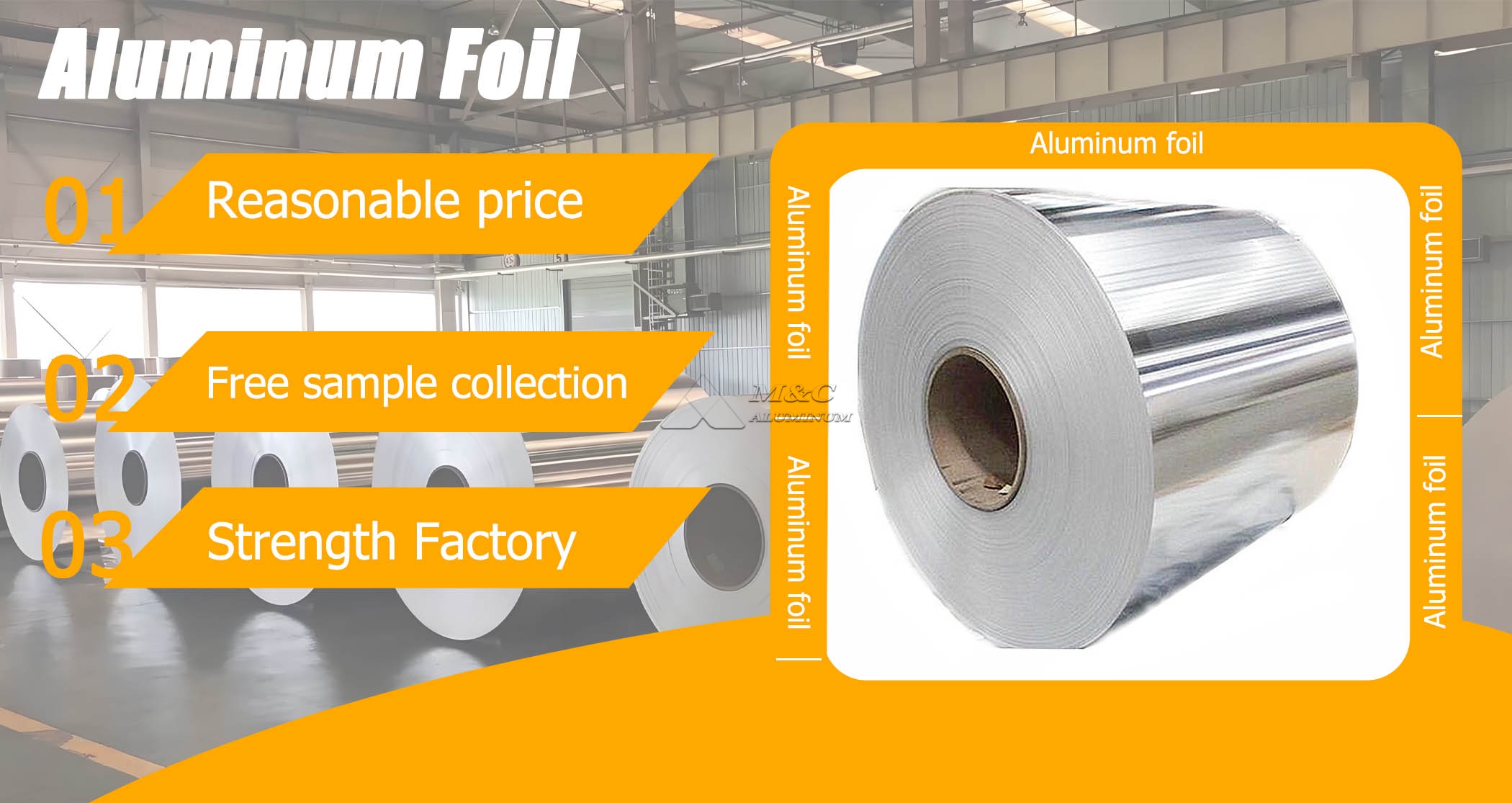
As a professional aluminum foil manufacturer, we produce anti-corrosion 3003 aluminum foil for HVAC heat exchanger applications, including air conditioner evaporator fins, condenser fins, radiator components, and industrial cooling equipment. Our 3003 aluminum foil is manufactured with stable chemical composition, controlled temper, reliable surface quality, and optional hydrophilic or corrosion-resistant coatings.
In HVAC systems, aluminum foil must withstand humid operating conditions, repeated temperature changes, condensate exposure, and environmental contaminants. Therefore, selecting a suitable HVAC fin stock foil is important for heat-transfer efficiency, equipment durability, and downstream forming performance. Our factory supplies 3003 aluminum foil in coils designed for fin stamping, fin rolling, louver forming, and coated heat exchanger production.
Why 3003 Aluminum Foil Is Used in HVAC Heat Exchangers
3003 aluminum alloy is an aluminum-manganese alloy with good corrosion resistance, moderate strength, and excellent workability. Compared with pure aluminum foil grades, 3003 aluminum foil provides improved mechanical strength while maintaining the formability required for precision HVAC fin production.
The manganese content in 3003 alloy contributes to improved strength and durability. This makes the material suitable for thin-gauge aluminum heat exchanger foil that must retain dimensional stability during high-speed stamping and louver forming. The material can also be supplied with surface treatments that improve condensate drainage and resistance to humid corrosion conditions.
Our anti-corrosion 3003 aluminum foil for HVAC is commonly used in the following applications:
Air conditioner evaporator fins
Condenser fin stock
Commercial refrigeration heat exchangers
Automotive cooling and HVAC components
Dehumidifier and heat pump fin materials
Industrial cooling coils
Ventilation and air treatment equipment
For customers seeking standard and customized coil supply, our 3003 Aluminum Foil range can be produced according to thickness, width, temper, surface condition, and coating requirements.
Anti-Corrosion Performance for HVAC Environments
HVAC heat exchangers often operate in conditions where moisture, airborne dust, acidic gases, salt-containing air, and condensate can affect fin surfaces. Aluminum naturally forms an oxide layer, which provides a basic level of protection. However, untreated foil may still experience surface degradation in demanding environments, particularly in coastal, industrial, or high-humidity installations.
To improve service reliability, we manufacture anti-corrosion aluminum foil with carefully controlled substrate quality and optional functional coatings. The base 3003 aluminum foil is processed to achieve consistent cleanliness, low oil residue, and uniform surface condition before coating. This preparation supports coating adhesion and helps reduce the risk of uneven wetting or localized corrosion.
For HVAC applications requiring improved water management, hydrophilic coating can be applied to the foil surface. Hydrophilic aluminum foil allows condensate to spread into a thin film rather than forming droplets. This helps water drain more efficiently, reduces airflow resistance caused by water bridging between fins, and supports stable heat-transfer performance.
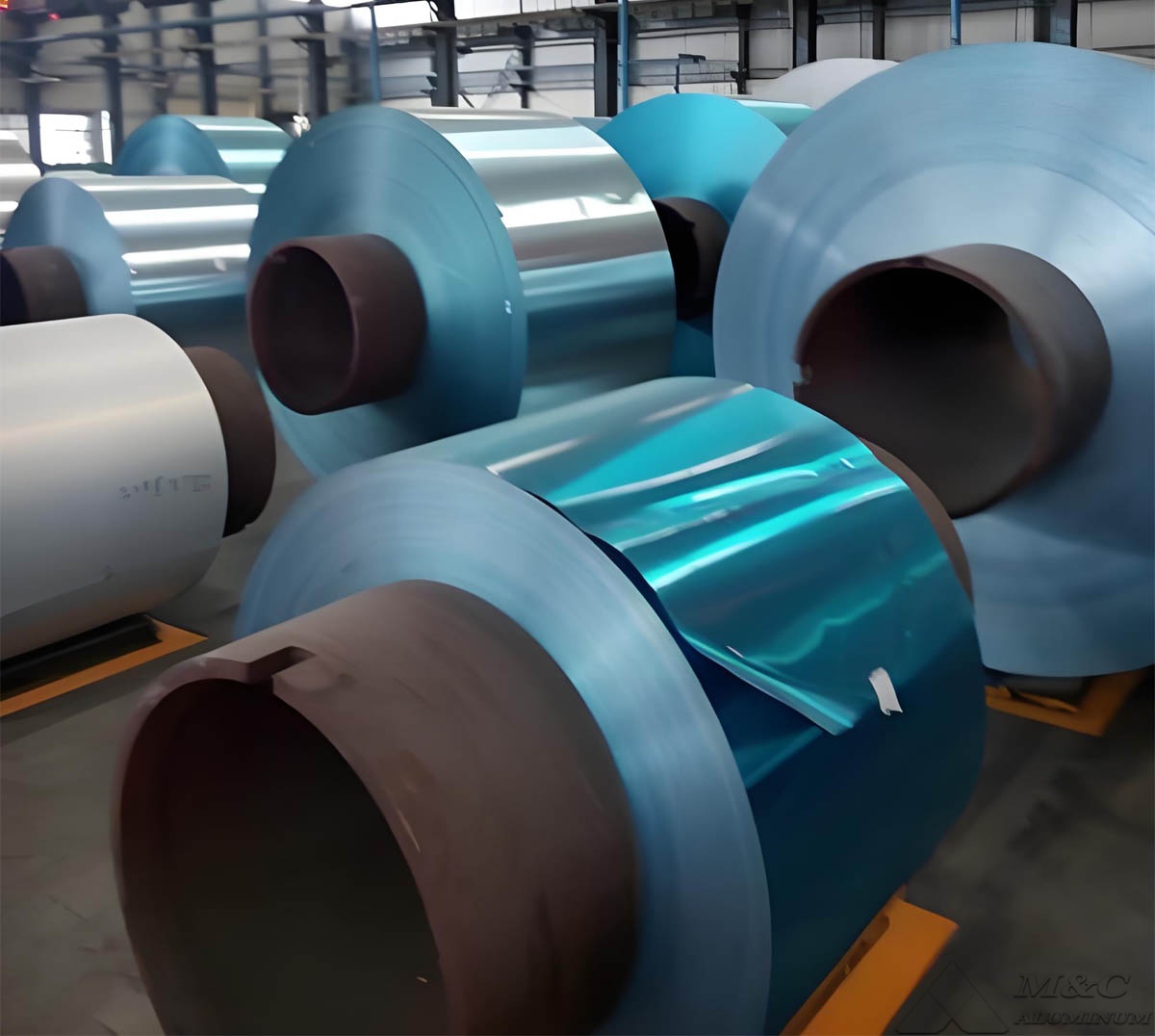
In addition to hydrophilic treatment, coating systems can be selected according to the operating environment. For example, enhanced corrosion-resistant coatings may be specified for coastal air conditioning systems, refrigeration units exposed to frequent condensation, or equipment operating in industrial atmospheres.
Technical Parameters of 3003 Aluminum Foil for HVAC
The following specifications represent our common production range. Final parameters can be adjusted based on customer drawings, equipment capability, coating process, and end-use performance requirements.
| Parameter | Standard Production Range | Notes |
|---|---|---|
| Alloy | AA 3003 | Aluminum-manganese alloy |
| Temper | O, H14, H16, H18, H22, H24 | Selected according to forming method |
| Thickness | 0.018 mm to 0.200 mm | Common HVAC fin gauges available |
| Width | 20 mm to 1,600 mm | Slit coils available on request |
| Coil inner diameter | 150 mm, 300 mm, 505 mm | Custom core sizes possible |
| Coil outer diameter | Up to 1,700 mm | Subject to coil weight and handling requirements |
| Surface finish | Mill finish, degreased, coated | Surface selected for downstream processing |
| Coating type | Hydrophilic, anti-corrosion, epoxy-based | Based on application environment |
| Coating side | One side or two sides | Available for specialized fin designs |
| Tensile strength | According to temper and thickness | Controlled through rolling and annealing |
| Elongation | According to temper and thickness | Verified for forming suitability |
| Surface quality | Clean, flat, low oil residue | Controlled for coating and stamping |
Manufacturing Process and Quality Control
Our factory controls each stage of production for HVAC aluminum foil, from raw material selection through final coil packaging. The process begins with qualified aluminum ingots and alloying control to ensure the manganese content and chemical composition meet 3003 alloy requirements.
After casting and hot rolling, the material is cold rolled to the required foil gauge. Thickness control is important because HVAC fin stock commonly uses thin material and requires consistency across the coil width and length. We use production inspection procedures to monitor thickness tolerance, flatness, edge condition, and mechanical properties.
Depending on the specified temper, coils are annealed under controlled conditions. Proper annealing supports stable hardness, elongation, and forming behavior. For customers producing complex louver patterns or narrow fin spacing, the required temper should be confirmed based on stamping speed, die geometry, and final fin design.
Before coating, the foil surface may be cleaned and chemically treated to support adhesion. Coating weight, curing conditions, wetting performance, and appearance are monitored during production. Our quality control process may include the following inspections:
Chemical composition verification
Thickness and width measurement
Tensile strength and elongation testing
Surface cleanliness inspection
Edge crack and pinhole inspection
Coating adhesion testing
Hydrophilic performance evaluation
Salt spray or corrosion resistance testing when specified
Coil appearance and packaging inspection
This controlled manufacturing approach enables us to supply aluminum heat exchanger foil suitable for continuous processing in HVAC fin production lines.
Selecting the Right Temper and Surface Treatment
The correct combination of alloy temper and surface treatment affects both production efficiency and in-service performance. For example, softer tempers may be suitable when deep forming or demanding louver geometry is required. Harder tempers may be selected where improved fin stiffness is needed, provided that forming requirements remain achievable.
For conventional HVAC fins, 3003 H14 aluminum foil is frequently selected because it provides a practical balance between strength and formability. However, the optimal choice depends on fin thickness, fin pitch, louver profile, tooling design, and operating conditions.
Surface treatment should also be selected according to the heat exchanger environment. Mill-finish 3003 foil may be appropriate for some standard applications. Hydrophilic coated aluminum foil is commonly selected for evaporator fins where condensate drainage is important. For installations in more aggressive environments, a higher-performance anti-corrosion coating can be considered.
Our engineering and production teams can review the requested material parameters and recommend a suitable foil condition for the customer's manufacturing process.
Processing Recommendations for HVAC Fin Manufacturers
To achieve stable performance during fin stamping and forming, HVAC manufacturers should consider several material-handling factors. Coils should be stored in a clean, dry warehouse and protected from direct moisture exposure. Sudden temperature changes should be avoided before processing because condensation on the coil surface can affect coating quality and handling.
During uncoiling and feeding, tension should be controlled to prevent edge damage, waviness, or deformation. Stamping dies should be maintained with clean working surfaces to reduce scratches on coated material. When processing hydrophilic aluminum foil, care should be taken to avoid excessive abrasion that could reduce coating performance.
We can supply coils in dimensions matched to customer production lines, including slit widths, coil weights, core diameters, and packaging configurations. This helps reduce material loss and supports efficient line operation. Our broader Products portfolio also includes aluminum foil grades for heat transfer, packaging, industrial forming, and other specialized applications.
Factory Supply and Customization Capability
As a 3003 aluminum foil manufacturer, we support export customers, HVAC component manufacturers, and heat exchanger producers with stable coil supply and technical coordination. Our production capability covers standard mill-finish foil as well as coated aluminum foil for anti-corrosion and hydrophilic applications.
Customization options include alloy temper, thickness tolerance, slit width, coil weight, surface treatment, coating side, and packaging method. For projects requiring material qualification, we can provide technical data, sample coils, inspection records, and production documentation according to the agreed specification.
Conclusion
Anti-corrosion 3003 aluminum foil for HVAC provides a dependable material solution for heat exchanger fins exposed to moisture, condensate, and changing service conditions. Its combination of corrosion resistance, mechanical strength, formability, and coating compatibility makes it suitable for air conditioning, refrigeration, ventilation, and industrial cooling equipment.
By controlling alloy composition, rolling quality, temper, surface cleanliness, and coating performance, our factory supplies 3003 aluminum foil that supports efficient fin production and reliable HVAC operation. For specific projects, material selection should be based on fin geometry, forming process, coating requirements, and the expected service environment.