
With the rapid development of new energy vehicles (EVs), energy storage systems (ESS), and high-end consumer electronics (3C), lithium-ion batteries are facing increasingly demanding requirements for energy density, cycle life, and safety performance. As an indispensable cathode current collector in the structure of lithium-ion batteries, aluminum foil carries active materials and enables efficient electron transmission.
Among various aluminum alloy grades, 1235 H18 battery aluminum foil has become a mainstream choice for battery manufacturers worldwide due to its high purity, high electrical conductivity, excellent processing performance, and outstanding cost-effectiveness.
What Is 1235 H18 Aluminum Foil for Power Batteries?
1235 aluminum foil belongs to the pure aluminum series, with an aluminum content of no less than 99.35%. Its impurity content, including Fe, Si, Cu, and other elements, is very low, which helps reduce internal side reactions in batteries and supports electrochemical stability during long-term charging and discharging cycles.
"H18" indicates that the aluminum foil has undergone a relatively high degree of cold work hardening and is supplied in a hard temper. Compared with O-temper soft aluminum foil, H18 aluminum foil offers higher strength and better dimensional stability. It is therefore suitable for battery aluminum foil applications requiring high mechanical strength, deformation resistance, and stable processing performance.
This aluminum foil is an ultra-thin material specifically designed for lithium-ion battery cathode current collectors. Its thickness generally ranges from 0.01 mm to 0.03 mm (10–30 μm), while the width can be customized from 100 mm to 1600 mm according to customer requirements. Its ultra-thin design helps reduce battery weight and improve energy density.
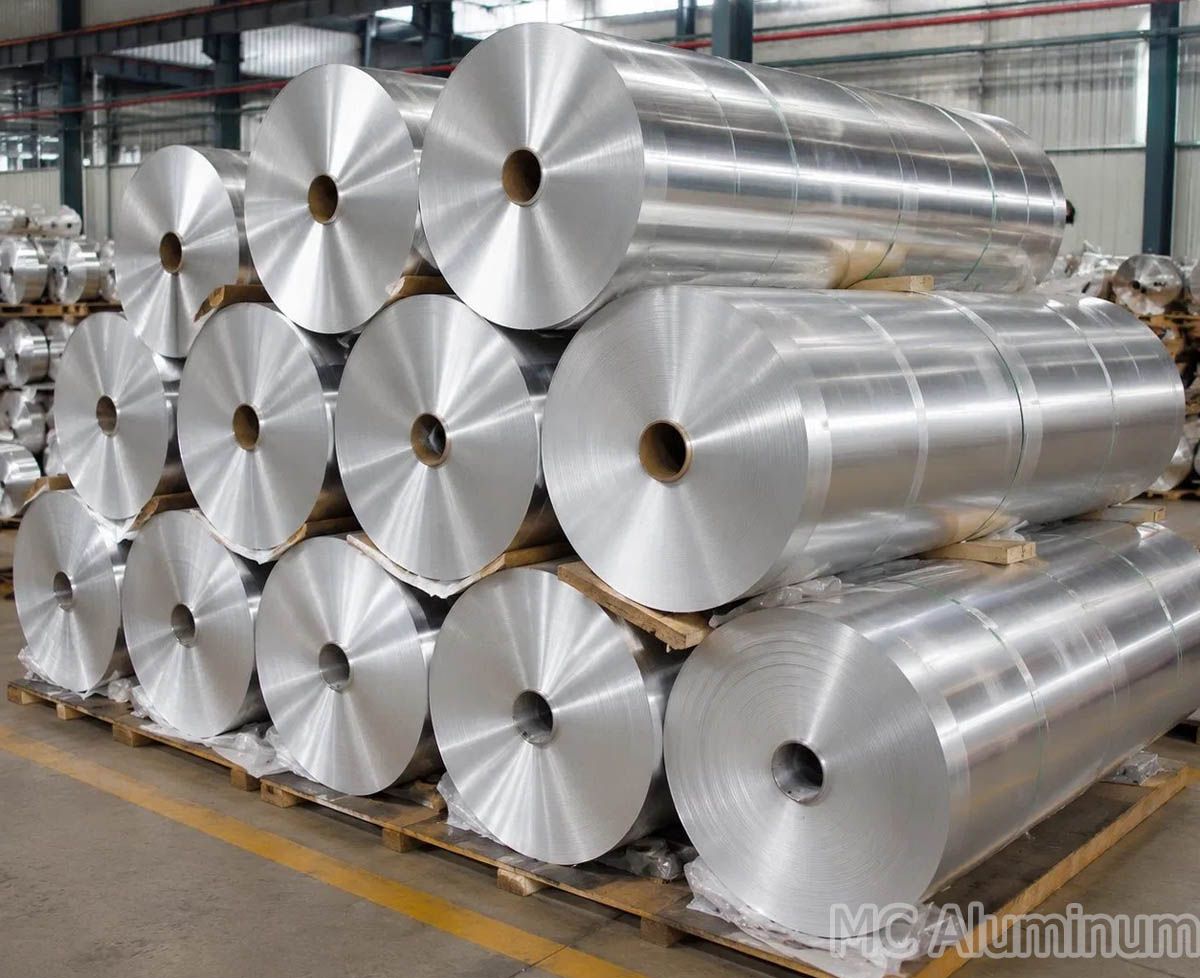
Advantages of 1235 H18 Battery Aluminum Foil
High Electrical Conductivity
1235 H18 aluminum foil provides excellent electrical conductivity, ensuring smooth current flow inside the battery. This helps improve battery output power and operating efficiency.
Low Electrical Resistance
Its low-resistance characteristics help reduce internal battery resistance and energy loss, thereby improving energy conversion efficiency.
High Mechanical Strength
The H18 temper provides high mechanical strength, allowing the aluminum foil to withstand tension, coating, slitting, winding, and other stresses encountered during battery manufacturing.
Excellent Surface Flatness
High surface flatness is beneficial for the uniform distribution and adhesion of electrode materials. It helps improve coating consistency, battery performance, and service life.
Good Thermal Stability
1235 H18 aluminum foil has good thermal stability and can maintain dimensional and structural stability during battery operation. It is less likely to deform or become damaged under normal processing and operating conditions.
Specifications of 1235 H18 Battery Aluminum Foil
| Performance Item | Typical Specification |
| Alloy and Temper | 1235 H18 |
| Chemical Composition (%) | Al ≥ 99.35%; Fe + Si ≤ 0.65%; Cu ≤ 0.05%; Mn ≤ 0.05%; Zn ≤ 0.10% |
| Common Thickness Range | 0.010 mm–0.020 mm (10 μm, 12 μm, 13 μm, 15 μm) |
| Thickness Tolerance | ±3%; high-precision micron-level rolling |
| Width Range | 200 mm–1600 mm; customized according to customer slitting requirements |
| Volume Conductivity | ≥ 61.0% IACS |
| Tensile Strength (Rm) | 160–210 MPa |
| Elongation (A50 mm) | 1.5%–3.0% |
| Surface Dyne Value | ≥ 32 dyne/cm; Grade A wettability |
| Coil Telescoping and Tower Shape | ≤ 1.0 mm; flat coil profile, free from loose winding and strip breakage |
| MOQ | 3 tons |
Wide Range of Applications
As a cathode current collector material for lithium-ion batteries, 1235 H18 power battery aluminum foil is widely used in the following fields:
New Energy Vehicle (NEV) Power Batteries
Used in power battery systems for electric vehicles, hybrid electric vehicles, and other new energy transportation applications.
Energy Storage Systems (ESS)
Suitable for grid-scale energy storage, residential energy storage, commercial and industrial energy storage systems.
Consumer Electronics Batteries
Applied in lithium batteries for mobile phones, notebook computers, tablets, wearable devices, and other 3C electronic products.
Cylindrical, Prismatic and Pouch Cells
Suitable for various lithium-ion battery cell formats, including cylindrical cells, prismatic cells, and pouch cells.
Sodium-Ion Battery Applications
It can also be used in selected sodium-ion battery current collector applications, subject to specific battery chemistry and design requirements.
In addition, this product can be further processed into carbon-coated aluminum foil. In lithium-ion battery applications, carbon-coated aluminum foil can help suppress battery polarization, reduce thermal effects, improve rate performance, and lower internal resistance.
Compliance with Major International Standards
1235 H18 aluminum foil for power batteries can be manufactured in accordance with multiple Chinese and international standards to ensure reliable quality and suitability for global markets.
Chinese Standards
GB/T 3880.3-2012: Wrought Aluminum and Aluminum Alloy Plates, Sheets and Strips for General Engineering — Part 3: Tolerances on Dimensions and Form
GB/T 33143-2022: Aluminum and Aluminum Alloy Foil for Lithium-Ion Batteries
American Standard
ASTM B209: Standard Specification for Aluminum and Aluminum-Alloy Sheet and Plate
European Standards
EN 573-3: Aluminum and Aluminum Alloys — Chemical Composition and Form of Wrought Products
EN 485: Aluminum and Aluminum Alloys — Sheet, Strip and Plate
Japanese Standard
JIS H4000: Aluminum and Aluminum Alloy Sheets, Plates and Strips
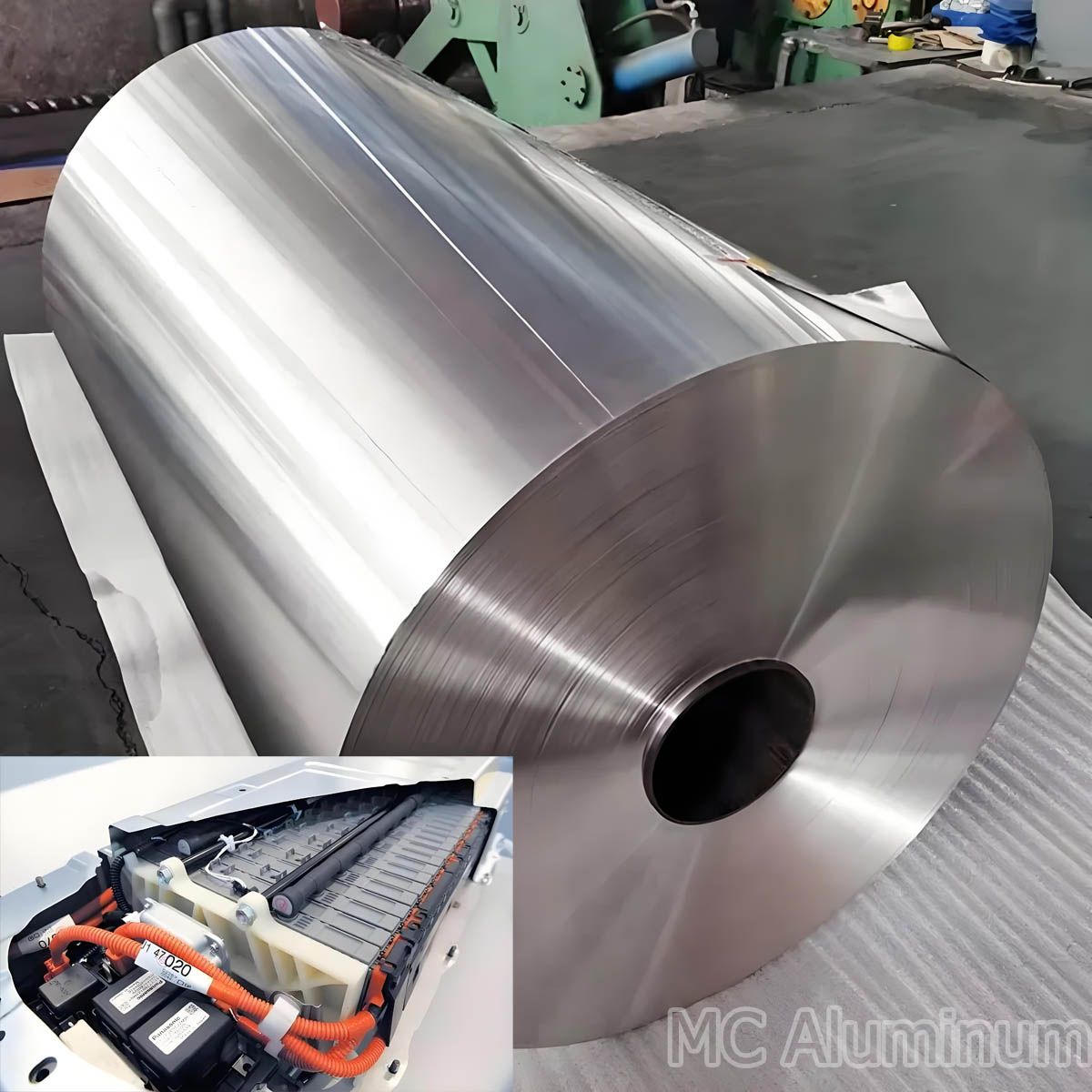
What Should Be Considered When Selecting Aluminum Foil for Power Batteries?
For battery manufacturers, purchasing aluminum foil should not be based on price alone. It is important to evaluate the compatibility between the material properties and the actual production process. The following factors deserve particular attention.
1. Thickness and Thickness Tolerance Control
Aluminum foil thickness directly affects battery weight, electrical conductivity, coating consistency, and active material loading. Excessive thickness variation may affect electrode uniformity and cell performance. Therefore, it is important to confirm thickness tolerance as well as longitudinal and transverse thickness consistency according to battery design requirements.
2. Surface Cleanliness and Wettability
Residual rolling oil, oxides, stains, particles, or other surface contamination may affect slurry adhesion and lead to powder shedding, exposed foil, or uneven local coating. For high-performance battery production, surface tension, residual oil control, cleanliness, and coating test results should be carefully evaluated.
3. Mechanical Property Compatibility
H18 aluminum foil offers relatively high strength. However, different coating machines, coating speeds, winding equipment, and manufacturing processes may have different requirements for tensile strength and elongation. The material properties should be matched with the actual tension range and processing conditions of the production line.
4. Slitting Quality
Edge burrs, edge cracks, wavy edges, and slitting dust may affect subsequent coating, die-cutting, winding, and cell assembly processes. High-quality slitting helps improve production yield, reduce equipment downtime, and minimize material waste.
5. Batch-to-Batch Consistency
Power battery manufacturing places great importance on long-term quality consistency. Stable raw material sources, mature rolling processes, complete inspection procedures, and batch traceability are essential for ensuring reliable long-term supply.
How to Choose Between 1235 H18 and Other Common Battery Aluminum Foil Grades?
Common aluminum foil grades used in power battery applications include 1235, 1060, and 1070.
A simple comparison is shown below:
| Item | 1235 | 1060 | 1070 |
| Series | 1xxx | 1xxx | 1xxx |
| Pure Aluminum Characteristics | 99.35% | 99.60% | 99.70% |
| Electrical Conductivity | Good | Excellent | Excellent |
| Processing Performance | Good | Good | Good |
| Common Temper | H18 | H18 | H18 |
| Battery Application | Cathode Current Collector | Cathode Current Collector | Cathode Current Collector |
| Key Selection Factor | Balanced performance, cost, and processing stability | Higher purity and conductivity requirements | Higher purity and specific process requirements |
In practical applications, aluminum foil should not be selected based on aluminum content alone.
For battery manufacturers, the more important factors include:
Thickness precision + tensile strength + elongation + surface quality + flatness + pinhole control + coating compatibility + batch consistency.
MC Aluminum can provide customized 1235 H18 battery aluminum foil solutions according to customers’ battery type, cell design, foil thickness, width, coil specifications, coating process, and applicable GB, ASTM, EN, or other technical standards.