
As a manufacturer of precision aluminum foil, we produce 1060 aluminum foil for electronic capacitor applications requiring stable chemical composition, controlled thickness, clean surfaces, and reliable processing performance. This high-purity aluminum foil is widely used as a base material for etched and formed capacitor foil, particularly in electrolytic capacitor production.
Electronic capacitor manufacturers require more than standard commercial aluminum foil. The foil must perform consistently during annealing, etching, chemical formation, slitting, winding, and final capacitor assembly. For export projects, material consistency between coils, dependable packaging, and complete inspection records are equally important. Our 1060 capacitor aluminum foil is manufactured with these requirements in mind.
Why 1060 Aluminum Foil Is Used for Electronic Capacitors
1060 aluminum foil is a commercially pure aluminum alloy with a minimum aluminum content of 99.60 percent. Its high electrical conductivity, good corrosion resistance, uniform metallurgical structure, and excellent formability make it suitable for capacitor foil processing.
In the capacitor manufacturing chain, 1060 aluminum foil is commonly supplied as a plain base foil. The downstream processor may etch the foil to increase its effective surface area, then form an aluminum oxide dielectric layer through electrochemical treatment. The resulting foil can be used in aluminum electrolytic capacitors for consumer electronics, industrial power supplies, telecommunications equipment, lighting systems, renewable energy equipment, and automotive electronic assemblies.
Compared with lower-purity aluminum materials, high-purity 1060 aluminum foil offers better consistency for chemical etching and formation processes. Controlled impurities are important because trace elements can influence etching behavior, oxide film formation, corrosion resistance, and electrical characteristics.
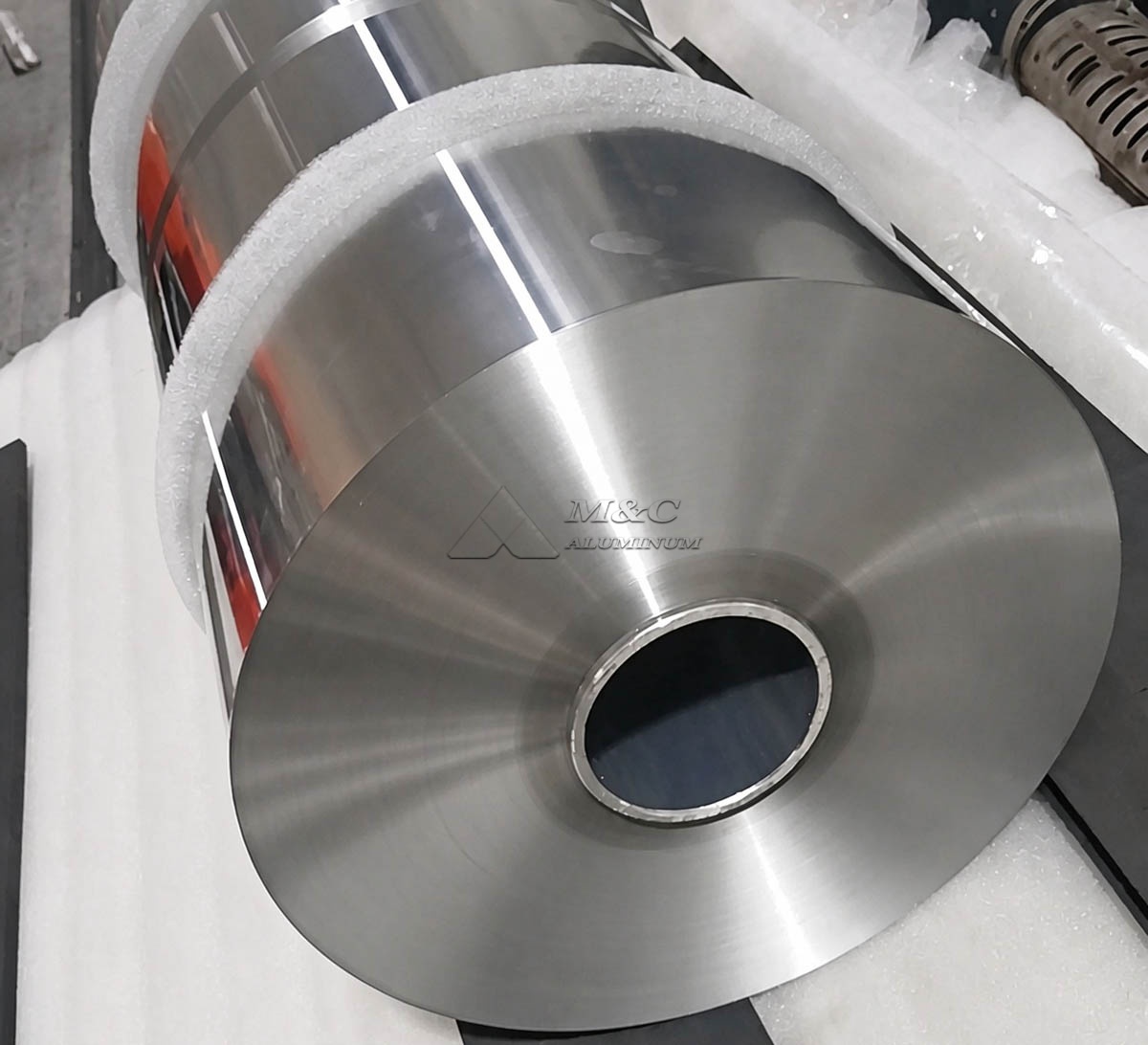
Manufacturing Control for Capacitor Aluminum Foil
We manufacture 1060 aluminum foil through a controlled process that begins with qualified aluminum ingots and alloy composition verification. Each production stage is managed to support the final requirements of electronic capacitor foil.
Raw Material and Chemical Composition
Our production starts with aluminum raw materials selected for stable purity and low impurity variation. We control the contents of silicon, iron, copper, manganese, magnesium, zinc, titanium, and other residual elements according to agreed technical specifications. This is especially important for capacitor applications because chemical uniformity affects downstream etching and anodic formation performance.
Rolling and Thickness Uniformity
After hot rolling and cold rolling, the foil is rolled to the specified final gauge. Precision rolling control supports stable thickness across the coil width and along the coil length. Uniform gauge helps capacitor foil processors maintain predictable etching depth, current distribution, and winding behavior.
For thin-gauge capacitor aluminum foil, thickness tolerance must be evaluated together with flatness and edge condition. A foil coil with stable average thickness but significant local variation may create difficulties during high-speed slitting or continuous electrochemical processing. Our inspection process therefore includes multiple measurement points across the strip width.
Annealing and Temper Control
Annealing determines the temper, elongation, softness, grain condition, and processing stability of the foil. We can supply 1060 aluminum foil in soft annealed condition or other agreed tempers based on the customer's etching route, handling equipment, and final capacitor design.
For many electronic capacitor foil applications, soft temper is preferred because it supports downstream deformation, winding, and chemical treatment. However, temper selection should be confirmed according to the converter's equipment and process requirements. Our technical team reviews coil dimensions, mechanical property targets, and surface expectations before production.
Surface Cleanliness and Surface Quality
A clean, uniform surface is critical for capacitor foil. Residual rolling oil, scratches, pinholes, oxide inclusions, edge cracks, and uneven surface texture may affect downstream etching or formation. We manage rolling lubrication, cleaning conditions, annealing atmosphere, and handling procedures to reduce contamination risks.
Our export-grade capacitor aluminum foil is checked for surface defects under controlled lighting. We also inspect the coil for telescoping, loose winding, edge damage, and surface contact marks before packing. For customers with specific defect acceptance criteria, inspection items can be included in the production agreement.
Technical Parameters of 1060 Aluminum Foil
The following table presents typical supply ranges for our 1060 aluminum foil for electronic capacitors. Final parameters are subject to customer specifications, end-use process requirements, and applicable contract standards.
| Item | Typical Specification | Notes |
|---|---|---|
| Alloy | 1060 | Aluminum content minimum 99.60 percent |
| Temper | O, H18, or as agreed | O temper is commonly requested for further processing |
| Thickness | 0.010 mm to 0.200 mm | Special gauges available upon technical review |
| Thickness tolerance | According to ordered thickness and width | Controlled through rolling and final inspection |
| Width | 20 mm to 1,650 mm | Slit coils available for capacitor foil processing |
| Coil inner diameter | 150 mm, 200 mm, 300 mm, 400 mm, 500 mm, or customized | Selected according to customer unwinding equipment |
| Coil outer diameter | As agreed | Controlled for safe transport and processing |
| Surface | Mill finish, clean and uniform | Free from serious scratches, oil stains, and inclusions |
| Edge condition | Trimmed edge or slit edge | Burr level controlled according to application |
| Tensile strength | Based on temper and thickness | Test values provided when required |
| Elongation | Based on temper and thickness | Important for winding and further treatment |
| Pinholes | Controlled according to foil gauge and agreed standard | Inspection criteria can be customized |
| Packaging | Export seaworthy packaging | Moisture protection and reinforced pallet support |
Performance Requirements for Etching and Formation
Capacitor manufacturers often evaluate base foil not only by standard mechanical properties but also by its behavior during electrochemical processing. We understand that the final capacitor performance depends on several downstream factors, including electrolyte composition, current density, etching method, formation voltage, and heat treatment.
For this reason, we focus on the foil characteristics that support stable downstream processing:
Consistent aluminum purity and controlled impurity levels.
Uniform thickness and stable coil profile.
Clean surface with controlled residual rolling oil.
Good flatness for continuous chemical treatment lines.
Reliable edge quality for slitting and winding.
Stable annealed structure suitable for further etching and formation.
Consistent performance from coil to coil within the same order.
Where a customer has a defined etching process, we can arrange trial material based on the requested gauge, temper, width, and coil weight. Feedback from pilot processing can then be used to refine the production specification for regular supply.
Quality Inspection and Traceability
Our factory applies quality control from raw material inspection through finished coil packing. Each production batch is identified to support traceability of alloy composition, rolling route, annealing condition, inspection data, and packing information.
Typical inspection activities include chemical composition analysis, thickness measurement, width measurement, surface inspection, coil shape evaluation, mechanical testing where specified, and packing verification. We can provide mill test certificates with the shipment. Additional documents, such as packing lists, certificates of origin, commercial invoices, and customer-required inspection reports, can be prepared for export orders.
For capacitor aluminum foil, we also recognize the importance of consistency between delivered coils. Our production planning aims to keep the same order within controlled manufacturing conditions whenever practical. This approach helps customers maintain stable processing parameters and reduce unnecessary adjustment during conversion.
Export Packaging for Moisture and Damage Protection
Electronic-grade aluminum foil requires careful protection during storage and international transport. Moisture exposure, dust, coil edge impact, and improper pallet handling can affect the usable condition of the material. We use export-oriented packaging methods based on shipment route, container loading method, coil size, and destination climate.
Our standard packaging may include moisture-proof wrapping, kraft paper, polyethylene film, protective coil boards, reinforced steel or plastic straps, wooden pallets, and fumigated wooden cases when required. Coil labels identify key order information, including alloy, temper, dimensions, coil number, net weight, and production batch.
For sea freight shipments, we pay particular attention to container loading stability and moisture protection. Customers may also specify vertical or horizontal coil packing according to their receiving and handling equipment.
Selecting the Right 1060 Aluminum Foil Specification
Before placing an order, capacitor foil buyers should define the intended processing route and key acceptance criteria. Important details include final thickness, width tolerance, temper, coil weight, inner diameter, allowable pinhole level, surface cleanliness standard, edge condition, and documentation requirements.
As a factory, we recommend discussing the downstream application before confirming the specification. A foil intended for deep etching, high-voltage formation, or narrow-width slitting may require different controls than foil used for general electronic capacitor components. Providing the end-use information allows us to recommend an appropriate grade and production route.
For customers comparing high-purity foil options, our 1060 Aluminium Foil range can be supplied in multiple gauges and coil formats. We also manufacture other aluminum foil products for industrial, packaging, and electrical applications within our broader Products portfolio.
Conclusion
1060 aluminum foil is an important base material for export-grade electronic capacitor production because of its high aluminum purity, electrical conductivity, formability, and compatibility with etching and formation processes. However, dependable capacitor foil supply depends on more than alloy designation. Thickness consistency, surface cleanliness, temper control, coil quality, traceability, and export packaging all contribute to successful downstream processing.
Our factory manufactures 1060 aluminum foil according to customer-specific requirements for electronic capacitor applications. By controlling production from raw material selection through final export packing, we provide stable coil quality for capacitor foil converters and international industrial buyers.