
What Are Semi-Rigid Aluminum Foil Containers?
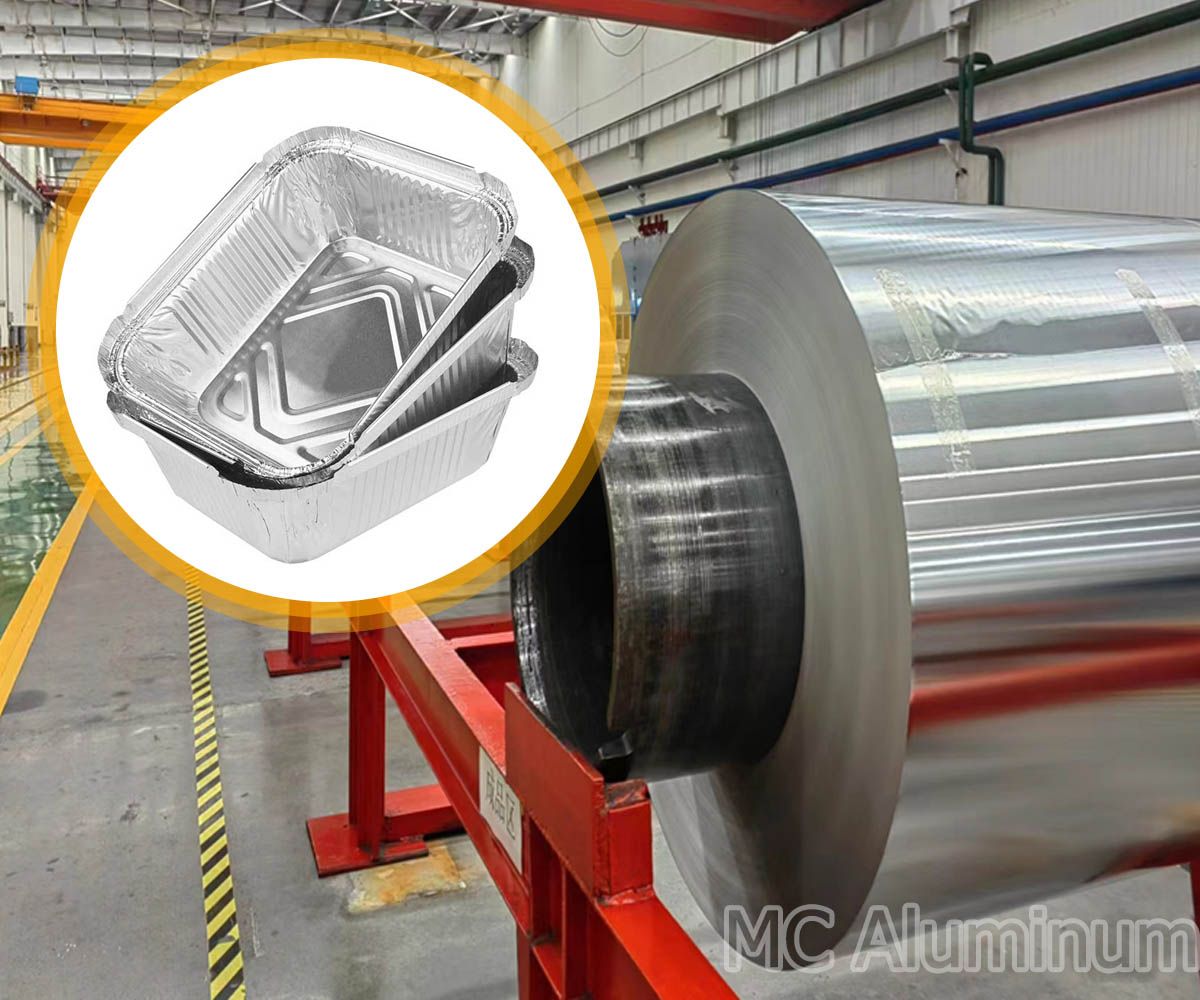
Semi-rigid containers are formed by stamping or deep drawing aluminum foil into structures with a certain level of rigidity. These containers combine flexibility with structural strength.
Compared to flexible packaging, they offer better stability; compared to rigid materials, they are lighter and more efficient.
Key Features:
Can directly hold food without additional support
Suitable for both high-temperature baking and freezing conditions
Easy to stack and transport
Fully recyclable after use
Common Products:
Aluminum foil lunch boxes, airline meal trays, baking molds, takeaway containers, and food storage trays.
Material Introduction for Semi-Rigid Containers
Aluminum foil used for semi-rigid containers is typically made of 3003, 8011, 8006, or 5052 alloys. The thickness is usually between 0.02mm and 0.2mm, and through special processing techniques, it maintains sufficient stiffness and formability while remaining thin and lightweight. This means it can be stamped into various complex shapes (such as ribbed lunch boxes) and retains its shape when filled with food, preventing it from easily collapsing.
Aluminum foil containers can be divided into two types: wrinkled containers and wrinkle-free containers. Wrinkled containers are typically produced using 3003 or 8011 aluminum foil alloys; wrinkle-free containers are typically produced using 8011, 8006, or 5052 aluminum foil alloys.
Core Advantages of Aluminum Foil
1.Excellent Barrier Properties
Effectively blocks light, moisture, oxygen, and microorganisms, significantly extending food shelf life compared to most plastic materials.
2.Safe and Hygienic
Food-grade aluminum foil contains no harmful heavy metals and does not release toxic substances or odors during heating, preserving food safety and original flavor.
3.Extreme Temperature Resistance
Suitable for both deep freezing and high-temperature cooking (oven or direct flame), without releasing harmful substances.
4.Efficient Heat Conductivity
Rapid and even heat transfer ensures uniform cooking and reduces processing time.
5.Eco-Friendly & Recyclable
100% recyclable and more environmentally friendly than plastic, aligning with sustainable packaging trends.
Container Aluminum Foil Specifications
| Alloy | 3003 / 8011 / 8006 / 5052, etc. |
| Temper | H24 / O |
| Thickness | 0.03 mm – 0.15 mm (Tolerance: ±5%) |
| Width | 200 mm – 1300 mm |
| Length | 1000 mm – 16000 mm |
| Price | Negotiable |
| Application | Food container manufacturing |
| Packaging | Fumigation-free wooden cases |
| Surface | Bright on both sides |
| MOQ | 1–3 tons |
Applications of Food-Grade Aluminum Foil
Takeaway and fast-food packaging
Baking and food processing
Airline catering
Medical and specialty food packaging
Frozen food storage
Production Process of Aluminum Foil for Semi-Rigid Containers
1.Raw Material
Aluminum ingots are melted into liquid form in a furnace.
2.Rolling Process
The molten aluminum is rolled into thin sheets using high-pressure rollers.
3.Annealing Process
The sheets are heated in an annealing furnace to improve ductility, then cooled slowly to enhance strength and durability.
4.Lubrication Process
Lubrication is applied to improve surface quality and prevent sticking during processing.
5.Foil Processing
The sheets are cut into smaller pieces and stamped into the required semi-rigid container shapes using molds.
6.Quality Inspection
Strict inspections are conducted, including thickness, dimensions, strength, and durability checks.
7.Packaging & Delivery
Qualified products are packed and shipped to customers.
FAQ
Q: What is aluminum foil used for?
A: Aluminum foil is widely used in food and pharmaceutical packaging due to its ability to block moisture, light, oxygen, and bacteria. It is also used in aseptic packaging, allowing perishable goods to be stored without refrigeration.
Q: Is aluminum foil harmful to health?
A: There is currently no conclusive evidence showing that aluminum foil poses health risks when used for food packaging. Studies indicate that storing food with aluminum foil does not cause aluminum migration under normal conditions.
Q: Can aluminum foil containers be used in microwaves?
A: Yes, but under specific conditions. Modern aluminum foil containers are often coated or specially designed to reduce sparking risks.
Q: Do you support customization?
A: Yes, we support:
Custom thickness and width
Surface coatings (non-stick, lacquered)
Color printing and embossing
Various coil diameters and packaging methods
Q: What is "lubricated aluminum foil" and why is it important?
A: During the stamping process, aluminum foil must be coated with a uniform layer of food-grade lubricant (e.g., DOS oil).
Benefits:
Protects molds by reducing friction
Prevents cracking and wrinkling during forming
Ensures smooth deformation in corners and complex shapes
MC Aluminum's food-grade aluminum foil undergoes rigorous pinhole testing, degreasing processes, and sheet shape control, ensuring food-grade safety and hygiene. With advantages such as high elongation, MC is a supplier of raw materials for various aluminum lunchbox manufacturers both domestically and internationally. Our products are exported overseas, and we can handle large orders ranging from 7 to 3000 tons. We offer competitive pricing, provide samples, and welcome customers to visit our factory. After-sales service is guaranteed.