
Introduction
As an aluminum foil manufacturer supplying materials for composite panels, railway interiors, marine structures, architectural cladding, and industrial sandwich panels, we frequently receive engineering inquiries about the selection of 3003 aluminum foil and 5052 aluminum foil for aluminum honeycomb core applications. Both alloys are widely used in honeycomb core production, but their performance priorities are different. Correct alloy selection affects core strength, corrosion resistance, adhesive bonding stability, forming behavior, and overall panel service life.
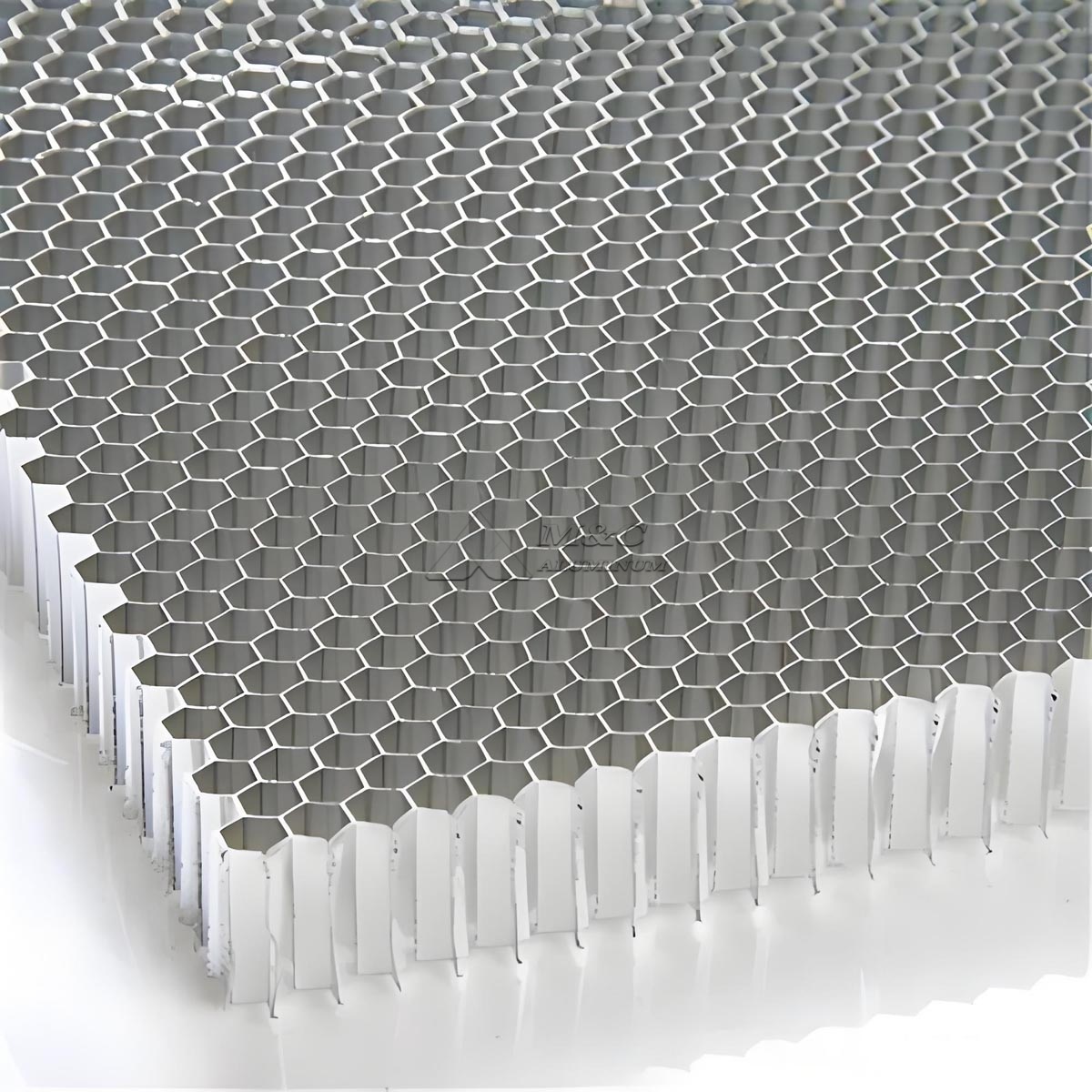
Aluminum honeycomb core is produced by slitting thin aluminum foil, applying adhesive lines, stacking, curing, cutting, and expanding the block into a honeycomb structure. During this process, the foil must maintain consistent thickness, clean surface quality, suitable mechanical properties, and stable bonding performance. From our factory production experience, 3003 aluminum foil is often selected for general architectural and industrial honeycomb core, while 5052 aluminum foil is preferred for applications requiring higher corrosion resistance and better mechanical performance under demanding environments.
Role of Aluminum Foil in Honeycomb Core Manufacturing
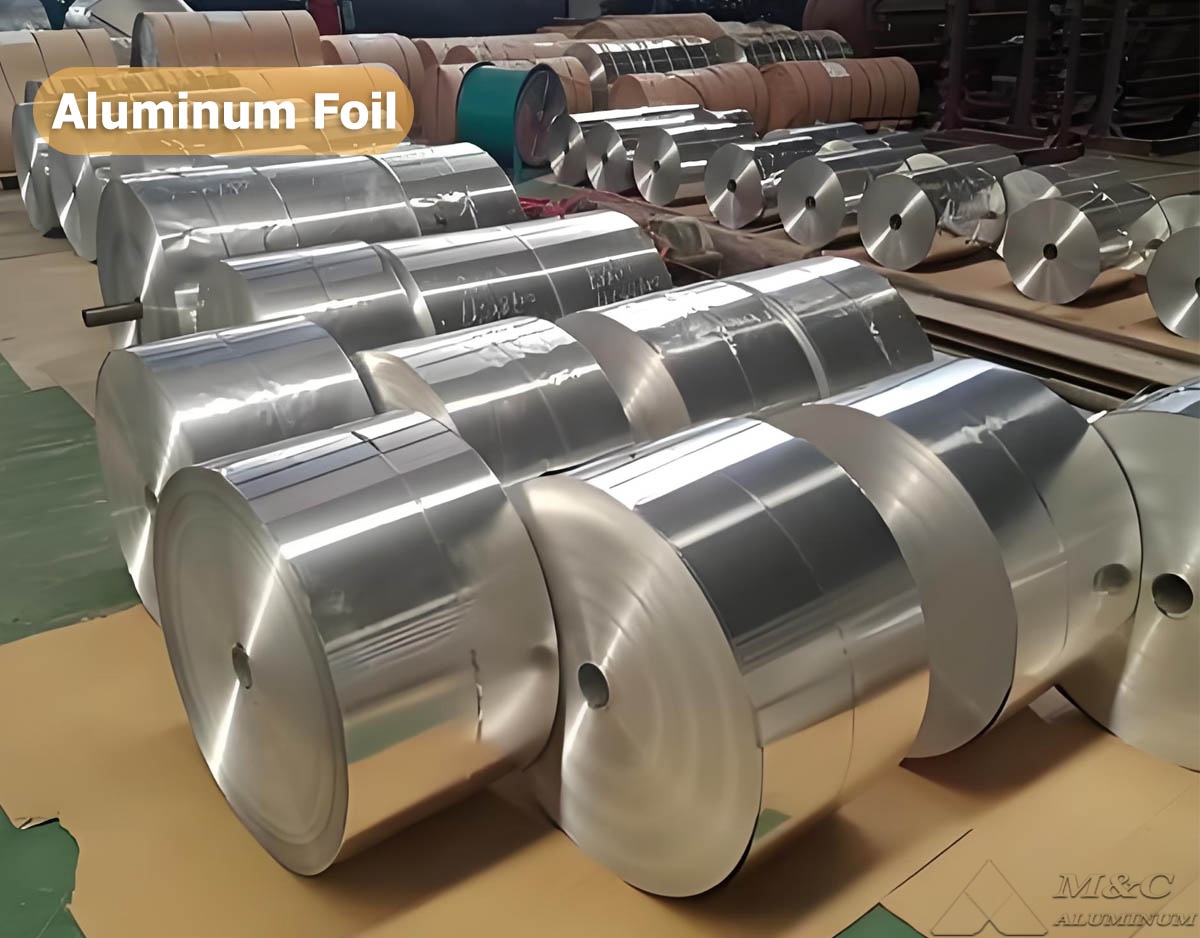
The aluminum foil used for honeycomb core is not a simple packaging foil. It is a structural raw material that directly determines the geometry and reliability of the expanded core. In production, foil thickness is commonly controlled from 0.03 mm to 0.08 mm, depending on cell size, core density, panel thickness, and load requirements. For special structural applications, thicker gauges can also be specified.
Our manufacturing control focuses on several key factors: alloy composition, temper, tensile strength, elongation, surface cleanliness, thickness tolerance, flatness, and oil residue. If foil strength is too low, the honeycomb wall can deform during expansion or panel pressing. If elongation and forming behavior are unsuitable, cracks may appear at the node area. If the surface is contaminated, adhesive bonding strength can decrease.
For this reason, our Honeycomb aluminum foil is produced with controlled rolling, annealing, surface degreasing, and inspection procedures to support stable honeycomb core processing.
Basic Alloy Characteristics of 3003 and 5052 Aluminum Foil
3003 aluminum foil belongs to the Al-Mn series. It has moderate strength, good formability, stable corrosion resistance, and reliable processing performance. It is commonly used in honeycomb core for building panels, partition panels, ceilings, doors, cleanroom panels, and general industrial sandwich panels.
5052 aluminum foil belongs to the Al-Mg series. Compared with 3003, it contains a higher magnesium content, which improves strength and corrosion resistance, especially in humid, marine, or chemically aggressive environments. However, 5052 is generally harder to process than 3003 and may require tighter control of rolling and annealing parameters to achieve consistent honeycomb expansion performance.
Typical Technical Parameters
The following values are typical factory reference data for honeycomb core foil. Final specifications should be confirmed according to customer drawings, applicable standards, and end-use requirements.
| Item | 3003 Aluminum Foil | 5052 Aluminum Foil | Engineering Comment |
|---|---|---|---|
| Alloy series | Al-Mn | Al-Mg | 3003 emphasizes balanced processability. 5052 emphasizes strength and corrosion resistance. |
| Common temper | H18, H19, O customized | H18, H19, H24 customized | Hard tempers are common for structural honeycomb core. |
| Typical thickness | 0.03 mm to 0.08 mm | 0.03 mm to 0.08 mm | Gauge depends on core density and cell size. |
| Tensile strength | About 140 to 200 MPa | About 220 to 290 MPa | 5052 generally provides higher tensile strength. |
| Elongation | Moderate | Lower to moderate | 3003 is usually easier to expand and form. |
| Corrosion resistance | Good | Very good | 5052 performs better in marine and humid service conditions. |
| Formability | Very good | Good | 3003 is more forgiving during expansion. |
| Adhesive bonding compatibility | Good with clean surface | Good with clean surface | Surface treatment and oil control are critical for both alloys. |
| Density | About 2.73 g/cm3 | About 2.68 g/cm3 | Difference is small for most panel weight calculations. |
| Typical applications | Building panels, doors, partitions, industrial panels | Marine panels, transport panels, outdoor structures | Selection depends on service environment and required strength. |
Mechanical Performance Comparison
For aluminum honeycomb core, tensile strength of the foil is not the only indicator, but it is an important factor. Higher foil strength can improve resistance to wall buckling, local deformation, and compression failure in the finished core. In this area, 5052 aluminum foil generally has an advantage over 3003 aluminum foil.
When used in panels exposed to vibration, repeated handling, or higher structural load, 5052 can provide better wall stiffness and improved durability. This is one reason it is often specified for transportation, shipbuilding, and other demanding composite structures. However, higher strength also means that process control becomes more important. If the foil is too hard or not uniform across the coil width, expansion may become uneven.
3003 aluminum foil provides moderate strength with better processing tolerance. In many building and industrial honeycomb panels, the final panel performance is determined not only by foil strength but also by core height, cell diameter, face sheet thickness, adhesive system, and lamination pressure. Therefore, for standard panel applications, 3003 often offers an efficient balance between performance and manufacturability.
Corrosion Resistance in Service Conditions
Corrosion resistance is one of the most important differences between 3003 and 5052 aluminum foil. 3003 has good corrosion resistance in normal indoor and outdoor environments. It is suitable for architectural panels, cleanroom partitions, furniture panels, and general industrial structures where exposure is not severe.
5052 has stronger corrosion resistance due to its magnesium content. It is more suitable for humid coastal regions, marine interior panels, refrigerated transport, chemical plant environments, and outdoor structures exposed to moisture or salt-containing air. For these applications, the improved corrosion resistance of 5052 Aluminum Foil can help extend service life and reduce the risk of early degradation.
It should be noted that honeycomb panel corrosion performance is also influenced by surface pretreatment, adhesive selection, edge sealing, face sheet alloy, and installation environment. Even when 5052 foil is used, poor sealing or incompatible adhesives may reduce long-term reliability.
Forming and Expansion Behavior
In honeycomb core production, the foil must withstand adhesive line application, stacking pressure, curing temperature, slicing, and expansion. Good expansion behavior requires uniform hardness, stable elongation, and consistent thickness.
3003 aluminum foil is generally easier to process. Its formability allows smooth expansion of the honeycomb block, especially for small cell sizes or low-density cores. It is less sensitive to minor variations in expansion force and therefore supports stable mass production.
5052 aluminum foil can also be used successfully in honeycomb core manufacturing, but it requires more careful control. Because of its higher strength, expansion force may increase. The manufacturer must control temper, coil flatness, slitting quality, and adhesive line spacing to avoid irregular cells or node stress. In our factory, 5052 honeycomb foil orders are normally reviewed together with the customer application, target core density, and expansion process.
Adhesive Bonding Performance
Both 3003 and 5052 aluminum foil can achieve reliable bonding when the surface is properly prepared. The most common bonding issue is not alloy type itself, but surface contamination. Rolling oil residue, oxide inconsistency, dust, or moisture can reduce adhesive wetting and node bonding strength.
As a manufacturer, we control surface quality through rolling oil management, annealing atmosphere control, degreasing when required, and surface inspection. For critical honeycomb core applications, customers may specify surface tension, oil residue limits, or bonding tests. We can also supply foil according to agreed requirements for epoxy, phenolic, or other honeycomb adhesives.
For 3003 foil, bonding stability is usually straightforward under standard production conditions. For 5052 foil, the surface is also suitable for bonding, but process parameters should be verified when higher strength tempers are used. Trial production is recommended when changing alloy, thickness, adhesive, or cell size.
Weight and Density Considerations
The density difference between 3003 and 5052 aluminum alloys is small. In most aluminum honeycomb core designs, the influence on final panel weight is less significant than foil thickness, cell size, and core height. Therefore, alloy selection should not be based mainly on density.
If the objective is weight reduction, engineers usually optimize honeycomb parameters such as foil gauge, cell diameter, and panel structure. If the objective is environmental durability or higher mechanical capacity, alloy selection becomes more important. In this comparison, 3003 is suitable for standard lightweight panels, while 5052 is more suitable when the design requires higher strength or better corrosion resistance.
Cost and Production Efficiency
From a manufacturing perspective, 3003 aluminum foil usually has better cost efficiency. Raw material cost is generally lower, rolling behavior is stable, and honeycomb core production is easier to control. For high-volume architectural and industrial panels, 3003 is often the practical choice.
5052 aluminum foil usually has a higher alloy cost and may require more precise production control. However, the additional cost can be justified when the project requires better corrosion resistance, higher strength, or longer service life in harsh environments. For example, marine panels, railway panels, and outdoor composite structures may benefit from the performance margin of 5052.
The appropriate choice should consider total project cost rather than foil price alone. Premature corrosion, panel replacement, bonding failure, or structural deformation can be more expensive than selecting a higher-performance alloy at the beginning.
Recommended Selection Guide
| Application Requirement | Recommended Alloy | Reason |
|---|---|---|
| Standard building honeycomb panels | 3003 | Balanced strength, good formability, and cost efficiency. |
| Interior partitions and cleanroom panels | 3003 | Stable processing and sufficient corrosion resistance. |
| Exterior panels in normal environments | 3003 or 5052 | Select based on humidity, coating, and sealing design. |
| Marine or coastal applications | 5052 | Better resistance to moisture and salt-containing environments. |
| Transport panels with vibration exposure | 5052 | Higher strength and improved structural durability. |
| Small cell or difficult expansion core | 3003 | Better formability and more stable expansion behavior. |
| High-strength honeycomb core | 5052 | Higher tensile strength and wall stiffness. |
Factory Quality Control for Honeycomb Foil
For both 3003 and 5052 aluminum foil, stable quality depends on production control. Our factory inspection normally includes chemical composition verification, thickness measurement, width tolerance inspection, surface quality inspection, mechanical property testing, and coil appearance checking. For honeycomb core customers, we also pay close attention to slitting burrs, coil flatness, pinholes, oil residue, and surface uniformity.
Before mass production, we recommend confirming the following information: alloy and temper, foil thickness, width, inner diameter, outer diameter, maximum coil weight, surface requirements, adhesive type, cell size, and end-use environment. These details allow us to match rolling and finishing parameters to the customer production line.
Conclusion
3003 and 5052 aluminum foils are both suitable for aluminum honeycomb core applications, but they serve different engineering priorities. 3003 aluminum foil offers good formability, stable processing, reliable corrosion resistance, and competitive cost, making it suitable for standard building and industrial honeycomb panels. 5052 aluminum foil provides higher strength and better corrosion resistance, making it more appropriate for marine, transportation, outdoor, and demanding structural applications.
As a manufacturer, our recommendation is to select the alloy according to the service environment, core density, mechanical requirements, adhesive system, and processing conditions. When cost efficiency and easy expansion are the main concerns, 3003 is often the preferred choice. When long-term durability and corrosion resistance are more important, 5052 is the stronger option. Careful specification and factory quality control are essential for producing reliable aluminum honeycomb core and finished composite panels.