
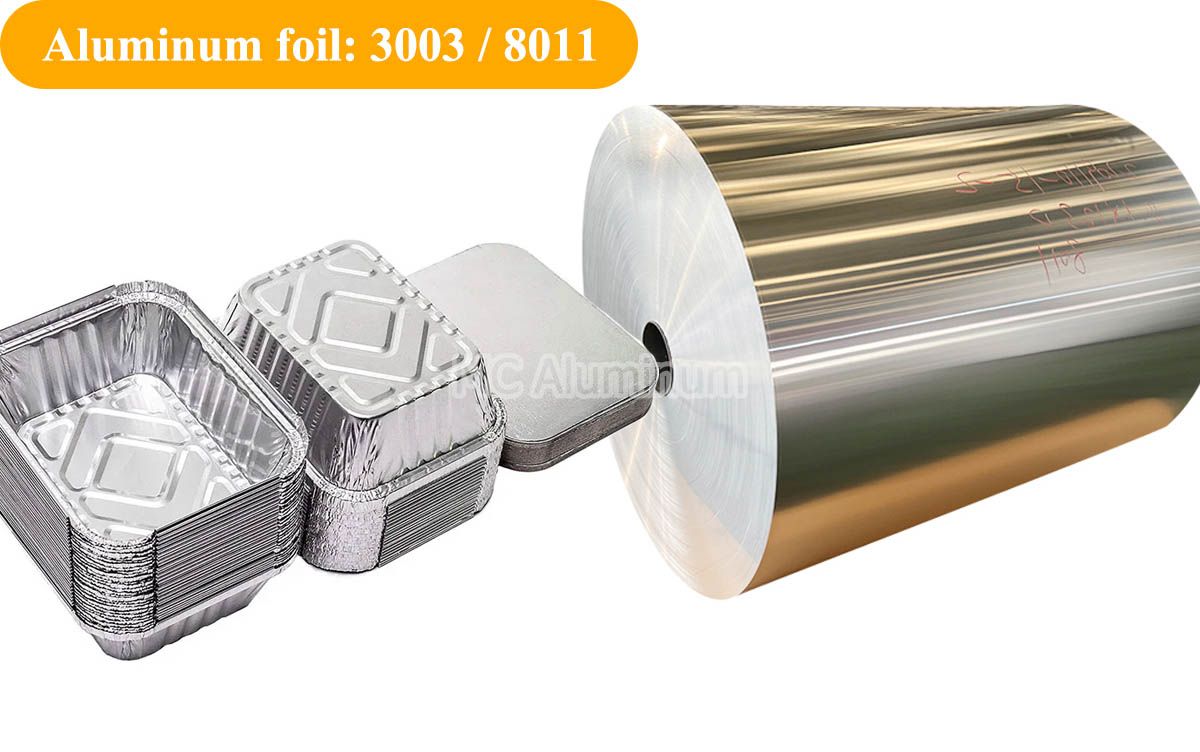
MC Aluminum aluminum foil coil products are widely used in aluminum foil food containers such as lunch boxes, baking trays, and takeaway trays. Thanks to its excellent barrier properties, hygiene safety, recyclability, and heat resistance, aluminum foil has become an indispensable packaging solution for the global food industry.
MC Aluminum provides high-quality aluminum foil jumbo rolls and mother coils. Alloy grades include 1100, 1235, 3003, 3104, 8011, 8079, 8006, etc., specifically designed for stamping and forming various types of food containers (lunch boxes, trays, lids, etc.). All products comply with FDA / SGS / ISO certification standards.
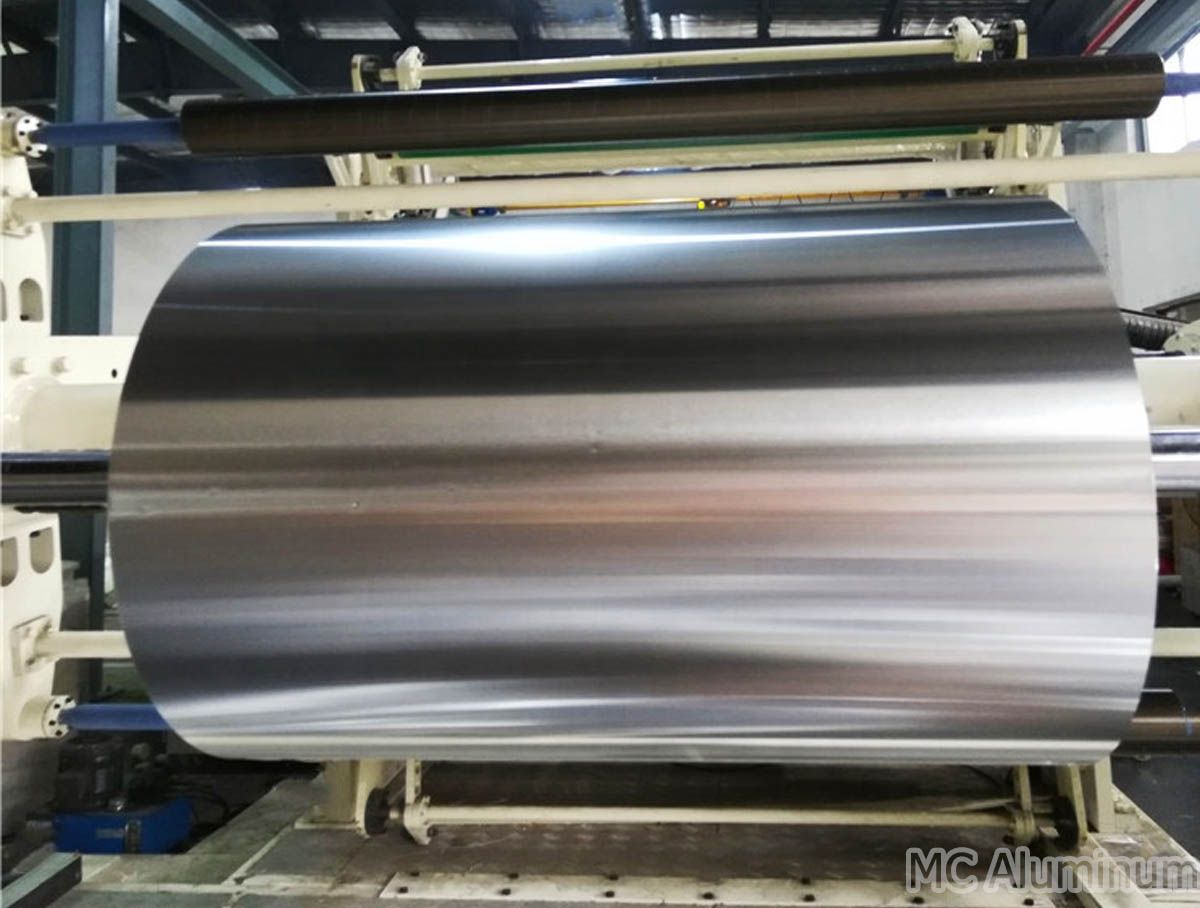
Our aluminum foil is mainly supplied in jumbo roll form, with widths typically ranging from 200 mm to 1600 mm. Single roll weights can reach several hundred kilograms or even several tons, making it suitable for continuous automated production lines and convenient for downstream slitting.
Unlike household aluminum foil, container-grade aluminum foil must meet stricter requirements in mechanical strength, hygiene safety, and surface quality. It must have excellent formability to withstand high-speed stamping without cracking, while also maintaining sufficient strength to support food without deformation.
Advantages of Aluminum Foil for Food Containers
Compared with plastic or paper packaging, aluminum foil food containers offer multiple advantages:
1.Excellent Barrier Performance
Aluminum foil completely blocks moisture, oxygen, light, and bacteria, helping keep food fresh for longer.
2.Heat and Cold Resistance
Aluminum containers can withstand both oven temperatures and freezing conditions, making them suitable for cooking, baking, and storage.
3.Good Formability
It supports deep drawing and stamping without cracking, suitable for complex container shapes.
4.Food Safety
Food-grade aluminum foil is non-toxic and odorless, compliant with international food safety standards.
5.Lightweight but Strong
Despite being lightweight, aluminum foil has sufficient strength to maintain container structure during transportation.
6.100% Recyclable
Aluminum is one of the most recyclable materials in the world. Recycling aluminum can save up to 95% of the energy required for primary production.
7.Clean Surface Quality
Smooth surface without pinholes, stains, or defects, meeting food-grade hygiene standards.
Aluminum Foil Specifications
| Alloys | 1100, 1235, 3003, 3004, 8011, 8079, 8006, etc. |
| Temper | O, H22, H24, H14, H16 (depending on forming requirements) |
| Thickness | 0.03–0.20 mm (typical container foil: 0.038–0.10 mm) |
| Width | 100–2000 mm (customizable) |
| Core Diameter | 76 mm (3 inch) / 152 mm (6 inch) or customized |
| Jumbo Roll Size | Adjustable diameter and weight based on production and logistics needs Surface: One side bright, one side matte; lubrication, coating, or painting available upon request |
| Certifications | FDA / SGS / ISO |
| MOQ | 1–3 tons |
Types of Aluminum Foil for Container Production
Wrinkle-Free Container Foil
Food-grade soft temper foil (8011/8006 alloy, O temper) with excellent elongation. Suitable for high-speed stamping without wrinkles or cracking. Complies with GB 4806.9 and FDA standards. Ideal for takeaway boxes and shallow trays with stable forming and high yield.
Wrinkled Container Foil
Designed for economical food containers. Flexible material with controlled wrinkling during forming. Suitable for basic stamping processes with good cost efficiency. Used for disposable lunch boxes and packaging containers.
Semi-Hard Container Foil
Made from H22/H24 temper. Higher stiffness than soft foil, good deep-drawing performance, strong resistance to denting and puncture. Suitable for medium-depth lunch boxes and airline meal containers.
Hard Container Foil
High-strength H18/H19 temper foil with excellent rigidity and load-bearing capacity. Suitable for deep-drawn large-capacity containers, cold-chain trays, and heavy-duty food packaging.
Applications in Food Container Production
| Product Type | Typical Thickness | Features |
| Takeaway foil container | 0.05–0.07 mm | Sealable, heat-retaining, leak-proof |
| Baking trays / oven pans | 0.06–0.08 mm | High temperature resistance, even heat conduction |
| Airline meal trays | 0.05–0.06 mm | Lightweight, stackable |
| Baking molds | 0.07–0.09 mm | Reusable, easy release |
| Foil lids | 0.04–0.05 mm | Flexible, easy sealing |
| Disposable grill trays | 0.08–0.10 mm | High temperature resistant, strong load capacity |
Quality Requirements for Food Container Foil
MC Aluminum ensures stable foil performance through strict quality control and precision manufacturing, supporting high-speed and reliable container production.
1. Excellent Surface Wettability (Grade A)
Through controlled annealing and surface cleaning processes, our foil achieves Grade A wettability. This ensures uniform adhesion in coating, printing, and lamination processes without peeling or missing spots.
2. Strict Pinhole Control
Infrared scanning is used to monitor pinholes for foils ranging from 0.03 mm to 0.15 mm. Extremely low pinhole rates ensure superior barrier performance against air, moisture, and light.
3. Precise Thickness Tolerance and Flatness
Thickness tolerance is controlled within ±3% to prevent breakage or wrinkling in high-speed stamping lines. Stable coil tension ensures smooth unwinding and reduced defect rates.
4. Food-Grade Safety
All products are certified by FDA, SGS, and REACH. Food-grade lubricants are used during production, ensuring safe direct contact with food.
Other Applications of Aluminum Foil
Bottle caps: wine caps, ROPP caps, yogurt lids, pharmaceutical caps, cosmetic caps
Pharmaceutical packaging: PTP blister foil, cold-form foil, blister packs, capsule foil
Food packaging: container foil, lunch box material, baking cups, sealing foil
Industrial applications: foil tape, cable foil, honeycomb foil, battery foil
FAQ
Q: Which alloys are commonly used for container foil?
A: Common alloys include 3003, 3004, 8011, and 8006, selected based on forming requirements and container type.
Q: What thickness is typically used for container foil?
A: It depends on container depth. Shallow trays usually use 0.03–0.05 mm, while deep-drawn or airline containers typically use 0.06–0.12 mm, often in 3003 alloy.
Q: Do you provide oiled foil?
A: Yes. We can supply pre-lubricated foil with food-grade oil, allowing direct use in stamping machines without additional lubrication.
Q: What is your MOQ?
A: Standard MOQ is 3–5 tons. Sample support is available for testing upon request.
Q: Is aluminum foil safe for food packaging?
A: Yes. Food-grade aluminum foil is non-toxic and odorless, compliant with FDA and SGS standards. It provides excellent protection against moisture, oxygen, and contaminants, ensuring food safety and hygiene.